Remembering Artists from Another Time: Alex Katz

Artist: Alex Katz

Truthful Fictions

The minds of some artists remind me of the blinding light generated by a Graflex Speed Graphic camera flashgun. Its magnesium flashbulb frightens the eyes like the hydrogen bomb testing at Enewetak Atoll. Remnants of the explosive white smoke remind me of Andrei Tarkovsky’s The Sacrifice, where a house burns inescapably in many flames. Similarly, as Michael Ondaatje’s Count László de Almásy burned brilliantly in the Saharan desert, his molting skin erupting, the human and reptilian skins remained. Strange imaginations-both voluntary and involuntary-sing as bright and dark forces at work. An apparent  new birth reveals a bit of heaven. 

An artist’s mind can be on fire and methodically cool. The lure of a new capture becomes my personal cries and whispers for what will be a lasting frame: a reality of moving frames, seen as a montage merging my portrait and architecture photography. It is all in one, all at once-a great awareness of quietude-like a pebble almost whispering as it dips into a waiting pool. 

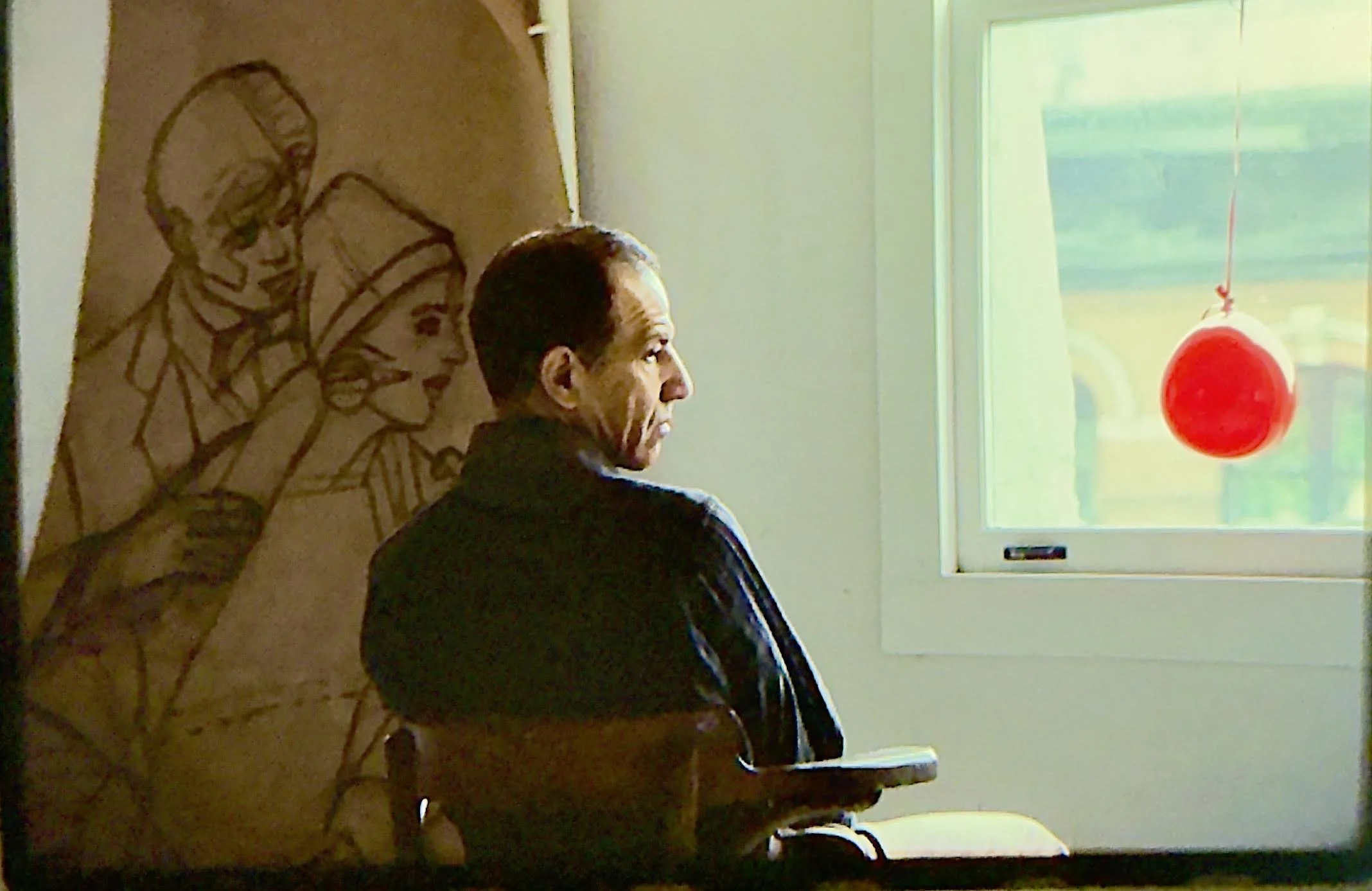
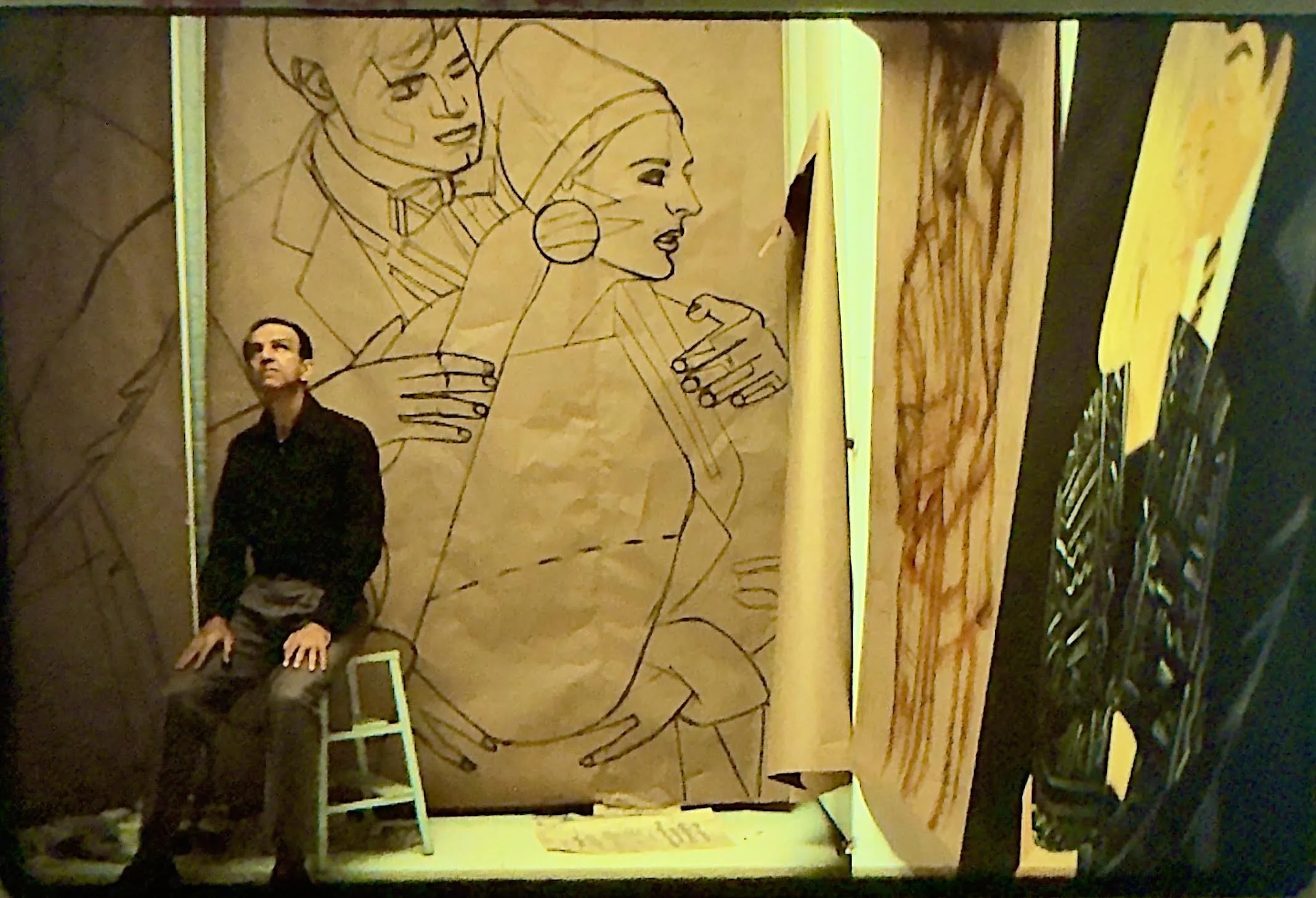
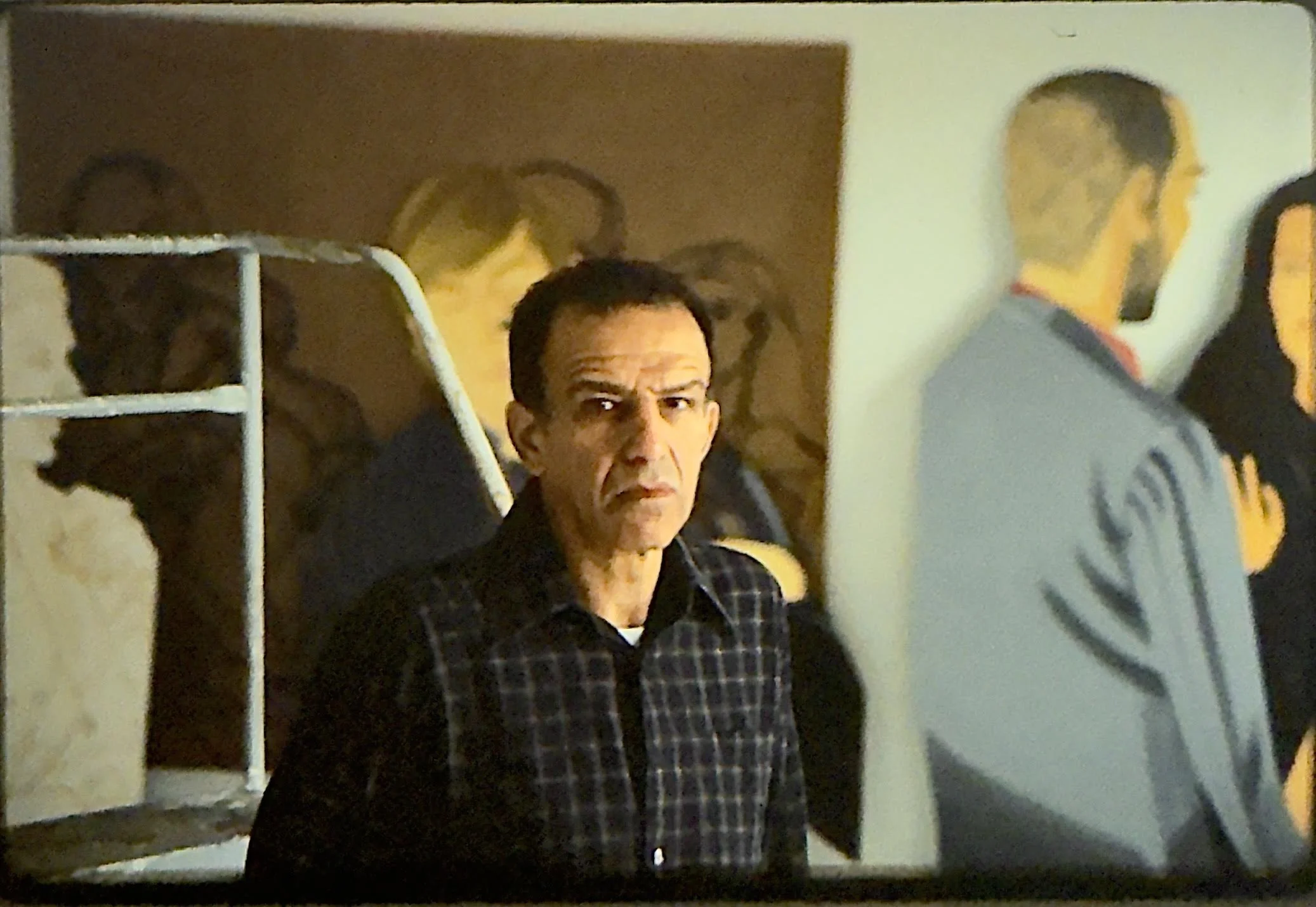
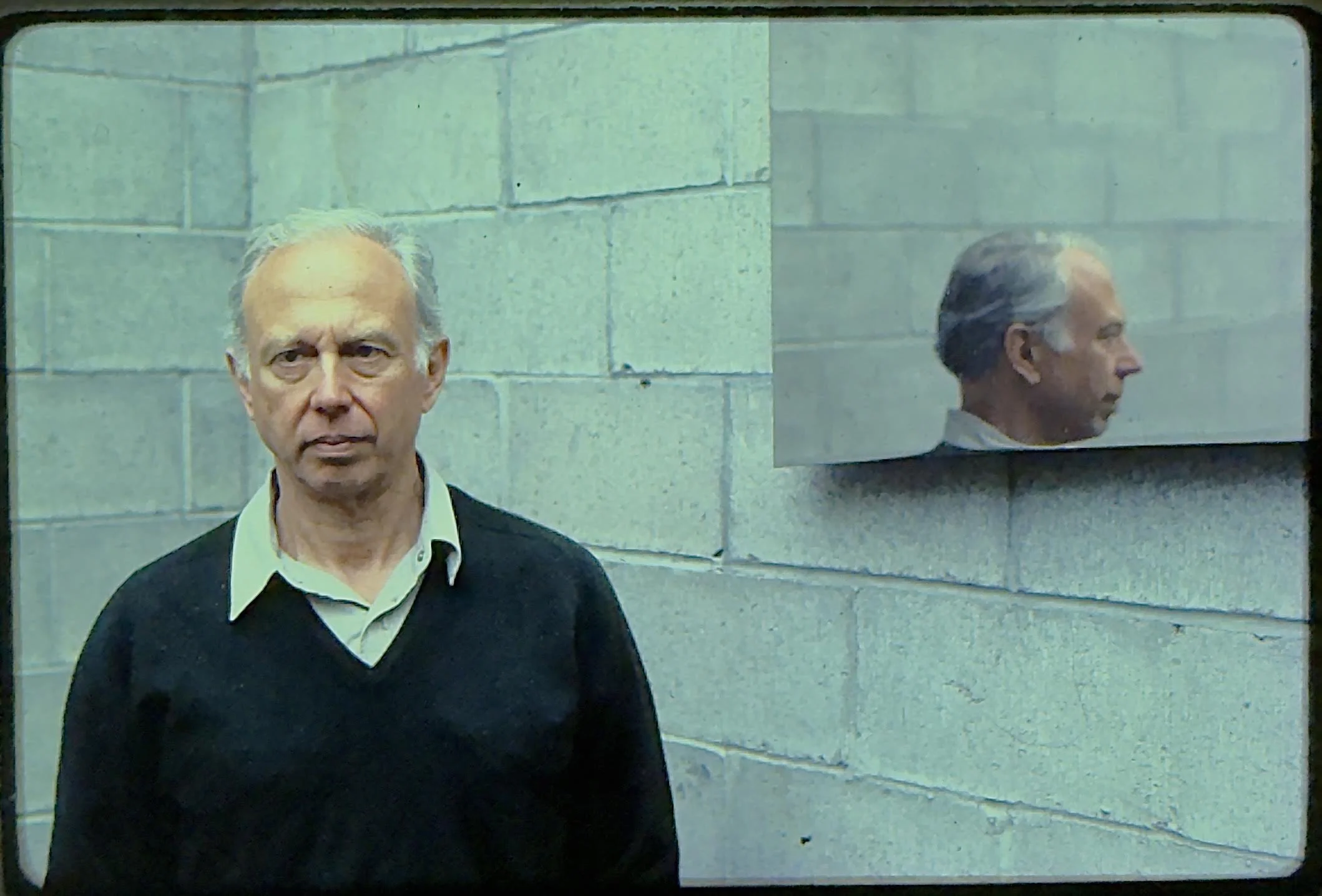
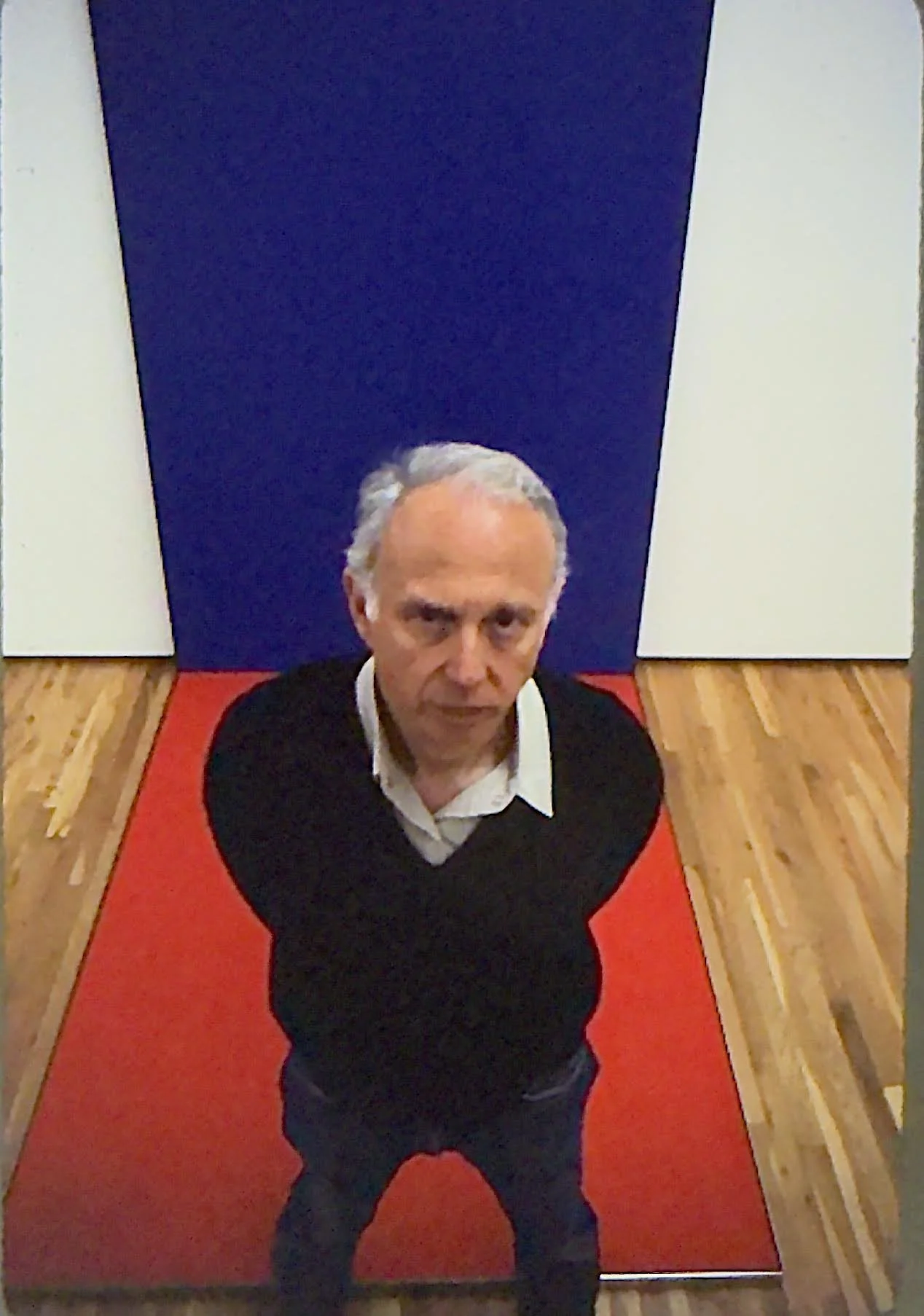
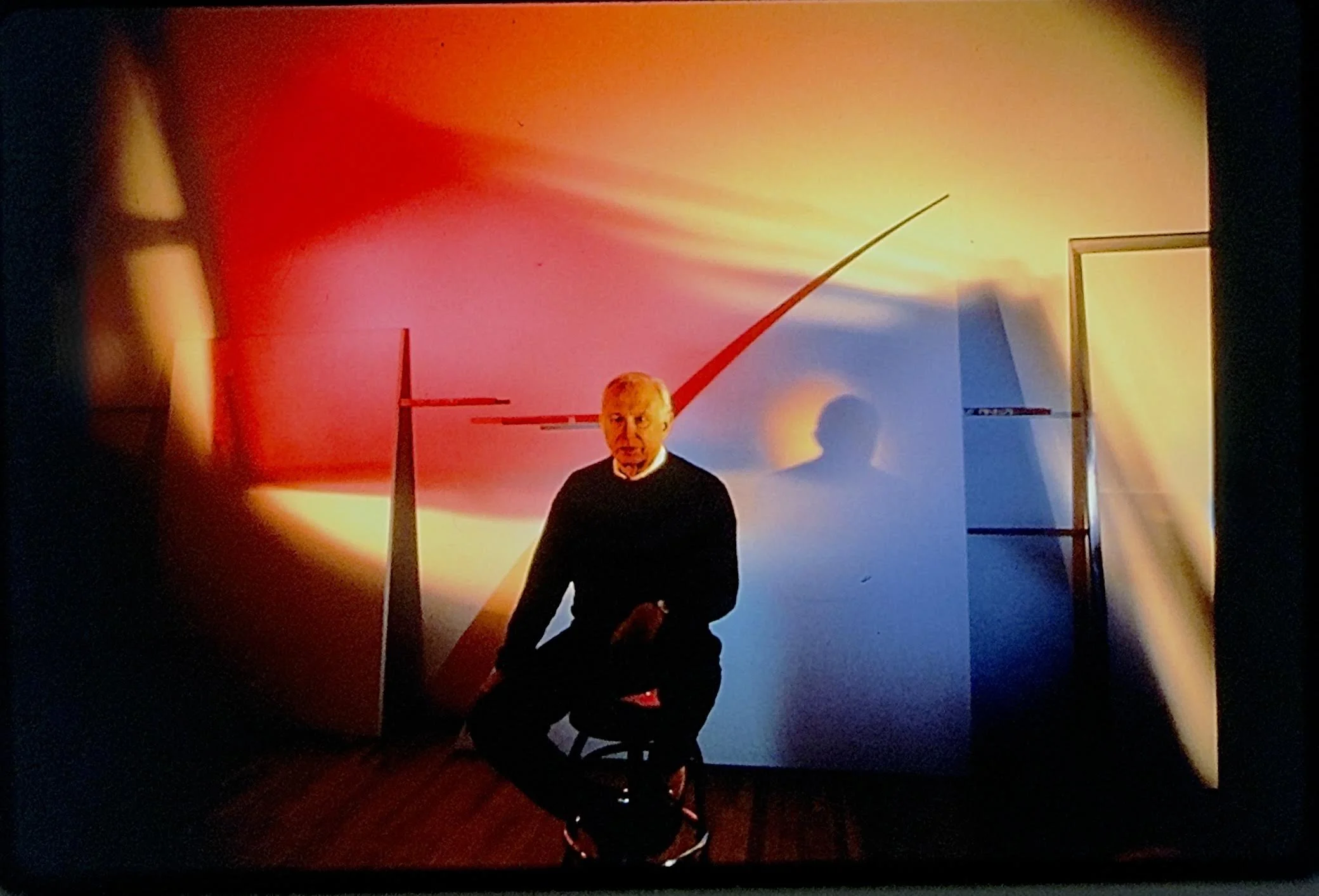
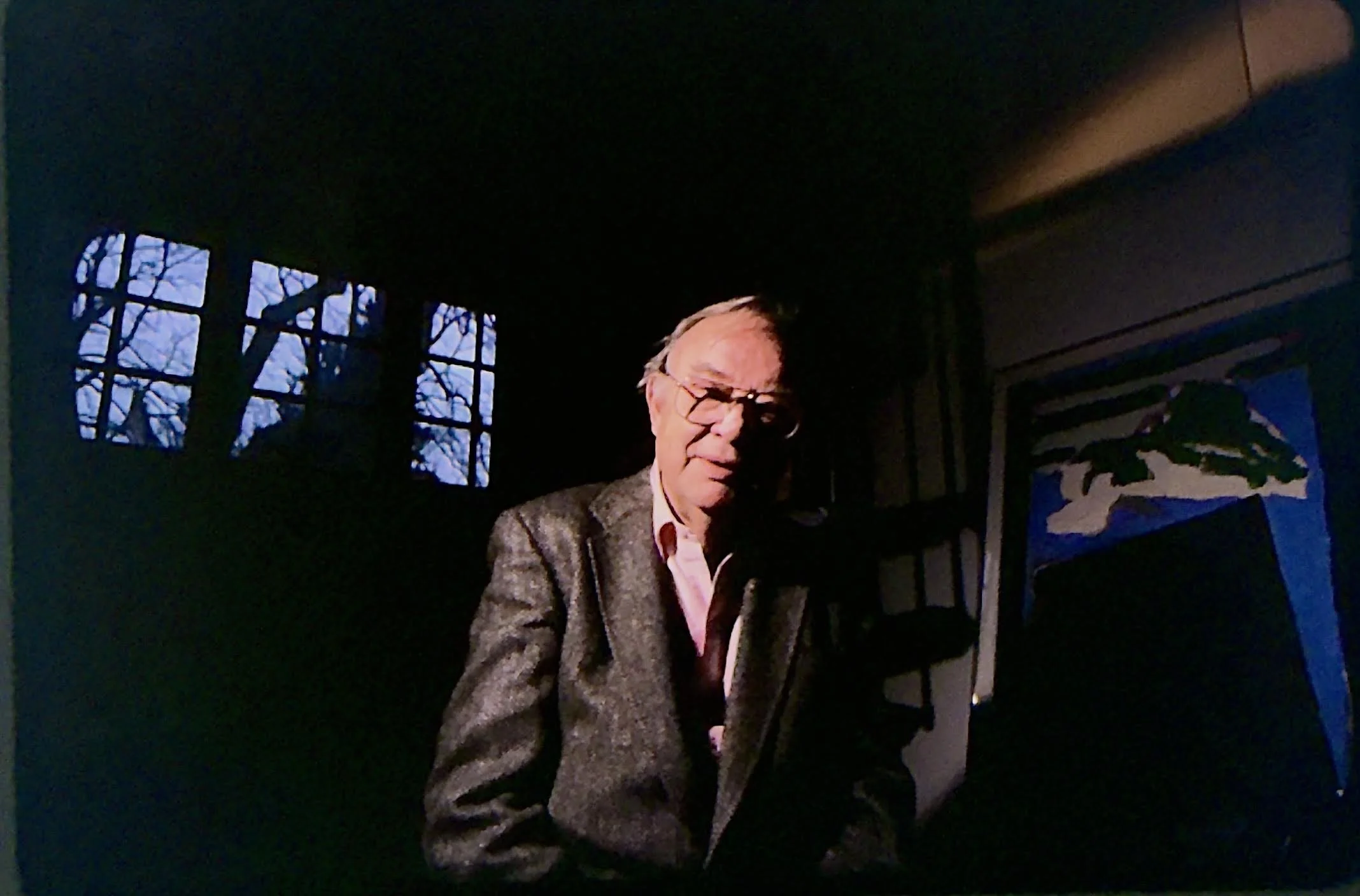
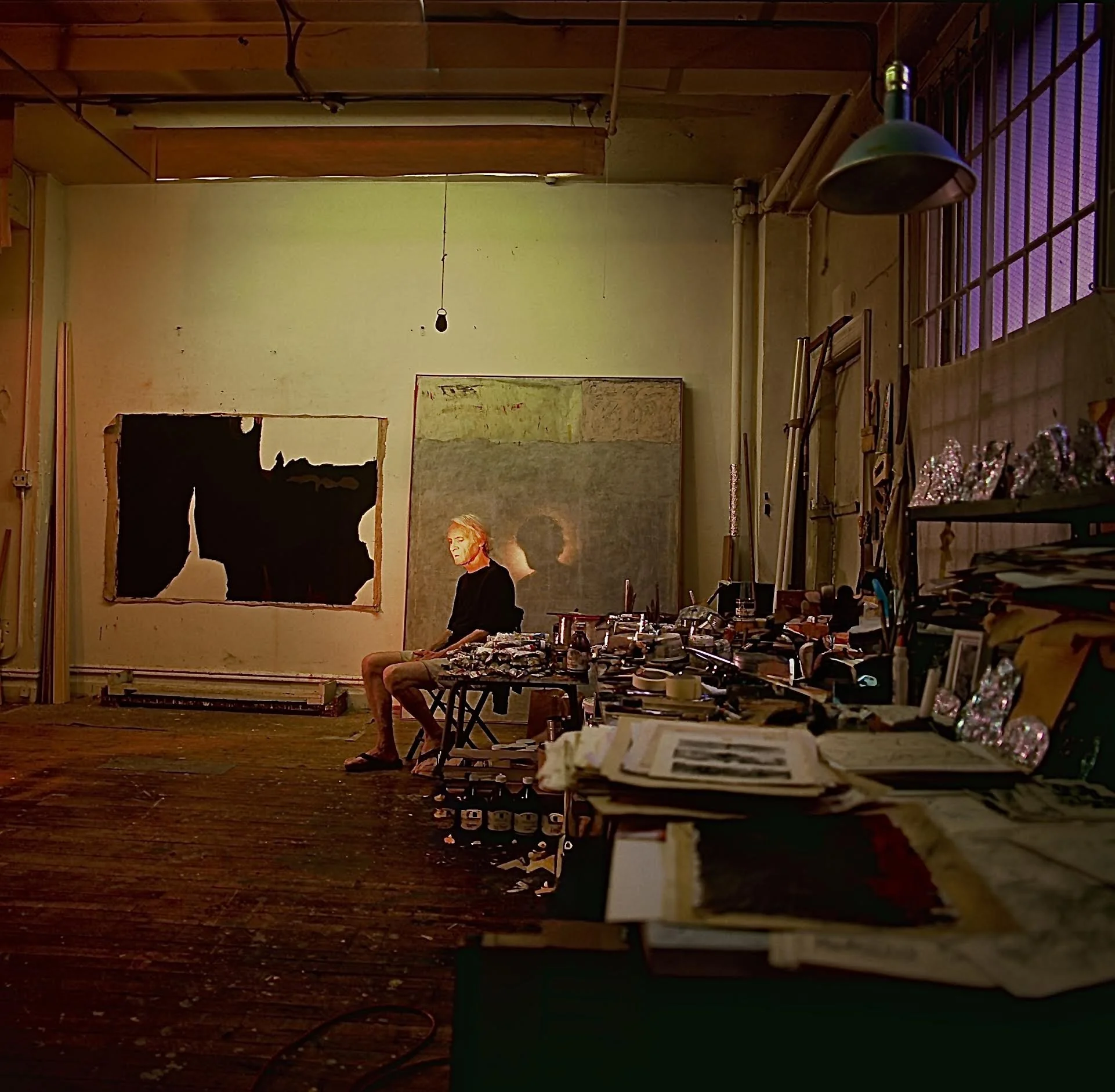
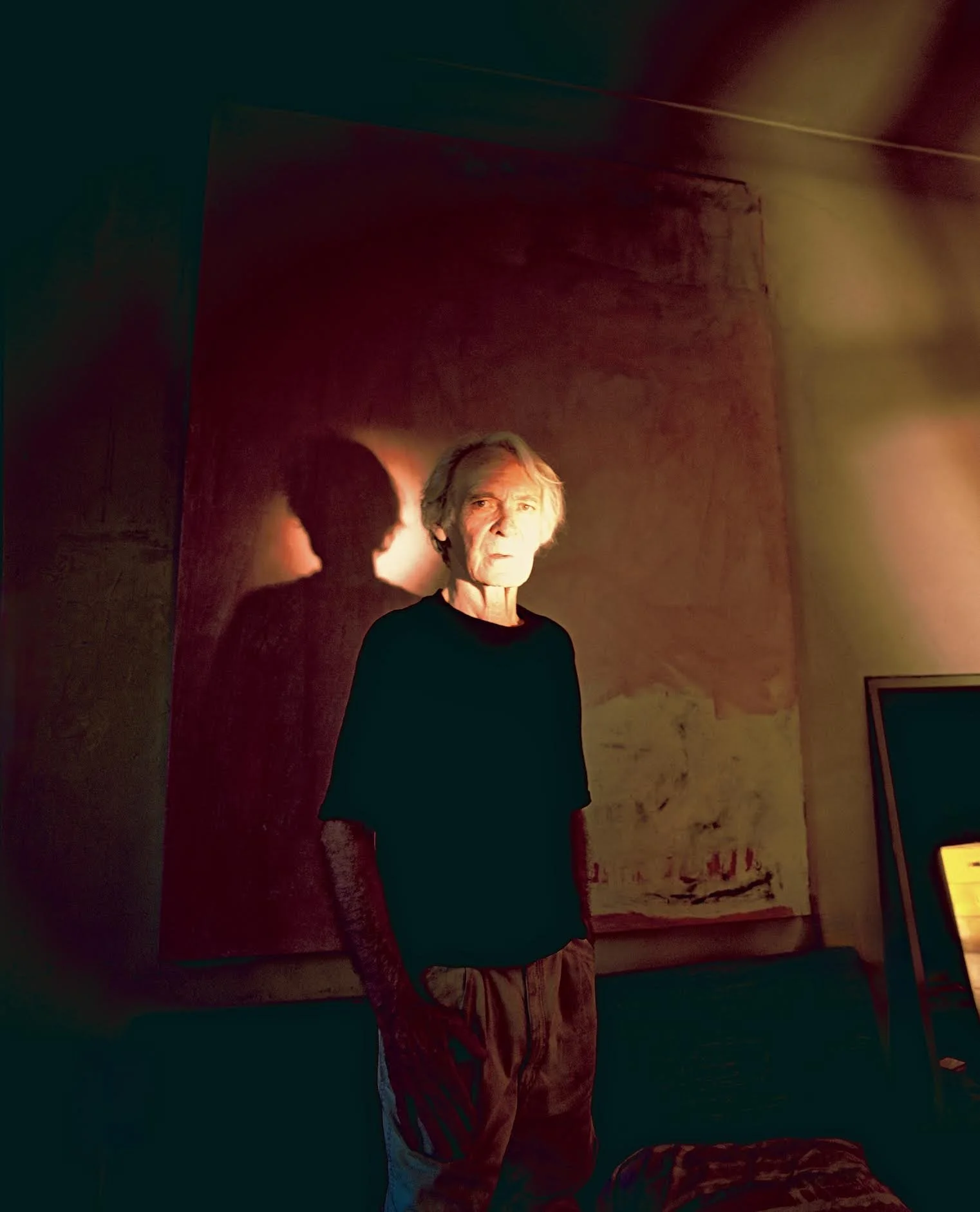
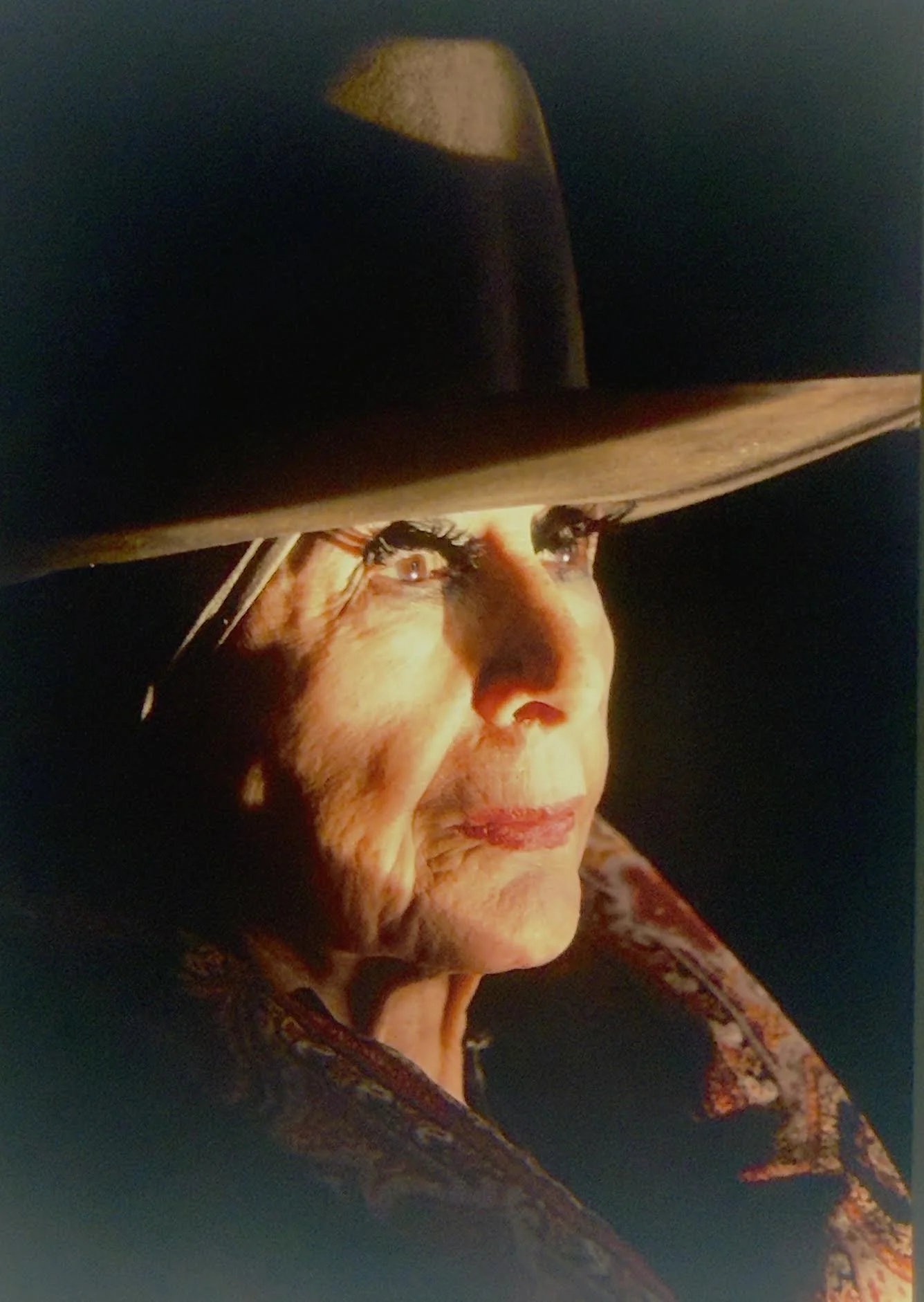
The artist Alex Katz greeted me at his studio door. He turned, and without missing a beat, I followed him like the Beatles crossing Abbey Road. Two men wearing white buck shoes, we strolled around the spacious studio more than once. A Day in the Life  felt like a constant theme, was here again. 

I always dream when I hear the lyrics, and I dream a bit more when the music plays. The quiet stroll still remains surreal in a fading memory. There was not a silence-just a query.

I had photographed hundreds of artists. The portraits were my classrooms for art history and psychological engagement. Photographing Katz was a minimalist exercise like a Georges Simenon novel. I had spotted a lone red balloon in his studio and hung it from the single window. The quiet story unfolded, but the power of mental persuasion was alive with every breath. We were two breeds of animals sizing up opponents or determining if there was a bond to occur. The dance of strangers began like a classic toe-step. In position we stood, the music about to begin. 

Then, as in most portraits, I recalled some assistance. I saw Gordon Parks position his classic “American Gothic” photograph. I knew Gordon a bit. I could borrow his brilliance. The “American Gothic” was the defining anthem to my portraits, allowing the stoicism to become an unraveling of a life from the past, fusing with a moment in the present.

I listened to Alex talk about Alex. I remembered a rumor from early on in his career. He was so dissatisfied with his work, that he  destroyed a measured ton of his paintings. He stared into and beyond the balloon. He repeatedly asked me, “Why?“ Yet he still calmly talked to me, around me, and beyond.

As we verbally catalogued names in common-The artists, the galleries, the travels- I saw him get close to breaking a smile. He was famous, I was not. But in the room where a painting and a camera narrated a history of two individual personalities with unique strengths and weaknesses, I called to him to let him know the session was complete.

Over the years I would run into him serendipitously. I would always extend my hand as he was lingering on a Soho Street or navigating a crowded gallery or museum  entrance. He would most often not remember my name but say, “Yes, the Red Balloon photograph.”


Remembering Artists From Another Time: Robert Rauschenberg

Artist: Robert Rauschenberg

Truthful Fictions

From his first bourbon to his last sake, I saw a baby Macaque sipping elixirs through a straw with unimaginable pleasure.

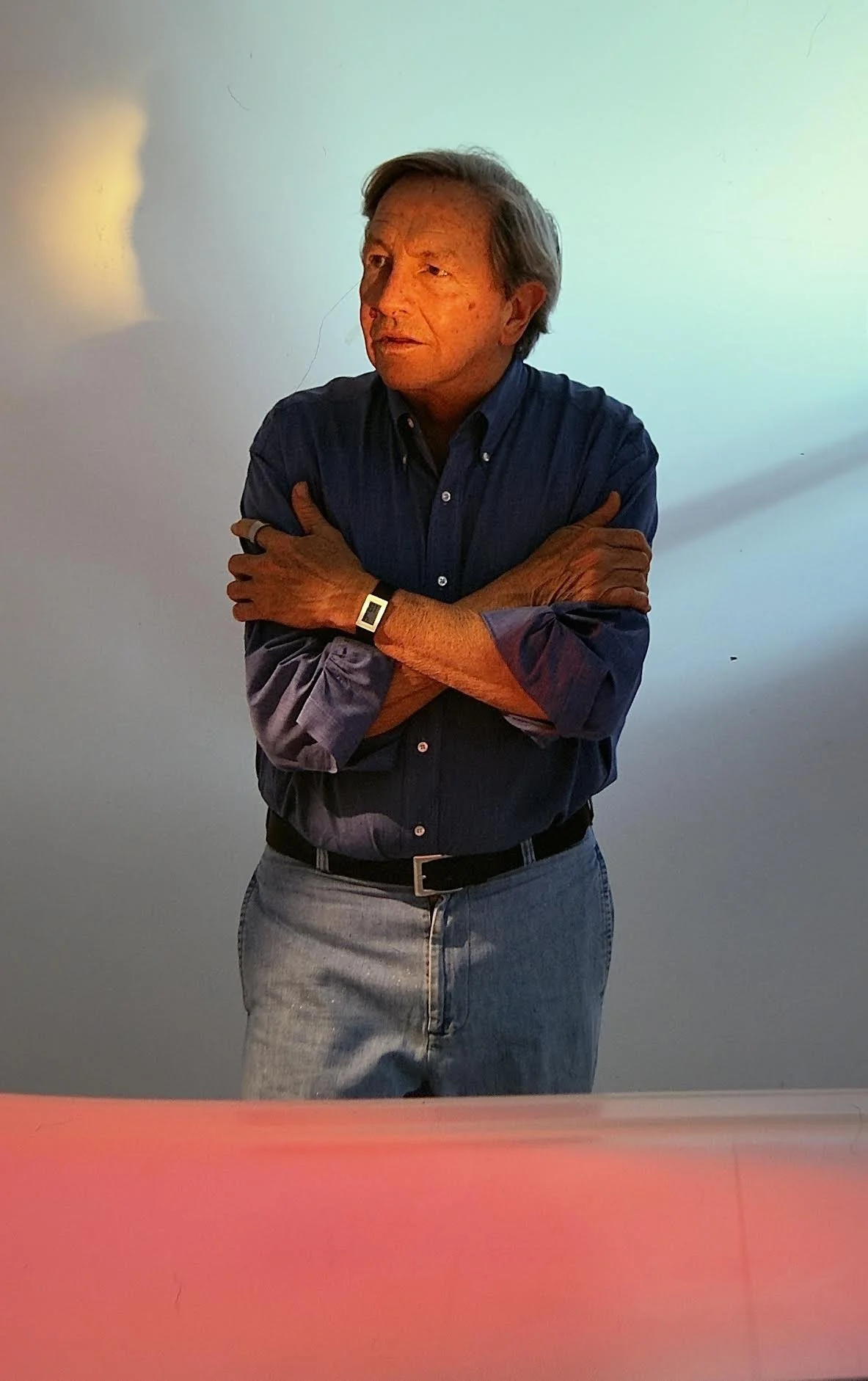
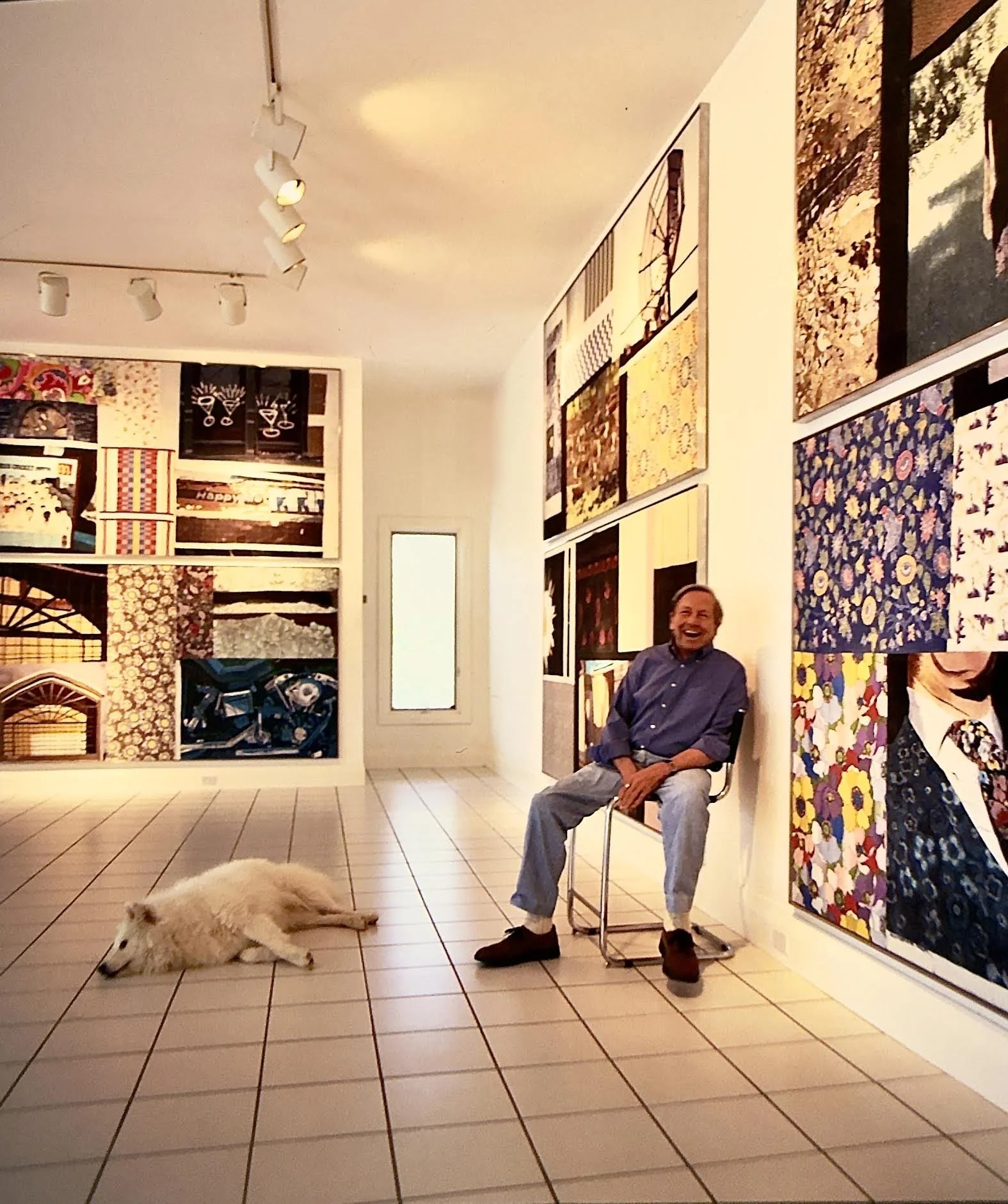
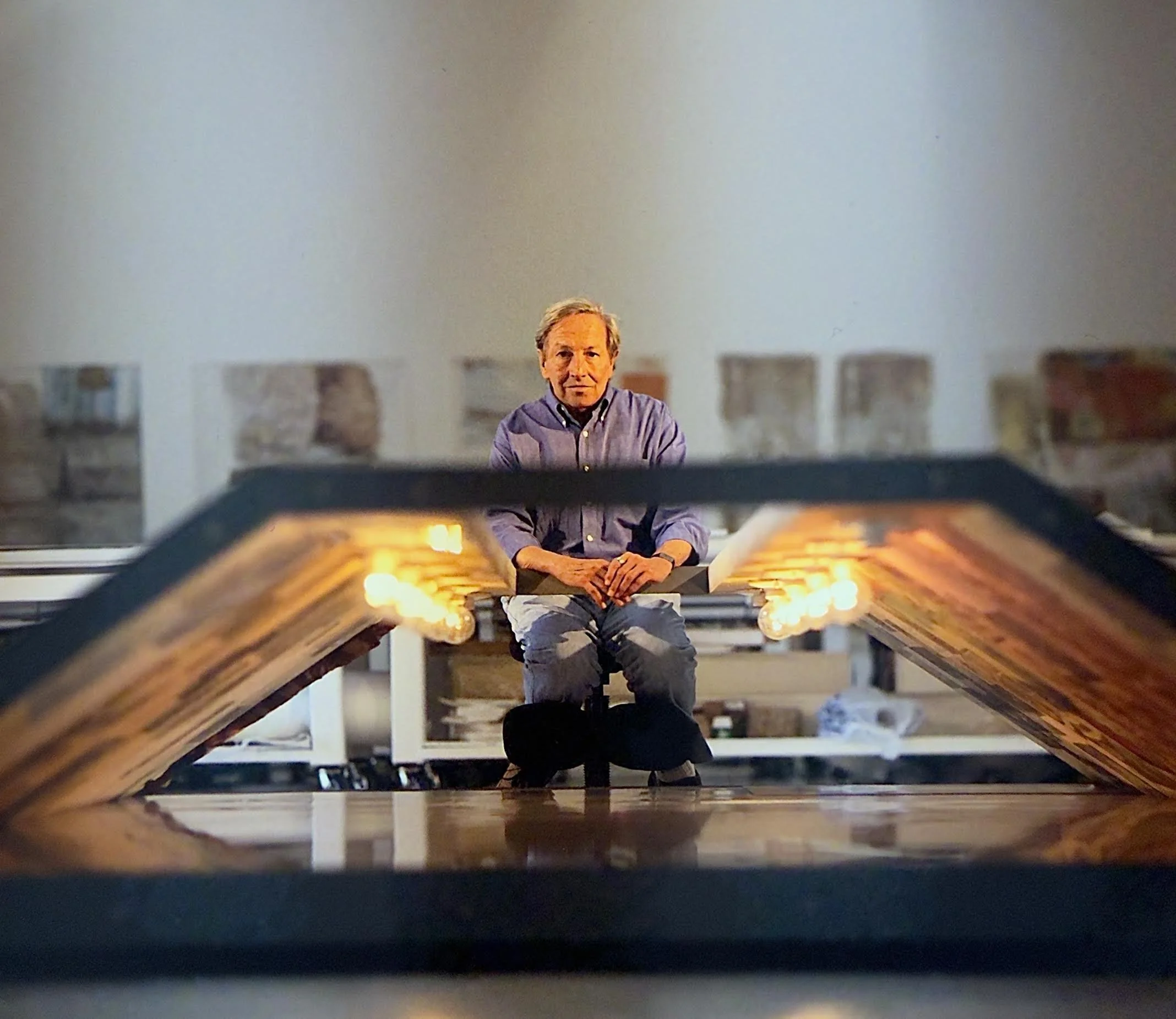
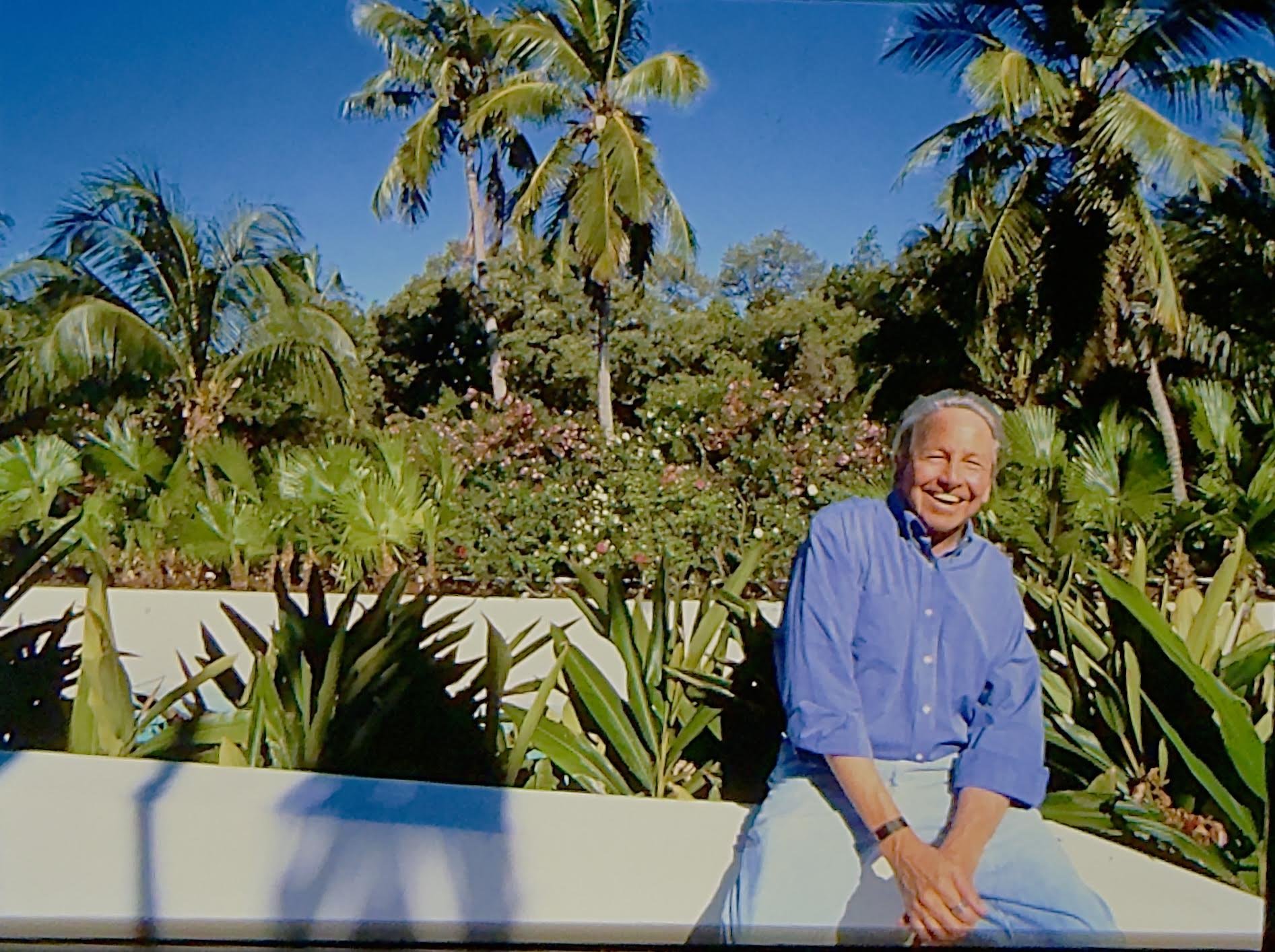
I photographed Robert Rauschenberg four times. Between Captiva, Florida and New York City, Each time he opened the door for me, he would ask, “Again? What was wrong with the last shots?” I would tell him each one was for a different source, that a fresh look was needed.

He had the skin of a child. Burrowing into Bob’s eyes, was like watching a grounded featherless Ribbon-tailed astrapia:  The beauty and trappings of an adorned human being. He was a man from space who embraced the entirety of the known and unknown universe. It was  both literal and imagined. He dreamed of being a bird in constant flight. His mind sat atop a child’s Radio Flyer wagon, as if he was the logo racing among the universes’ planets. Until the day he passed, he remained an intoxicating, purposeful Shakespearean Puck, a living  Child-Man. 

The most important sliver of Robert Rauschenberg’s legacy that you or any need to know, is he was a preternatural, extra-human being. His laugh remains. He was the carpe diem ambassador to this planet; “seize the day” was his calling card: He bellowed in front of any mirror that allowed a shy man to announce, “I am him, he is I,” His presence can still be heard in every room he graced.

Five-hundred years ago, Leonardo da Vinci was the  master of just about everything. Robert Rauschenberg, was not. But he did engage in as much as time would allow. He Imagined the origins of flight, the entire vocabulary of creative  possibilities. He was an artist bound in constant stimulus for entertaining any and all ideas on the table.

It is easy to imagine that in mind and view, Edgar Rice Burrough’s Tarzan, Rudyard Kiplings’s The Jungle Book, Siegel and Shuster’s Superman, Arthur  C. Clarke and Stanley Kubrick’s 2001: A Space Odyssey’s The Star Child all clustered and wafted near Rauschenberg’s mind- with hope driving the wish for possibilities to come true.

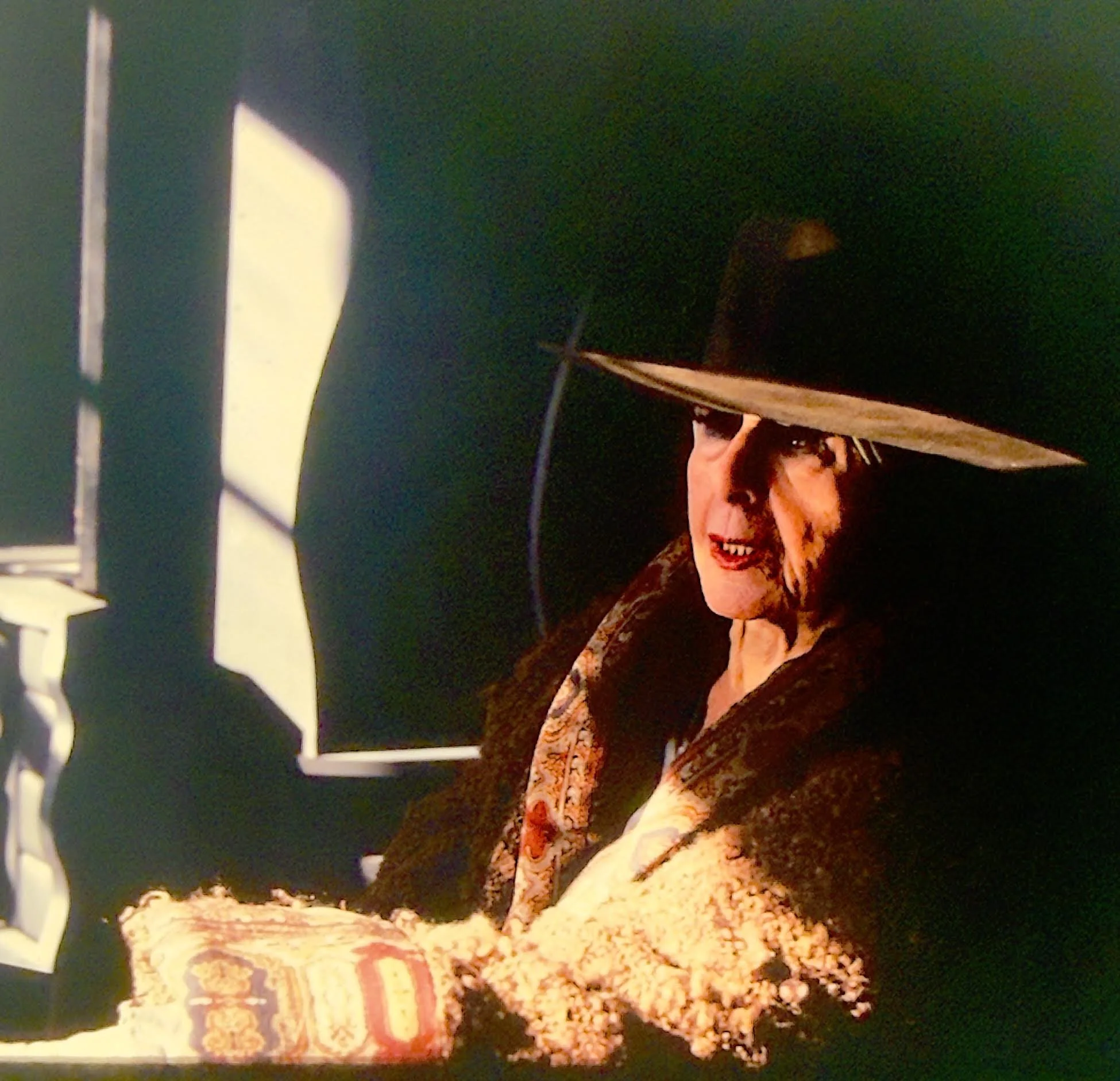
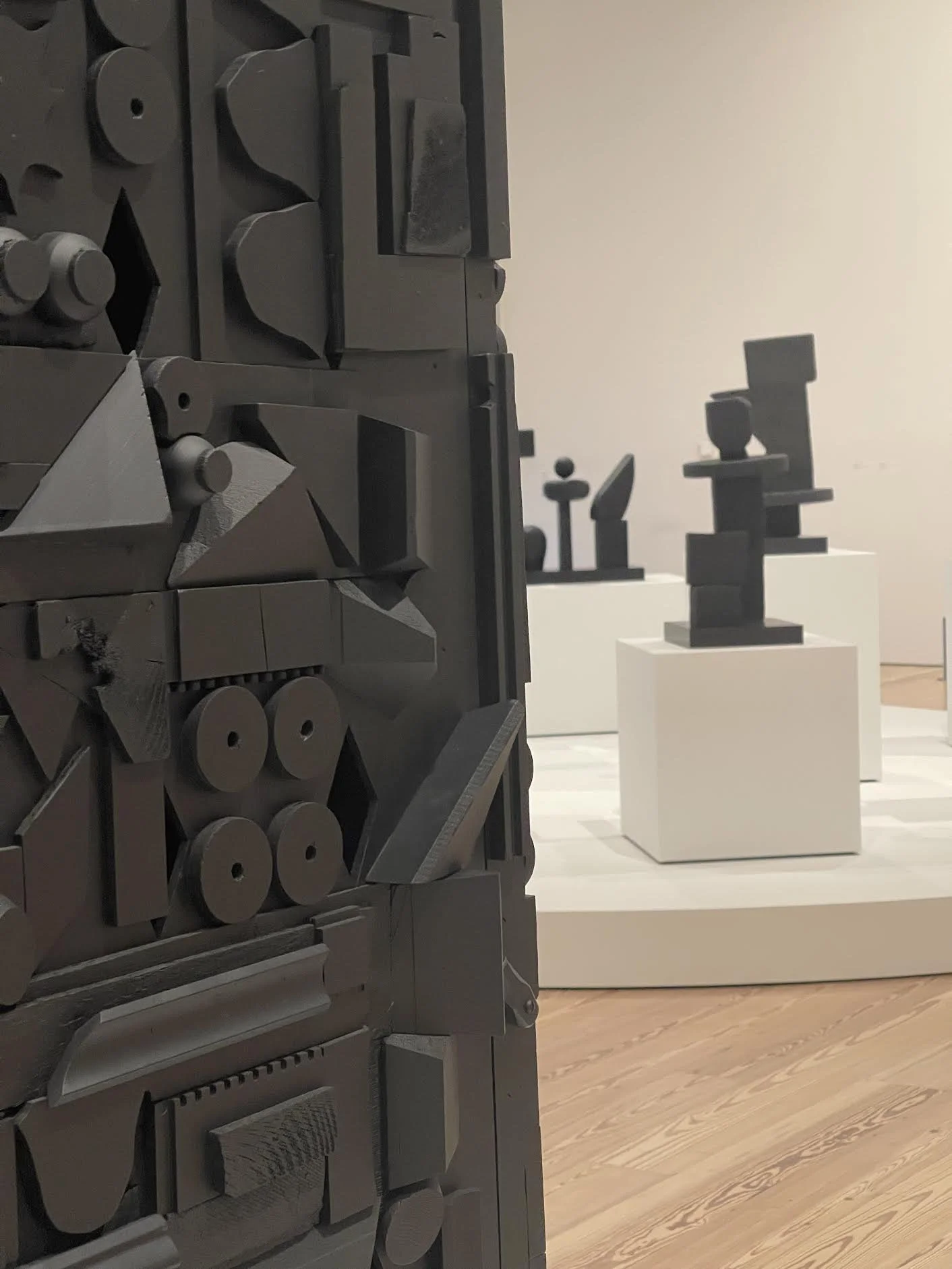
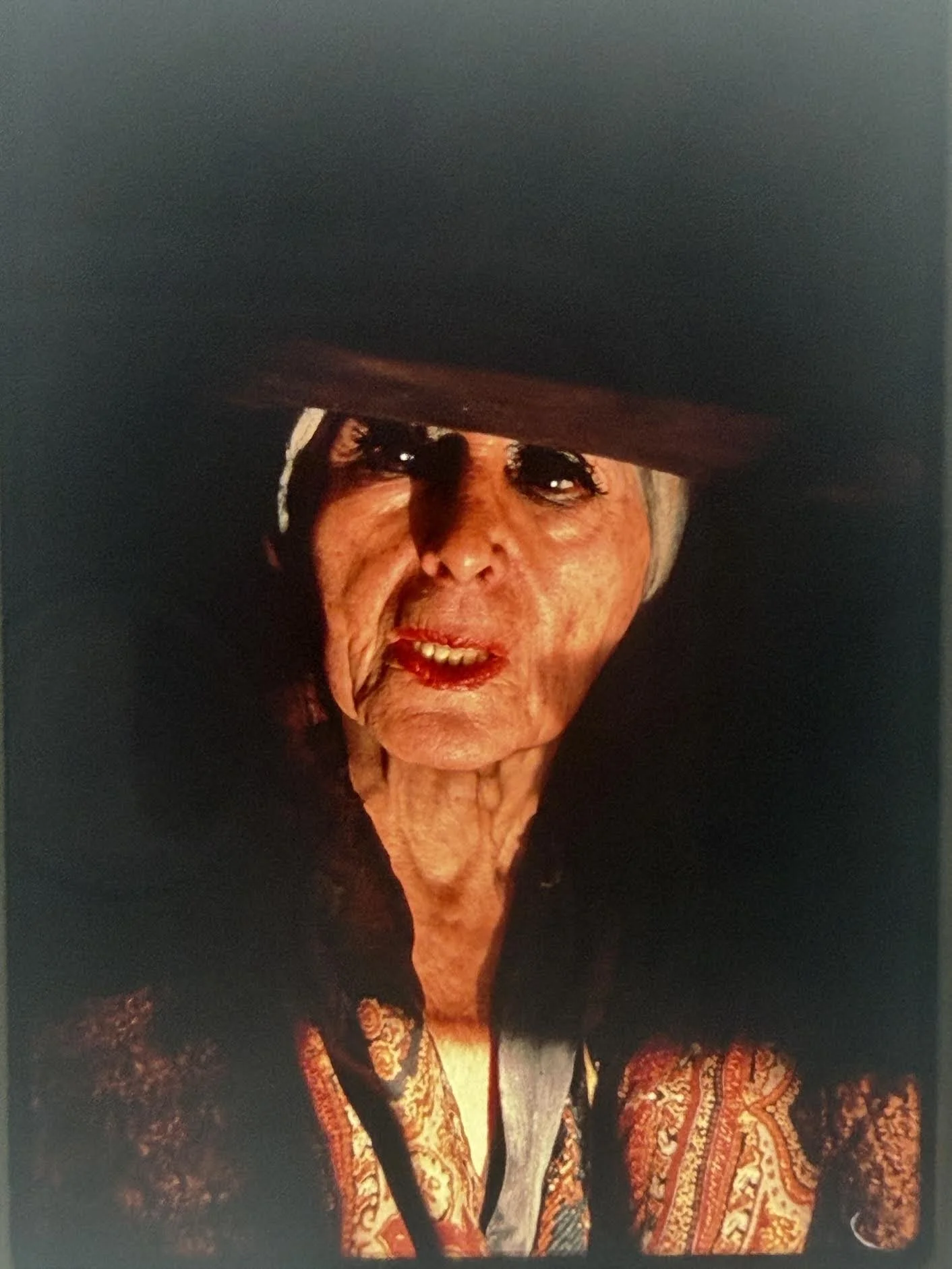
Do I exaggerate? Yes, I do. I have had many inspirational moments with art world luminaries of another era: Willem de Kooning, Jasper Johns, Clement Greenberg, Louise Nevelson and Leo Castelli all come to mind. The real deals are illuminating and intoxicating. During my portrait sessions, witnessing  a single person exposing his anticipations and reflecting on accomplishments can sound like grandiose fiction. To see clearly what needed to be exposed, I would flex my reflex cameras, alternating between my 35mm and 6x7 formats.

The world Bob voiced in articulated slur was profound on levels I had not yet experienced. The hours and days I spent with him were not enough, yet my camera effortlessly shuttered. These portraits of people in stratospheres far above mine, remind me  of a gaze in recline from one and any planetarium. The facts lie naked in the skies.

On the morning of the Robert Rauschenberg Retrospective at the Guggenheim Museum, I stood in the  rotunda. The renowned art curator Walter Hopps  placed his arm around me and whispered,

“Catch Robert before he flies away.” The memory holds a touch of the sublime. In that moment a flood a memories danced.

Whatever hindsight is worth, I thought  Bob was past the age of expiration in art history: Who knew he was then and everyday following embarking on new flights for the mind? His creative forces just wouldn’t die. For someone like him the gates were opened each and every day. It was an amazing coming-of-age lesson. To see, in real-time, four episodes of my own career captured in single frames, all taking place in a bit more than a decade and a half. Each session challenged my eyes elevated the cameras’ needs.

Looking back today and every day, I see it like a piano student repeating the keys of “Chopsticks” against the sky: lessons to understand, and grasp the basics of the camera and move on.

Robert Rauschenberg, the shy, prodigious boy who could have been born in a pollinator garden on any planet and still found a canvas to make his mark shared with me hours across days, and days throughout the years.


Remembering Artists from Another Time: Henry Moore

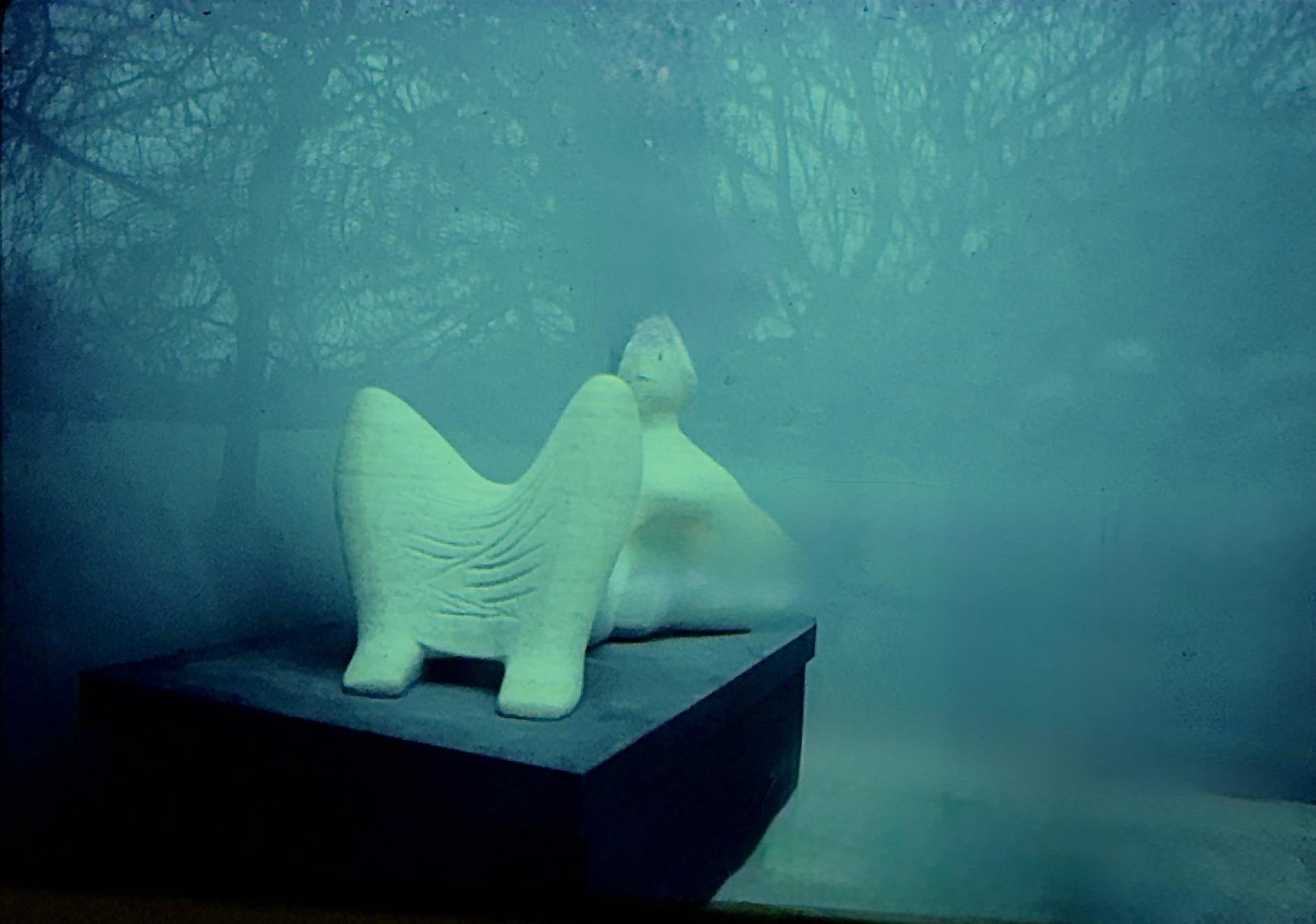
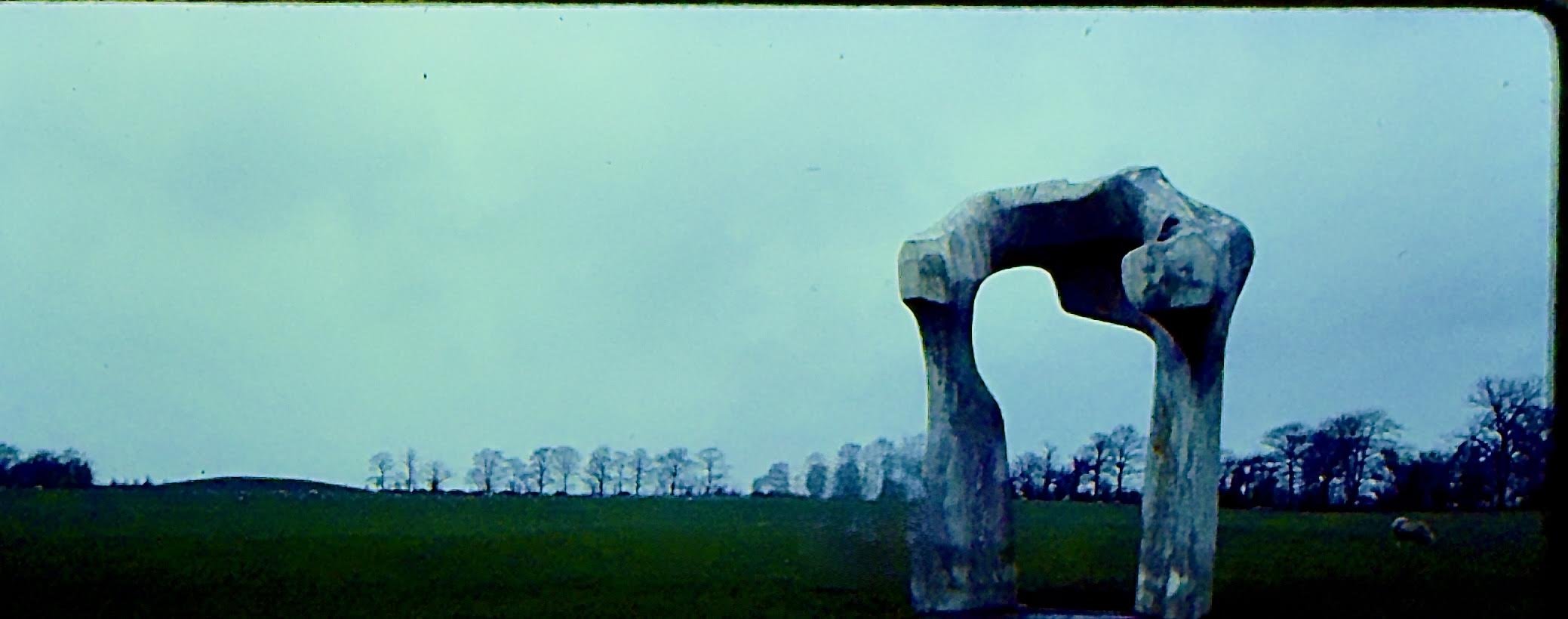
A sculpture on Henry Moore’s property

Truthful Fictions

Truthful Fictions are my cultural phantasms: one day is better than another, and the end of one day leads into the next.

At a very young age in a matter of seconds, I was the man who fell to earth.

Whispers were summoned:  Above the grass like elfin neighbors of nature, we walked abreast into those incandescent sounds. Two minds with diverging interests and destinations motoring forward. Like in life we didn’t hold hands. We didn’t look at each other. We maintained our steps in the grass.

The unmistakable  from nearby kingdoms aired like a united coalition of Christian choirs in melodious songs. The King’s and Queen’s United Kingdom called out. The twentieth-century icon heard his nation’s entreaties: Accented histories, “The Sylvan land, The Cluain land, The Coill land, The Bonnie, The hint of Cynefin.” The artist Henry Moore, would not have wanted it another way. The land enveloped the Kingdoms’ history of sights and sounds.

Alone with my memory, I can still recall the blackness of the camera shutter curtain sliding at least once. Prose written by the philosophical and the romantic walked the land centuries before Henry Moore and Richard Schulman. For those who toed the lines, the blades of grass painted words above and below for the pastorally inclined to wade through. What did  the  centuries behind  look like to me? What were the paths of thought, romance and fictional prose hidden in plain sight?

There were birds of foreign heritages. Flocks of many petitioned our stroll invasively. We moved in quiet mode. I remember hearing the echoes reverberating in my single frame. I did not intend to poeticize the moment nor the day, yet there we were, two men separated by a slew of decades. It was truthful fiction motivating my sight to see what may be here in there. I needed to account for a setup of each new frame.

That day’s memory would never be repeated nor reenacted in my time. I felt like a character in writings I palpably remembered. There was a topographical, lyrical, and evocative blending of nature’s precision.

My long strides moved to synchronize with the little man aside. He had so many lives to share, stories to share. He joined the moment like no other had or ever would.  

At twenty-something I was afraid for what I was supposed to do. The black shutter curtain lifted, sat again, and maybe moved one more time. It is incredibly fast but I prefer a slow methodical motion to appreciate what the camera might have seen. An inviting language can be heard: It is the beautiful elegance of grassland posing as a kingdom in the United Kingdom.

2: I made an image as I stood on my toes as a dancer in soft shoes. The frame was a Kodachrome celluloid 35mm, sized 36mm by 24mm. Maybe it was closer to 1.42 inches x 0.94 inches. I was walking on Henry Moore’s countryside. I played the Neil Young lyrics in my mind over and over. ‘Old man, look at my life, I’m a lot like you were, Old man, look at my life, I’m a lot like you were.’—Neil Young

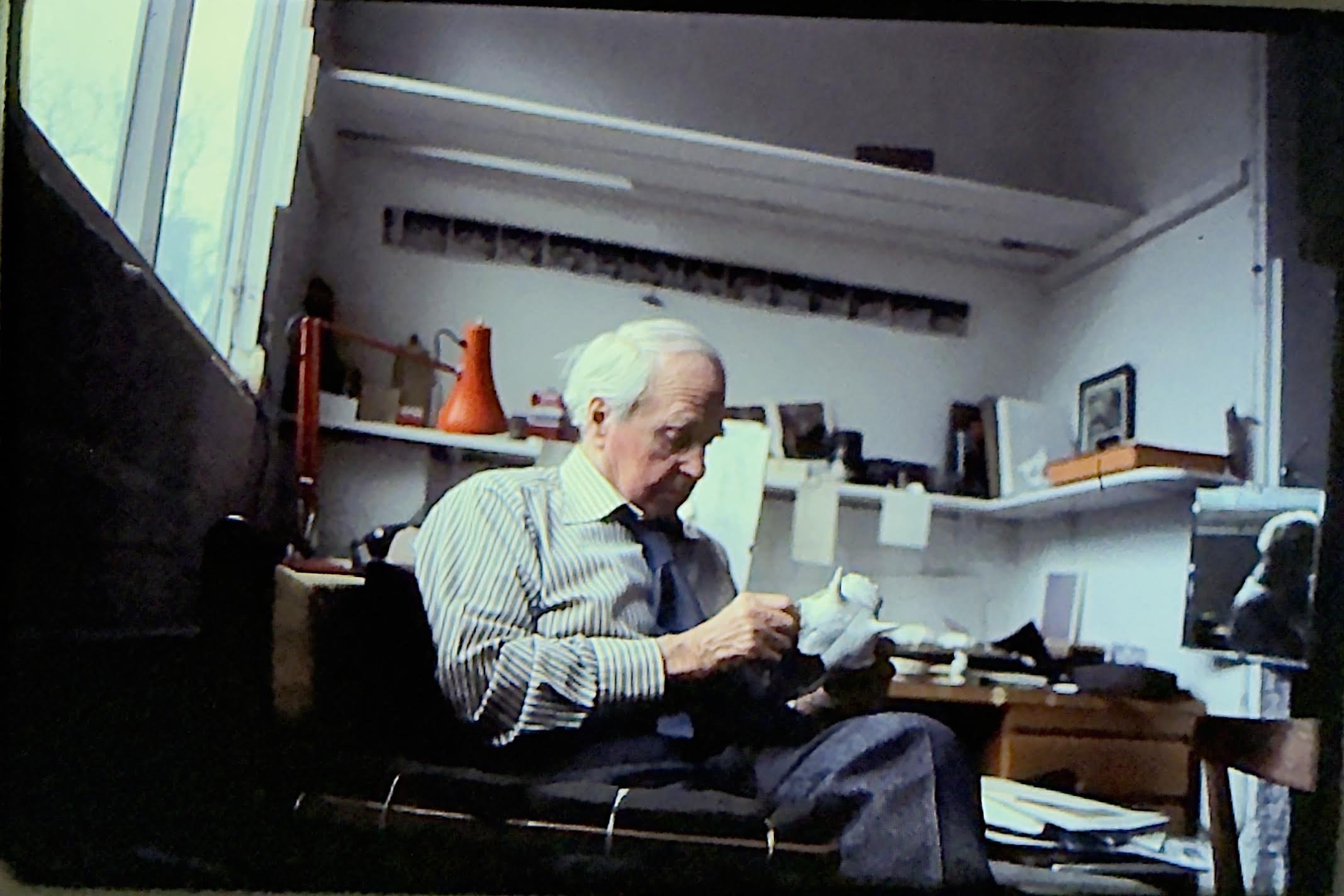
Henry Moore Sketching

Henry Moore one of the finest names in 20th century art led me to places I will never know again.

In a significant way, there was just this old man almost sixty years my senior in step with me… but he wasn’t just my old man. He was a brilliant self-appointed rascal. King and country foremost in his mind.

When I first shook the hands of this giant little man, it was at a table of many for lunch.

He was art history. The moment was like an alchemical fix: my endorphins and adrenaline mixed, and stirred  hallucinating imaginations. I was instantly celebrating  being in Lewis Carroll’s Alice in Wonderland — Beatrice Potter’s, Br’er Rabbit. The image of the rabbit holding the skirt of Alice was not real. I was a very young photographer iris to iris with a storied figure in 20th-century art. Why wouldn’t fiction become reality, reality seem fictitious?

Talking among many at a lunch in my honor, the prickly huff-and-puff Englishman didn’t quite enjoy the attentions directed elsewhere: It might have been something to do with my admiring comment about Richard Attenborough’s great Gandhi film. I was not prepared for a loyalist in the room. Certainly that was my mistake not to be able to read political passions. I figured it out quickly when the great artist walked away from the table, leaving me to commune with nature and mingle with the sheep-like homesteaders who watched my gait with a healthy laughter. It was okay to be left alone in transcendental fields of grass.

I knew Moore was headed back to his studio. I wondered if there was a remnant of his fabulous World War 2 Underground sketches: the penciled work that made me tear when I first saw them.

I caught up with him at his studio. I watched him sketch. I watched him knowing he was a reminder of an era not mine. This was Henry Moore knowingly or not rehearsing for a close-up with my camera. All I could see was a surrealist idea of an artist making lovely work with a pencil in hand.

I had a pocketful of assorted ology’s to keep me thoughtful in this moment. I have always traveled with something to think about more than a single photograph. I conjured a few gems to help me focus on what I knew what the camera may discover. Roger Fenton’s Rievaulx Abbey, and the Bisson Frères Portal of Saint-Ursin, Bourges often remind me of the heights of visual captures I will never equal. Oh, but the joy of hearing the black shutter curtain snap is the prodigious sound that keeps me alive.


Remembering Artists from Another Time: Ellsworth Kelly

Artist Ellsworth Kelly

Truthful Fictions

The camera cannot miss the words that are destined to arrive. Intoxicated by a hint of the fantastical,

and the voices of seminal artists, I placed my camera in a space of time. I discovered the demands of connecting dates and places within a revolution of continuous art history. How remiss would the camera have been to not advance, frame after frame, like a reconnaissance sniper in the naked woods.

My camera hears secrets. Thousands have posed before and will after this day.

Artists of various generations have been influenced by many; in a similar manner, many have been influenced by those generations. I was never photographing just one person. I was attempting to photograph every voice associated with the entire DNA of modern art in a single frame.

It was like a witch’s brew—a promise that night will follow day, and the morning will become night. When I visit the studios of most artists I am invariably invited to see more than I previously knew. 

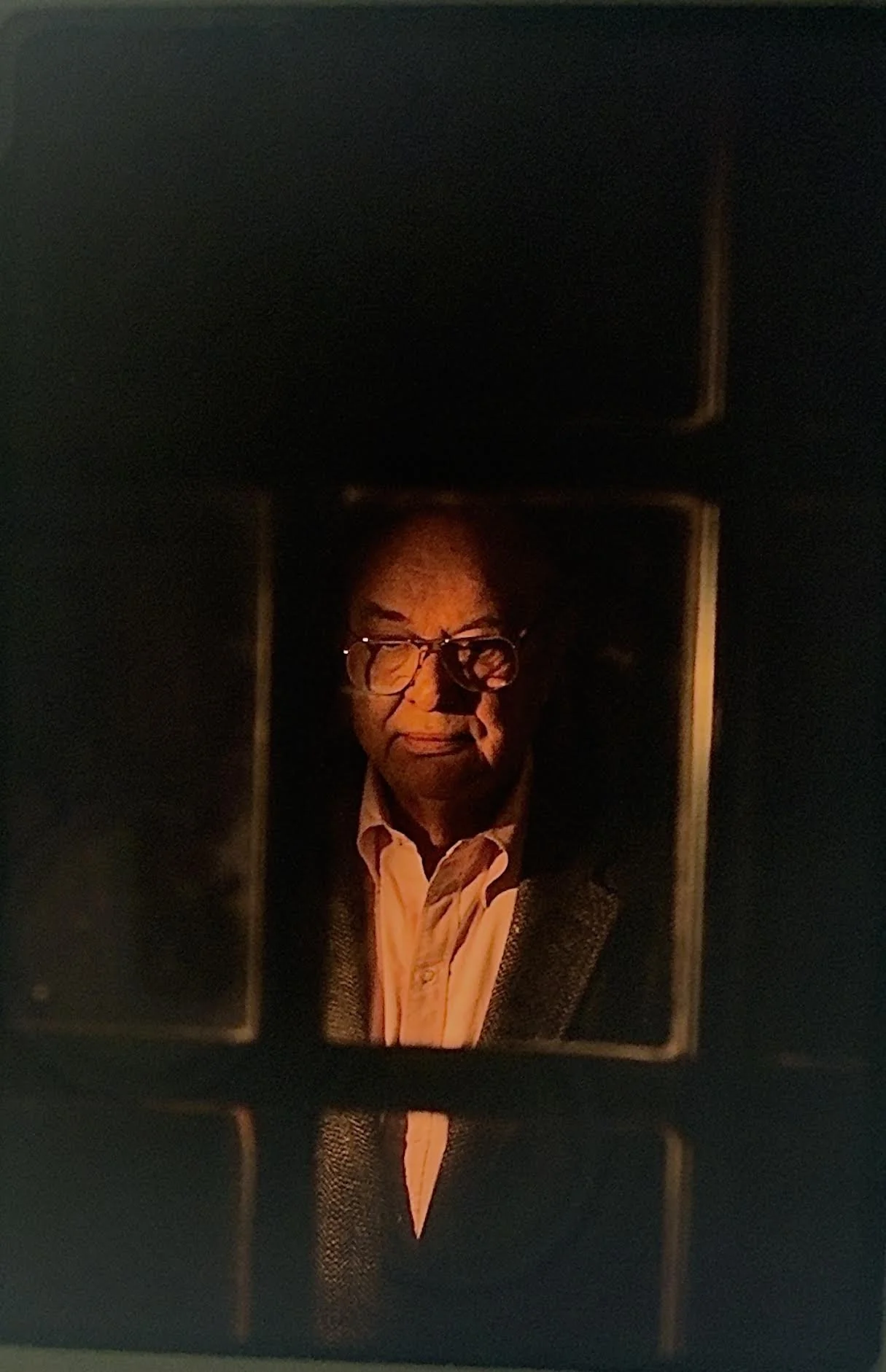
The artist Ellsworth Kelly welcomed me into his home, then, with great care, took me by the arm. He turned me around and we walked the land like two characters out of Rølvaag’s Giants in the Earth. 

The artists’ hands pointed the way, and touched the wind. I followed this aged man ageless stroller across his grounds, and property in silence. He shared a few words before we paused in our reflections…

For a brief glimpse over the artist’s shoulder I saw two men in a mirror (the shape of his works,) the artist, and the man with the camera. I knew we would make a visual memory with the mere shutter heard.

Entering his house and studio reminds me of a visual marriage between the movie Ex Machina with

 Nathaniel Hawthorne’s tome “The House of the Seven Gables”. It was like an exploration of minimalist darkness— eerie and alone, with sounds and ideas lurking behind corners. I was not scared, but a bit frightened of the unknown.

Kelly the artist was like a single thread amidst the tapestry of art history. His work has  become part of the fabric of contemporary art history. If you stare long enough into his canvases you will see the life of a planet; your dreams can carry you wherever you need them to be. You might meet head-on the way we decipher the history of who we are. His vibrant geometrical shapes, spoke to you if you listened. 

He was a mere strand among the finest materials of cloth; woven into the artist’s world.

I realized that after three sessions with Kelly, he and I have changed, and my cameras have changed. What we talk about will be different. In the the spirit of discovery, I have seen the artists’ work in Tokyo, Berlin and countless other cities. The moment is singularly different and the verve felt here is powerful. Red, blue, yellow and other colors hang like drapery offering protection and invitation to imagine.

I remember Emily Pulitzer describing a perfect storm: Ellsworth Kelly and Richard Serra lured Tadao Ando for a meeting of tremendous minds. It was the timelessness of artistic fervor felt in a single frame. I realized my camera had framed each of these people and their works.The story about the conversation that took place to convince Tadao Ando to create the Pulitzer Foundation was like feeling one million fireflies enter any part of the insane brain that is mine. Seeing the entire scope of three giants in one room and Serra and Kelly committing to contribute, was simply inspiring. It was a beautiful story. Three heads of creative prowess together, imagined as I peer into my archives reliving the moments as if I was among them.

Each time I photographed Kelly and waved thank you for the time he shared with me,I envisioned a scenario of death. Each memory  of my portrait sessions, would be a lasting finale. Yet, more was to follow. Fantastical dreams prevailed again and again.


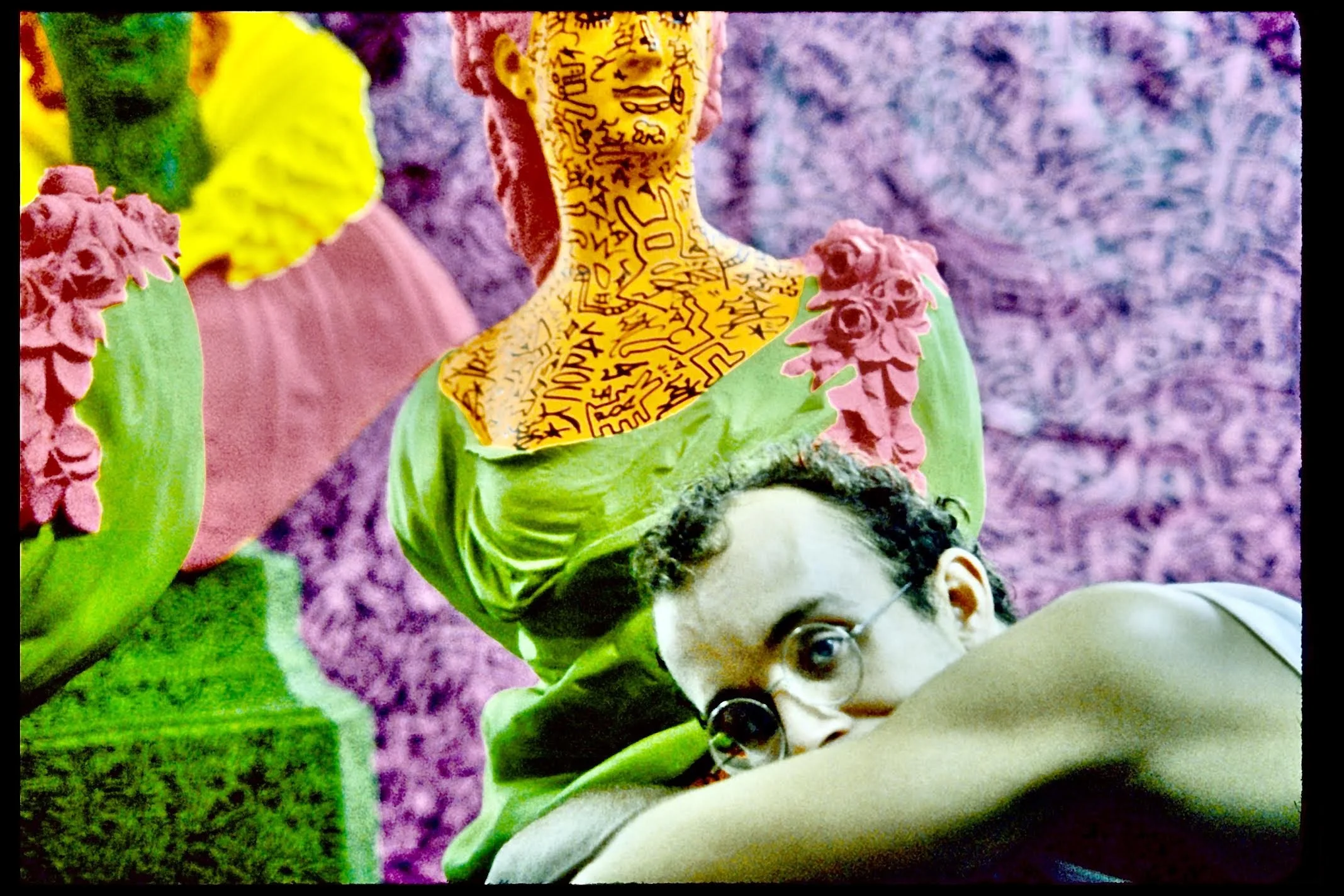
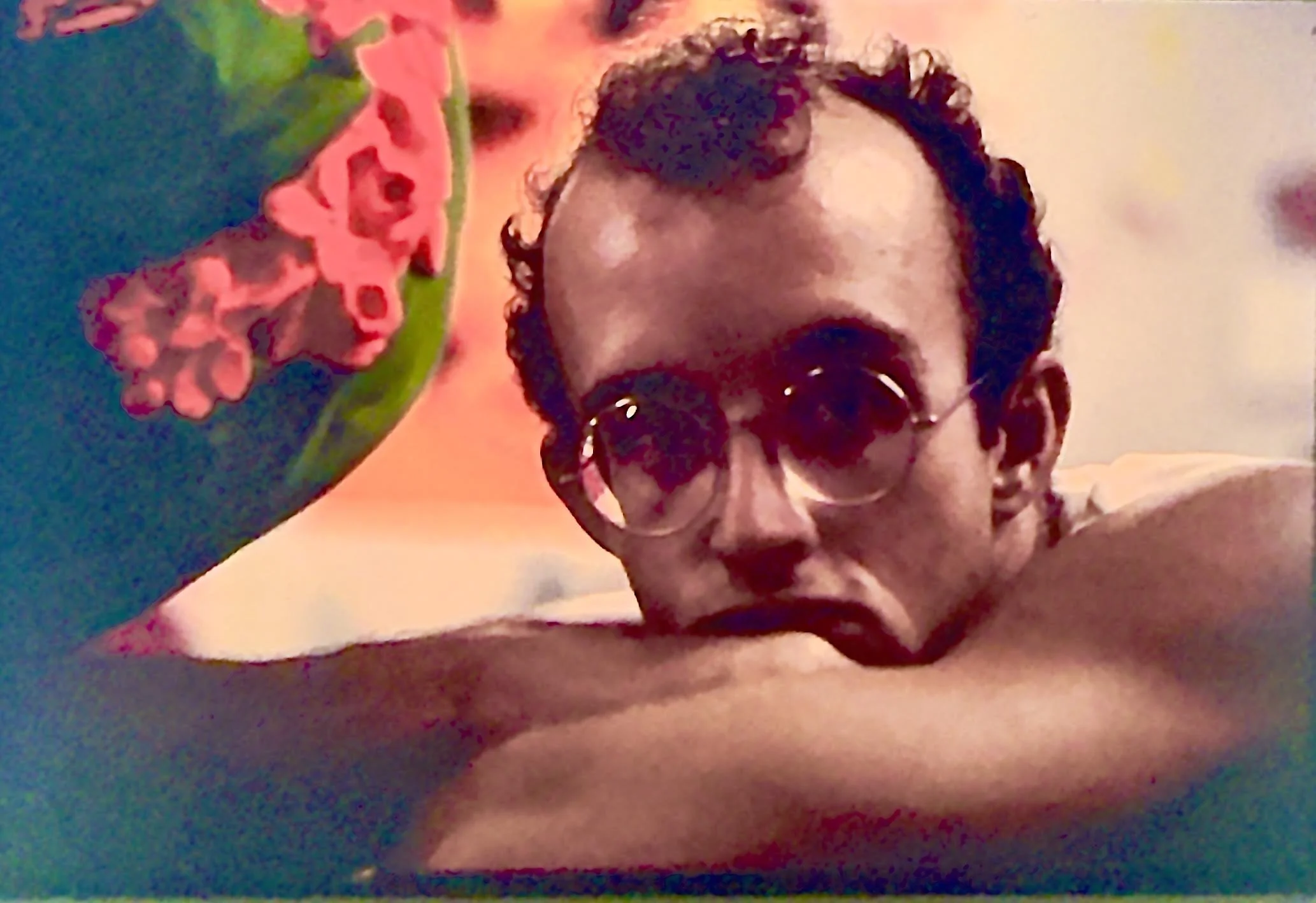
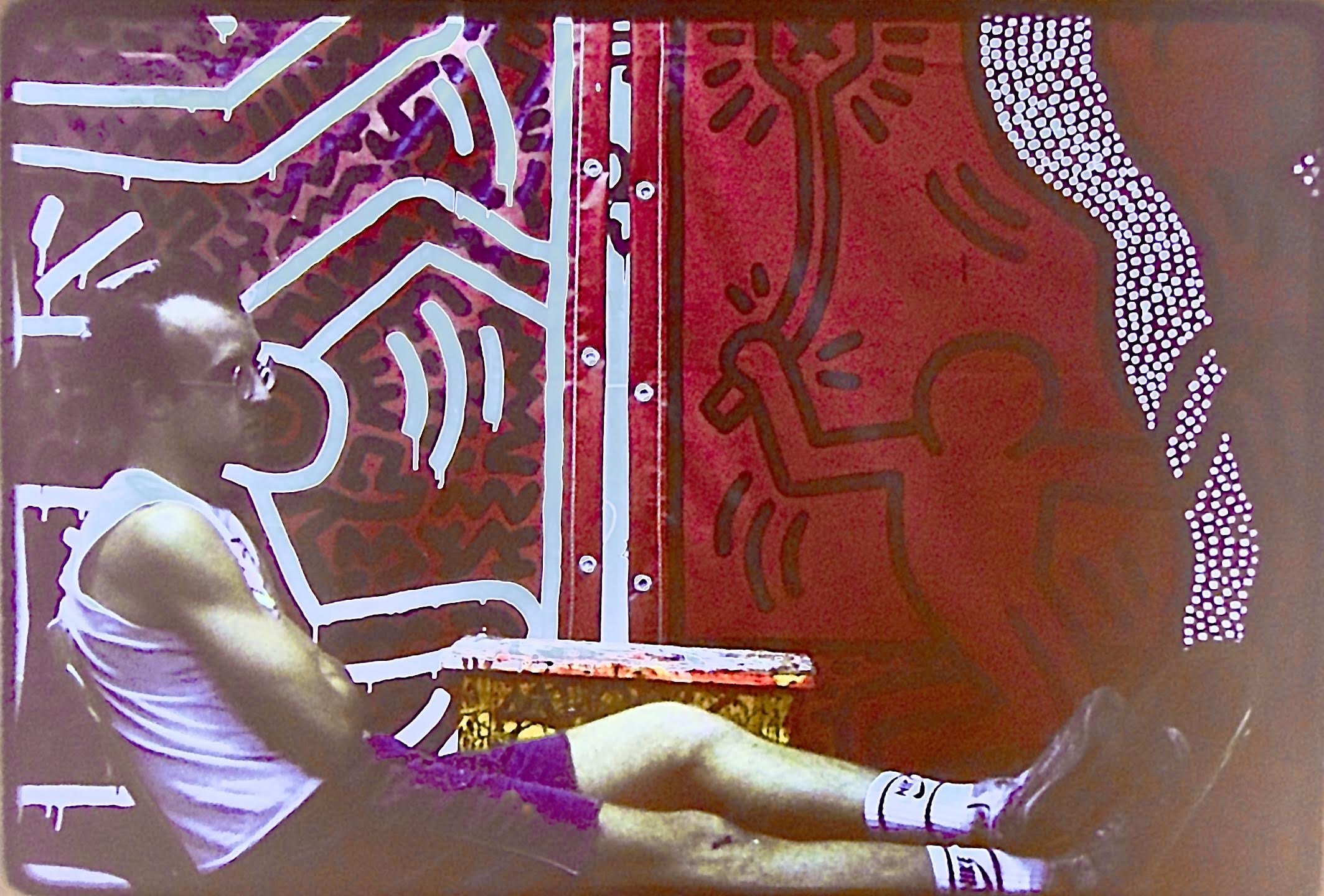
Remembering Artists From Another Time: Keith Haring

Artist Keith Haring

Truthful Fictions

I was driving through one of a thousand urban boulevards in a sapphire blue ‘60s Mustang. Squabbling like wild children, Kurt Vonnegut and Ray Bradbury hitchhiked a ride in my brain. From afar, a squadron of infamous and famous faces materialized like celluloid portraits captured in the tailwinds.

I have always measured a camera’s life in fractions. I have measured the success of my pictures in fractions. Imagine decades of evaluating your happiness in a fraction of a second. I recall similar expanded fractions of time when I have felt like gazing into the eyes of a Caravaggio, a Renoir, or a Giacometti. It has not been my gaze that matters. It is the aura around and inside the eyes that captures my attention in one of those aforementioned fractions. The camera does not hesitate when it sees the light across the seas, atop and in between architecture or just as a dapple of light across Boulevard Haussmann. Everything I see is in fractions.

One day I graduated to large format cameras for two reasons: I was wasting film in 35mm by not utilizing frames efficiently; I wanted more information between the lines in the available resolution. The marginal differences can be tremendous.

I daily have visual conversations with my camera’ lens. They allow me to imagine  what it might be like to exchange ideas between the eyes of the portrait subjects; my own gaze and an audience of one million. We all see what we see, yet consider it differently. To me, this exchange  is the equivalent of a roundtable of oral history-ideas laid out on a table to unite the past, present, and future.

Grand thinkers, grand imaginations like Proust’s and Homer’s come to mind. The worlds they layered before our world are kinds of places I hoped to find while looking through my viewfinder. My personal Jupiter is probably Boswell’s The Life of Johnson. It was Johnson who wrote, "Memory, once interrupted, is not to be recalled... Tradition is but a meteor, which, if it once falls, cannot be rekindled."Boswell’s work is not an oral history either, but a a great account of a man and his times. My mechanical camera  can only capture a fleeting moment before it disappears forever. My camera’s fractions could never equal one of literature’s great tomes. 

Picture-taking is simple, so I try the impossible. I try for the grand and settle for a few musical notes. On a practical level my approach is akin to the musicologist and folklorist John and Alan Lomax, and the Chicagoan, Studs Terkel. My fractions can find a home in the cumulative sense. I never intended to become one of these figures. Documenting diverse places and people wasn’t something I sought to accomplish—it was a ticket to explore and find new adventures. 

Arriving at the studio of Keith Haring, one of the prominent figures of the art world’s zeitgeist. Felt like a perfect pas de deux.

My camera never went to war. It has quietly and actively engaged creatives in their environments. Early on, Keith Haring looked haunted. I am not 100% certain, but he seemed overwhelmed by the fame. I think he also relished how he could twirl his wand and make things happen. So many speak about him as an elfin giant—fragile, much larger than expected. He was one of those people tethered to whispers: “There is Keith.” People look and listen.

As he posed before my camera, I could almost hear his unique patois. It wasn’t a reference to anything cultural, but like a number of famous artists I have photographed, his consonants and vowels seemed to become unique to his presence. 

Keith was photographed by the most famous photographers in the world: portrait, fashion, and popular dilettantes all wanted a moment. When this fragile artist entered the room, one could claim that the zeitgeist had entered. The aura glowed.

The day I shot him, there was a line of known camera guys waiting for their slot. The fragile deer caught in headlights also knew how to exhibit a bit of P. T. Barnum. He created a circus effect, making the commotion seem that much more important. To be photographed four or five times in one day can feel daunting for anybody, but the fragile graffiti artist liked being famous. What I won that day was a concession. The famous artist loved that there was energy about in the hallways. When he faced my lens, it was almost as if he was lending his eyes to share the calm he could not have. But for a tiny fraction of time, he could be Keith from Pennsylvania. 

The studio was filled with the graffiti-animated colors that would be the Haring trademark. One day soon, those canvases and wall murals would be worth millions of dollars. In my mind, one hundred ghosts of portraits in my rearview mirror gave me a bit of enduring confidence. The eyes of fame shone  but were solemn. “Let’s just talk,” he motioned. I cannot possibly know what he shared with the “famous” guys. I do know that the oral history that my camera has captured over time, this was one of a mere few fractions of time where two quiet voices talked about art and artists and only if the day could end with that whisper.

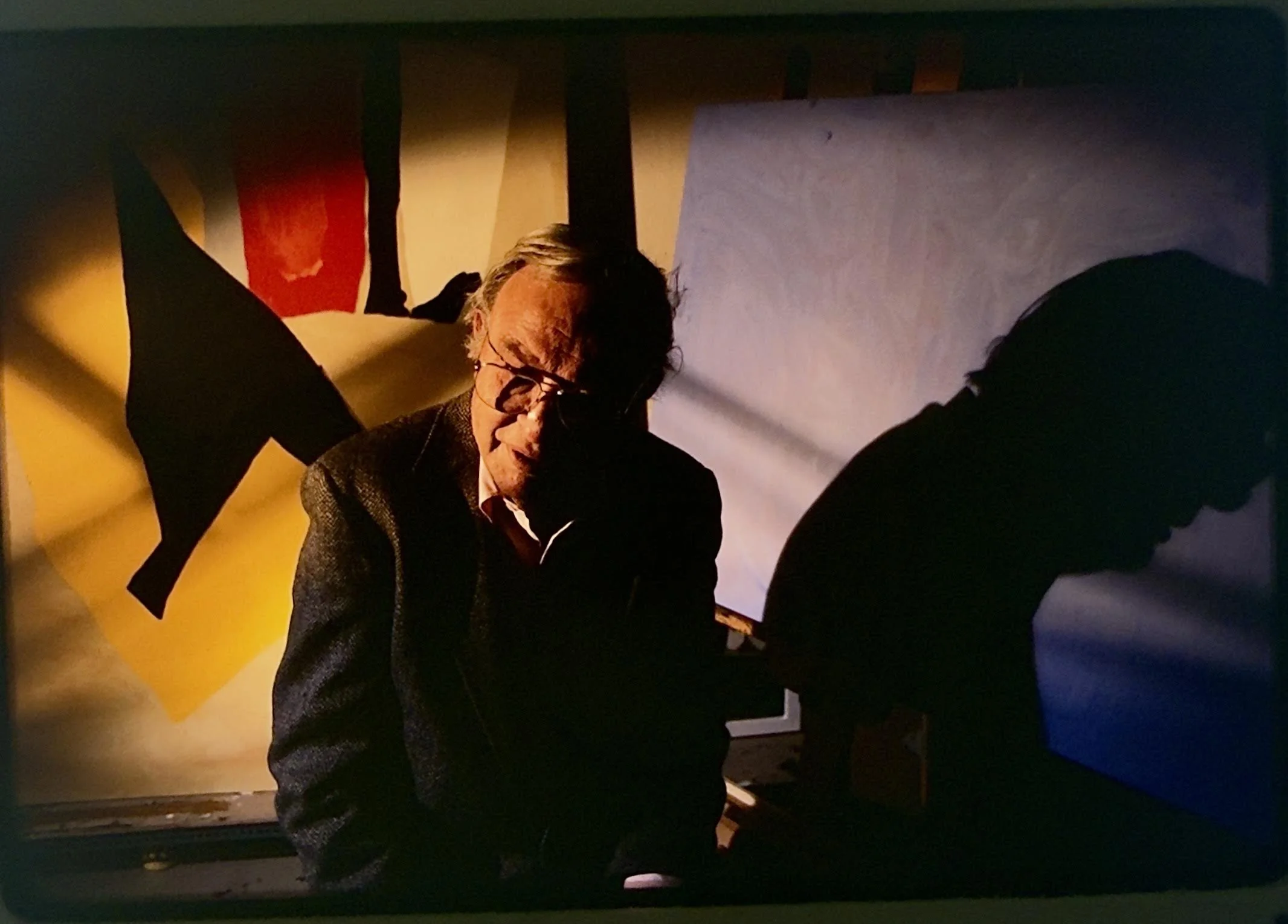
Remembering Artists From Another Time: Robert Motherwell

Artist Robert Motherwell

Truthful Fictions

I have gazed into the lions’ eyes; the eyes of the Tsavo lions from Kenya, and the  stone Lion of Lucerne have returned the gaze. I discovered a ferocious, stoic presence within those eyes.

Gazing into a canvas of art is like entering a palace of changelings. The best of applied art invokes limitless dreams through a window of unfathomable beauty. A world history of canvases reminds us that we are never truly alone.

I gazed into the eyes of a 25-foot reticulated python, caressing her neck once or twice as she returned my gaze. I have shaken the hands of Hollywood’s Golden Age, and they gazed back in return. I have gazed into the temples of art  greatness-Noguchi and de Kooning come to mind. I have walked in the corridors and communities of art history, visiting nearly 1000 artists’ studios, and nearly 100 museums. Faces come at me like ghosts in the daylight. I remember them like the card game War: a game that is not strategically complicated. You flip one towards your opponent, and impatiently wait for the challenging return. My archives house the lives of so many ghosts. 

I have experienced a good number of “infectious trifectas”-artists I have photographed three separate times, including Kelly, Lichtenstein, Johns, Botero, Rauschenberg and more. Returning to these  familiar landscapes is exhilarating; sometimes a mere few hours becomes a reverie of artful, soulful moments. 

The artist Robert Motherwell was waiting for me in his studio. Crossing that threshold  was like stepping into a giant diorama. I was the shapeshifter straddling  generational worlds that separate ages and movements. My brain became the ball in an arcade pinball game, bouncing from a young burgeoning Keith Haring to Robert Motherwell-from emerging Graffiti art back in time to Abstract Expressionism and Surrealism. Historical entries appeared in my illusory imagining walking with giants.

Artist Robert Motherwell

Robert Motherwell was older than I imagined. Through my cameras’ captures a living embodiment of twentieth-century art history greeted me. in one of two guises: ”Let’s get this over with, or, let’s talk and enjoy the meeting of our decidedly divided ages ”. Fortunately for me, three or so hours flew by.

Just about every artist I met started the conversations with, “I hear you photographed Bill de Kooning”. I knew then that it was a generous calling card. From there, no question whether inane or curious was inappropriate. So after the de Kooning briefing and a few niceties, the great artist took me by the shoulder and escorted me around the studio without a word spoken. I felt as though i was navigating a parallax view. The world and my eyes shifted with different curious pronouncements happening as one.

I spotted a reproduction of his Elegies series. I saw a black painting that reminded me of a Sargent’s Spanish Flamenco series. I asked about the influences. He said, “Maybe we should sit for a while.” He started by saying , “I thought you came here to shoot my portrait.” The Motherwell monologue after that was a great series of run-on sentences.

He spoke about familiar stories-the damnation of being forced to emulate Cezanne in art school. He whispered with eyes looking in many directions, that he might have at times had Sargent in his mind. Then we shifted the conversation to his friendships and my art world captures. We had Kenneth Noland, Helen Frankenthaler, Matta, Clement Greenberg in common. Though as we danced in periods of commonality, we touched on Ernst, Dali, de Kooning and ten more. The hours were a class symposium on thrills and  more.

He looked at his watch and I knew a good time, a great education was nearing the finish line…so I began to shoot.

Some artists live their lives in three stages: small and intimate spaces; large spaces to create a larger identity; and a less imposing space that tethers the future and the past. Motherwell in this immense carriage house was in the “tethering” phase-a tremendous home, and an intimate serenade to the past and what may be the future. Connecticut was not Paris or New York. As I caressed his paintings, I felt a dance come over me. Maybe a Maypole, yet a jig nonetheless. Round and round we go, dancing on the moments of space and time. My time will never have a fixed place in history; from near and far it appears like a tiny ball of yarn, unraveling pieces of my history. The passionate sharing between two generations seems quite sumptuous in hindsight.

Artist Robert Motherwell

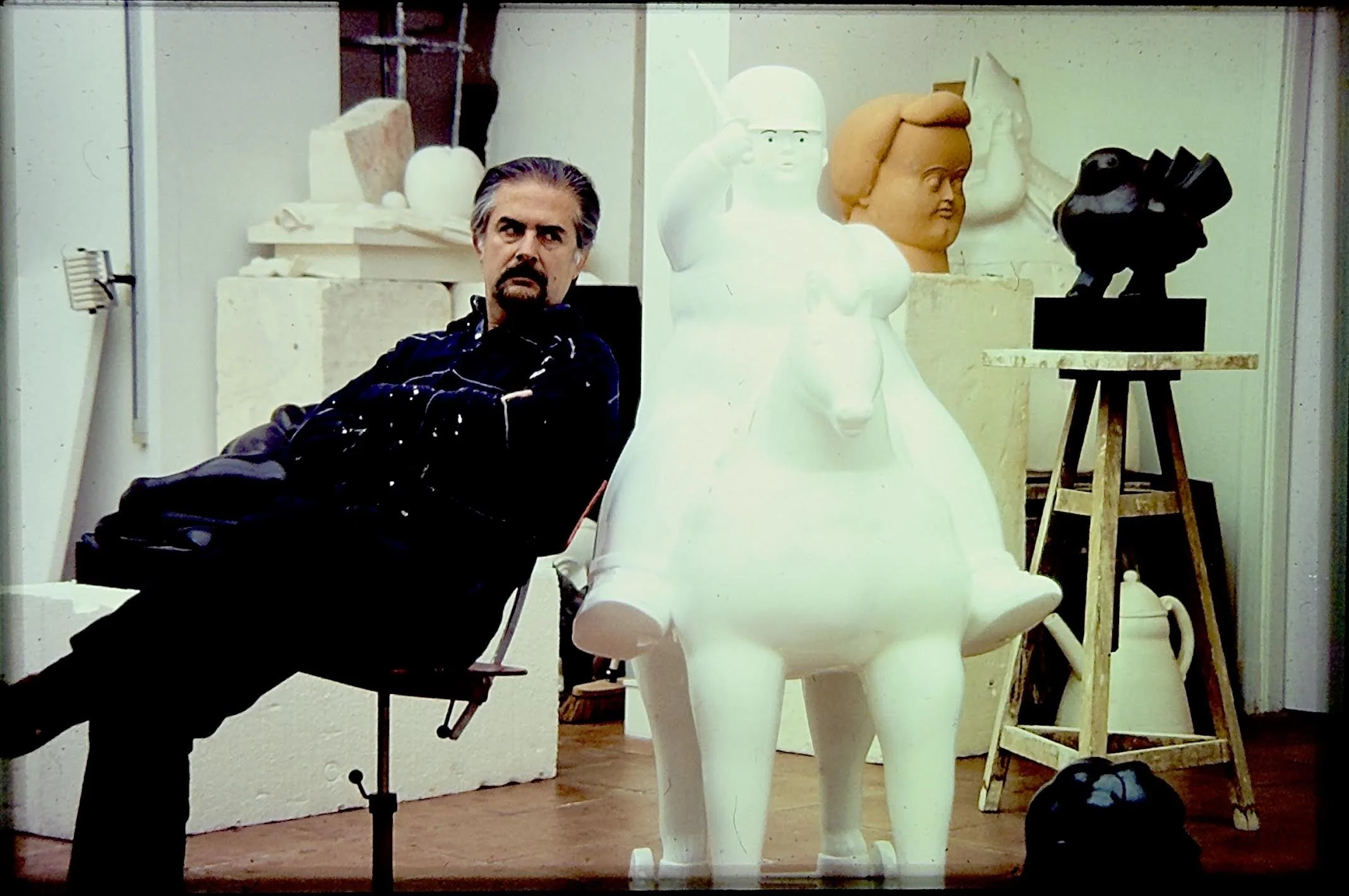
Remembering Artists from Another Time: Fernando Botero

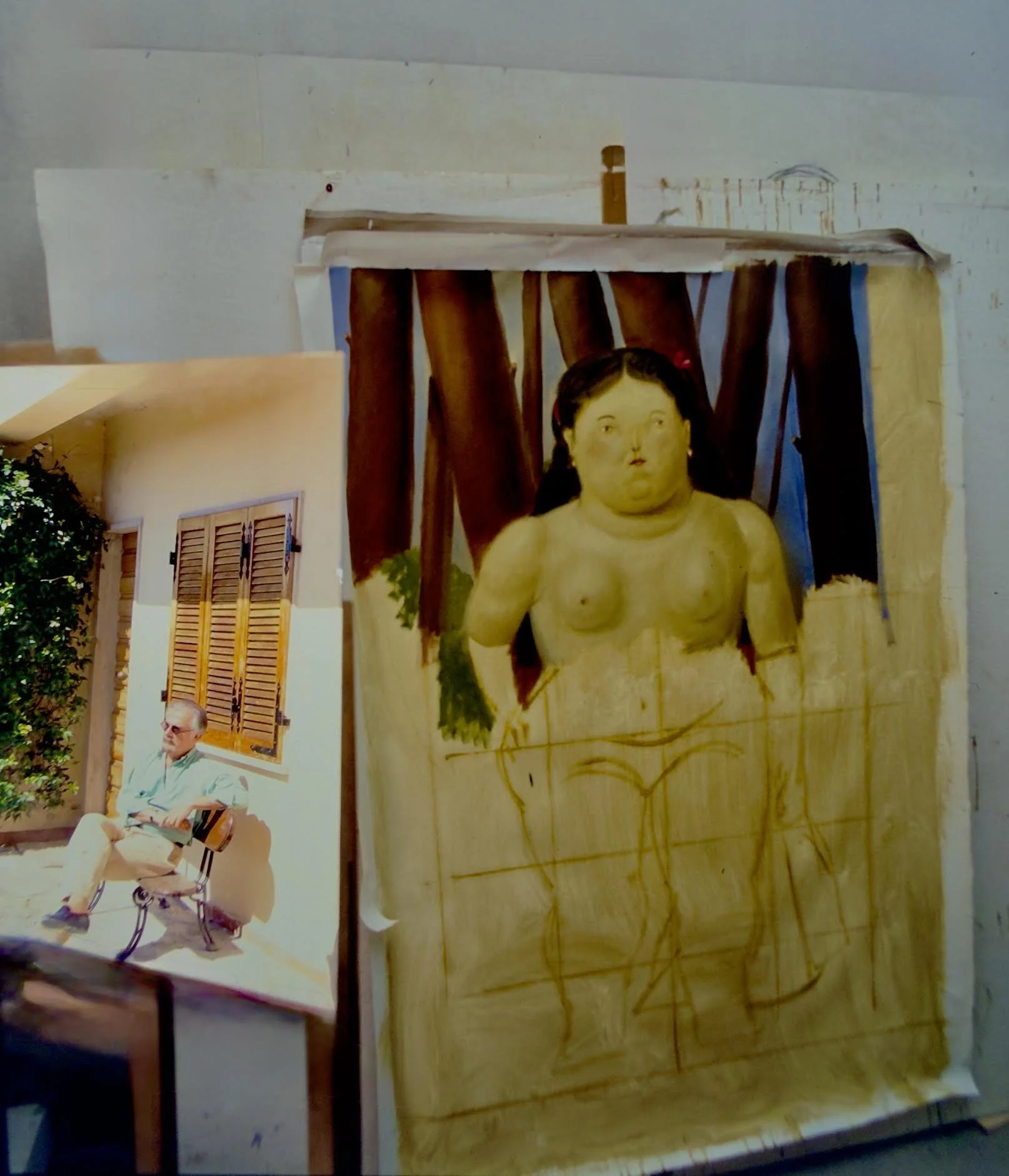
Artist Fernando Botero in his studio: Pietrasanta, Italy

Truthful Fictions

There are three lines drawn in the sand. The wind blows, the lines scatter in the wind. Nature observes the fragile agreement. What will time remember? Maybe the transience of time and space.

“Will the wind remember

The names it has blown in the past?” — Jimi Hendrix

I merely urged my camera to explore the celluloid possibilities. I needed the adventure. I needed to cross boundaries in time and space. I needed to know what might be seen if I ventured across the dare. There is a purpose I imagine every day. If I cross over the line, a new discovery will be ahead. 

    I saw the great cannon in Jacques Offenbach’s operetta, “A Trip to the Moon”. An  adaptation of Jules Verne’s  “From Earth to the Moon”. In one morning witnessed nature’s ethereally hallucinogenic stark skyline, a whiteness of naked swans caressing Earth’s contours. I stood with photographer Edward Curtis and Director John Ford. The movie, The Searchers, played in my mind. John Wayne’s Ethan Edwards crossed the open plains of Monument Valley. 

 I spun the ideas, as if they were in my mind multicolored crinkled cellophane. I rotated my eyes, raised multiple cameras, and fired a single shutter speed as if into a Rubik’s Cube of all three imagined stories. I know the visual highlights were inviting me to seek what the other side had to offer. The necessary beauty of living.

    Fernando Botero, the Colombian artist, posed for me. The first time, he was like my Melville’s whale. There was always a whale of particular proportions in my scopes. I have met Botero in five or seven cities. In each city he greeted me as if I was the most important person in the room. When he extended his hand in friendship, I easily in mind recalled his friendship with Willem de Kooning: Botero described that moment as two artists from separate worlds with one idea in common. Art.

The success he built was celebrated by many. The man, the artist in my presence never walked with airs. It was his pleasure to take me by the hand. In my  imagined pirouette, ask me how I like what I see, how do I see his art.

It is impossible to define why my experience in one city was more entertaining than another. If I had to make a difficult choice I would say the Italian city Pietrasanta would be the winner.

Before I photographed his portrait, he invited me for a drive. He picked me up at my hotel and with not a word from me, he whole heartedly shared how happy he was to be in the car not touring but two people along for a ride from the small charm of one city to what I would consider the grand stories from Carrara Italy: The days from Michelangelo and the reminiscing of “The David” and more.

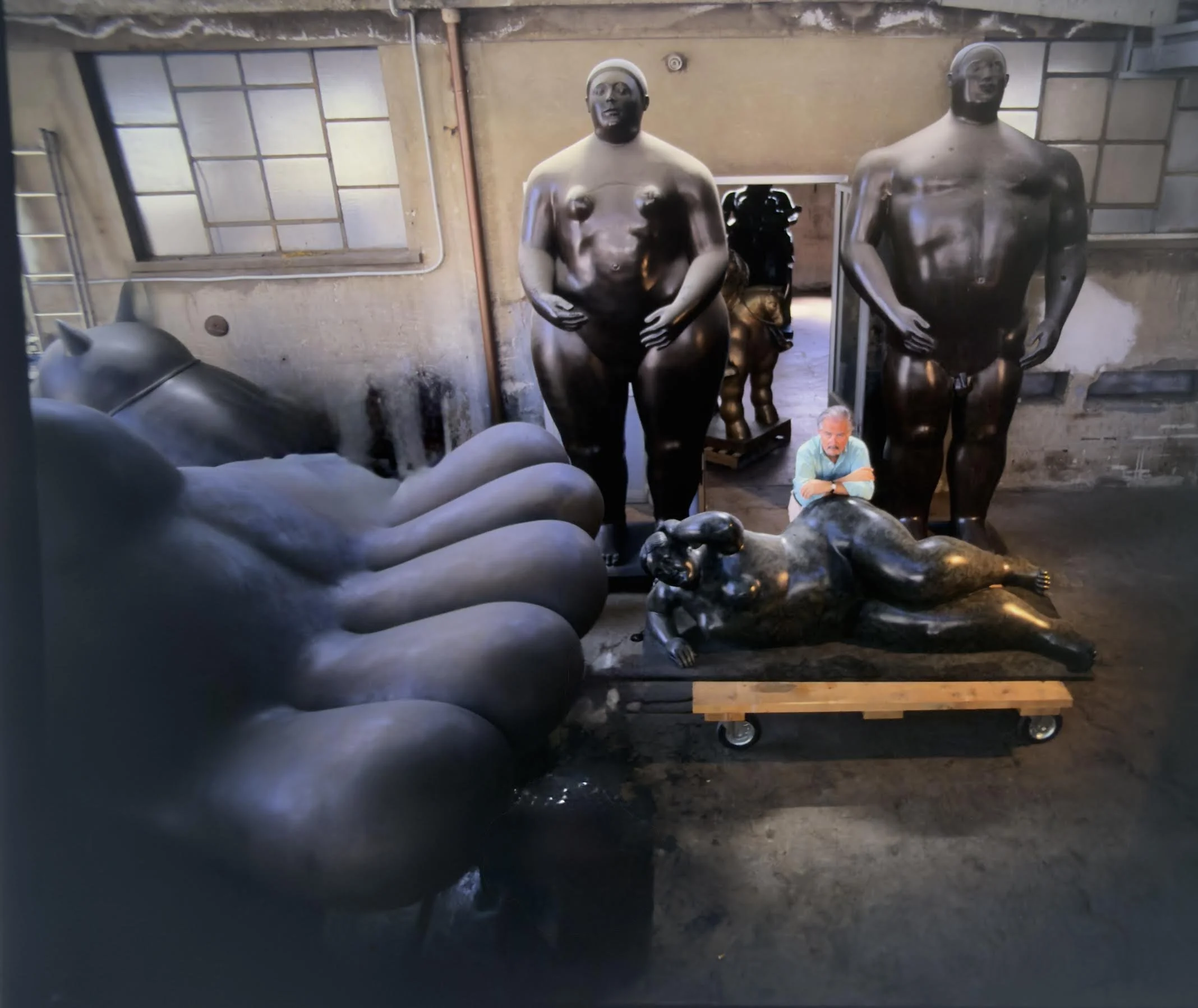
Botero in the Carrara Foundry shared at one time with Michelangelo

To like art, to love centuries of art in a moment. To feel you were sitting with DNA from Michelangelo to the contemporary Botero. Five or six of us had an impromptu picnic. To sit at a table with the stone carvers. To engage in broken English with the people who made marble dreams realized was my ”wow” factor.

A millennium of sculpture was born where I sat. Davids to my left, Boteros afar in the foundry. A wall (like an auto mechanics shop)  of magazine porn in every other direction. A slightly embarrassed photographer enjoyed the visuals.

After a few congenial snaps of the artist in his sculpture environment, Botero said, “andiamo”. 

We returned to his home atop a mountain bluff shaped like a cocked hat. It seemed that Botero led the troops in this small craftsman’s town of Pietrasanta. He was here, equally Caesar and Spartacus.

The portraits at his villa were like framing stills for the cinema. The artist and his work, the physical gestures with brush and paint. I felt I was a marauder wielding my camera equipment. I felt I was a guest. I felt I participated in the creative process. I was in a portal of discovery—a time machine.  For centuries Italy has embraced the burden of beasts who wanted to live as artists. These beasts live in her past and present. Fernando Botero is such a beast.

I could in memory clearly see the lines in the sands. There was a prevailing wind like a lilting Italian aria. Drifting through my snapshot of time spent with the artist. There was not a dance to be had, just a dream inhaled like Ahab spotting his white whale.

I have only been where my camera saw. I have never dreamed of another world. A symphony of ideas carries me into a calm within the urbanized frenzy. Not even silence is heard.

I knew and remember every single subject in view that my camera missed. It wasn’t the one that lured the eyes into the brightest solarium, the darkest den, the most colorful aquarium. It is not that another frame; I wouldn’t be successful. It is simply a story that is mine, captured as I crossed the lines in the metaphoric sand. 

Botero in his Paris Studio> It once belonged to the photographer Brassai


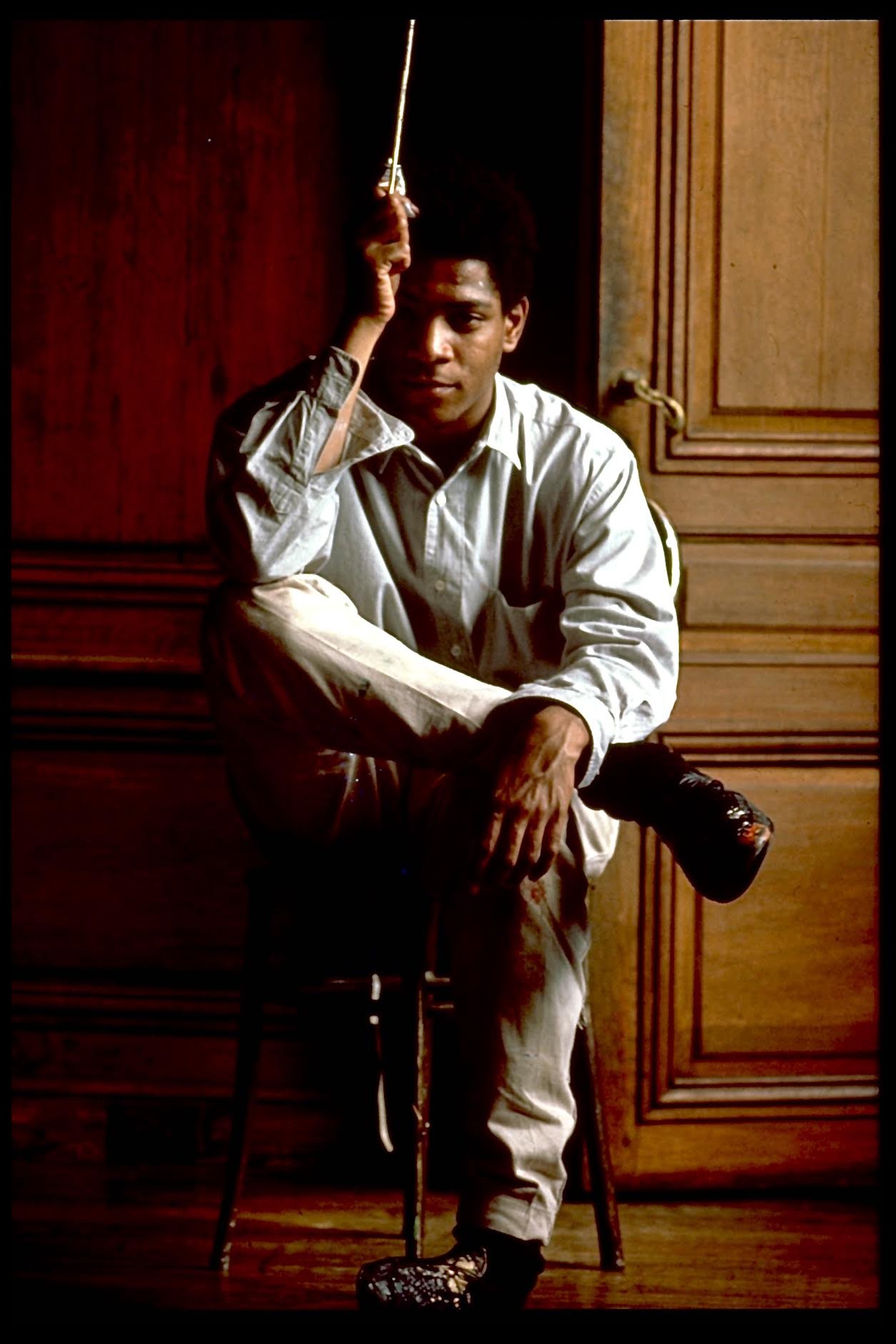
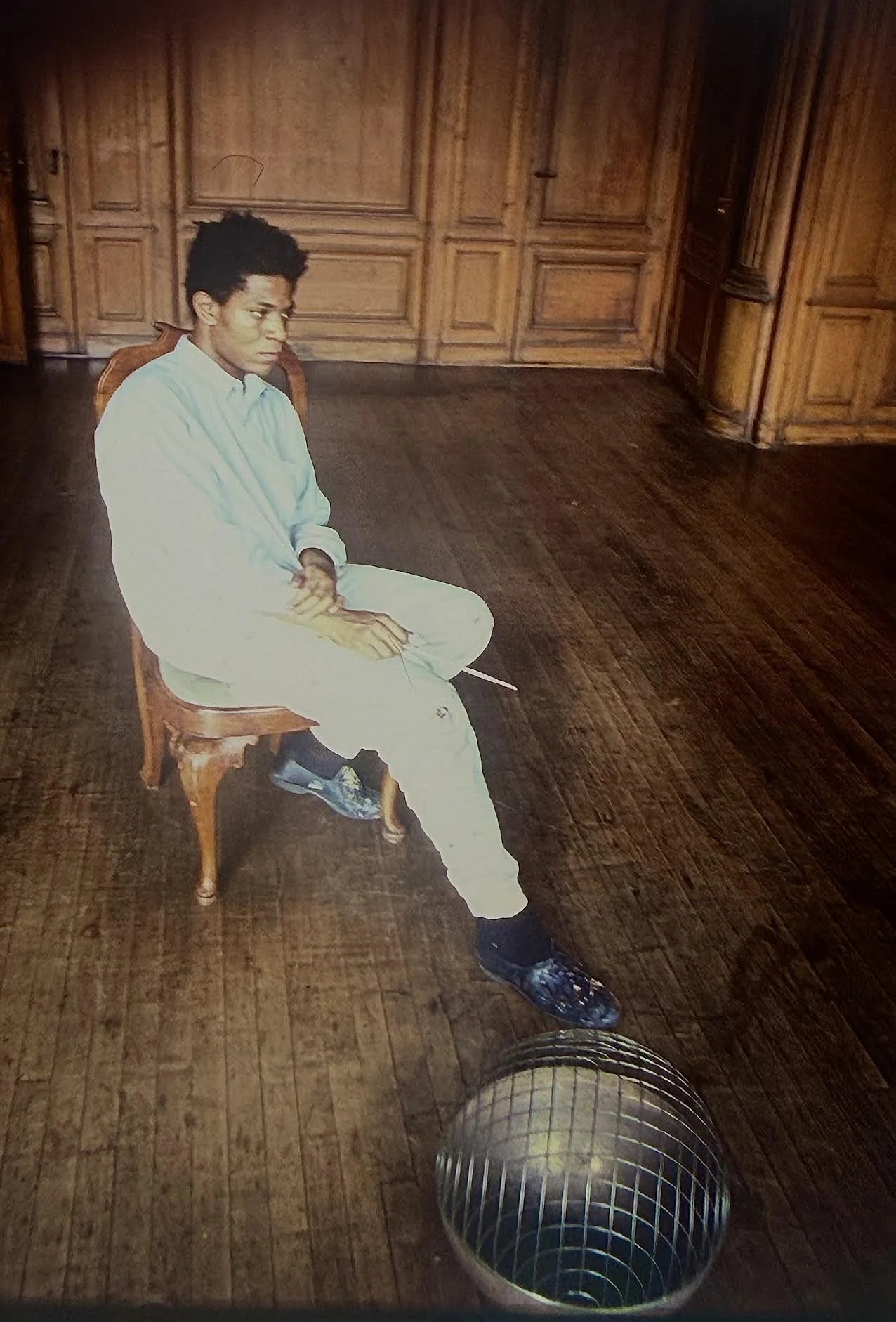
Remembering Artists From Another Time: Jean-Michel Basquiat

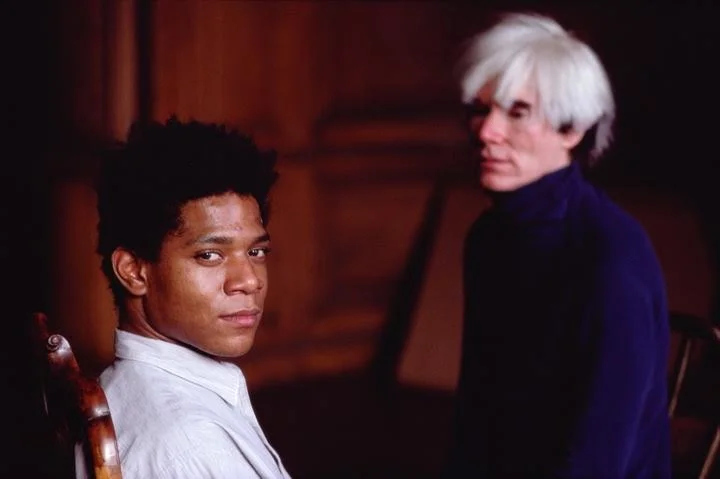
Jean-Michel Basquiat in Andy Warhol’s Studio

Truthful Fiction

I have always imagined ten and more Mantled Guereza monkeys nestled harmoniously atop an enormous Baobab Tree. The Tree of Life gave them sanctuary like a court of opinion with abacus beads heard sliding mathematics in real time.

Then I imagine:

The White Nile merges with the Blue Nile: Khartoum and more are forever beholden. The River Nile and Sir Richard Burton lead my eyes somewhere new. I dreamed in silence of carrying even one leg of photographer Carleton Watkins’ tripod as he sojourned across the American West. The unspoiled beauty of nature readied for its close-up. The  earth rotated. I wanted to feel the fear of breathing alone. Georgia O’Keeffe propped her easel in the tiny earthen landscapes, in quiet peace.

My world is empowered by the silence of creating. I am only aware when the Nile, the Yosemite, the Chihuahuan Desert spill out across the sky with stories we know yet never have known.

I press the shutter release on one or all three of my single-lens reflex cameras capture different voids in space.

Alone on an entire planet but emboldened by what Burton wrote, Watkins snapped his shutter-release ,and O’Keeffe gestured with a brushstroke towards the canvas. The planet is not a lonely place.

My camera is alone like a single vowel among twenty-six letters. I am alone with my army of single-lens reflex cameras in mind in spirit. Alone is an envious castle. Alone is a place of shattered nerves. It is a place to be emboldened by what happens at 1/30th of a second before, and a slightly larger fraction that follows.

I have spent endless days happily connecting the dots of my past, present and future. The days often remind me of games—Chess, Go, Dominoes and even Scrabble. I often utilize the nature of board games to connect my pictures to a meaning of sorts. Names like games, tiles and pawns are like my finite mirrors. They offer an explanation for my decades of photography. Whoever or whatever poses before my lens is not a game but an everlasting experience. In that respect, Jean-Michel was an exquisite player.

Jean-Michel Basquiat in Andy Warhol’s Studio

It was hard to believe Jean-Michel Basquiat was a historically famous genius when we first met. At Andy Warhol’s studio, Jean-Michel was not what I anticipated—He was just an eager kid with zero artifice.

The art dealer Leo Castelli had arranged the portrait session of Warhol. When I entered Warhol’s studio, Andy merely said to Jean-Michel, “He is here to shoot me”. Then Andy whispered to me, “would it be ok to shoot the two of us together”. For me, I knew I was being offered a bite into a slice of a delicious cake. I knew there was something more happening. I knew that my archives would forever be punctuated by “the moment”. Yet I still didn’t quite understand the fame game.

When I was alone with Basquiat he told me that “Andy said this was to be an important picture.” Somehow my mind spun like a top. Was I being manipulated? Nope! This kid, who was a few years younger than I, was just being himself. When I arrived a few days later to show him what I had captured, I felt that every bone in his body was transparent truth. We talked, we smoked a bit, laughed a lot, and made the most of good conversation and good company.

He invited me to join him across the street for a drink. There we sat at one round table. There was one unglamorous spill on the table, two chairs and one bottle of Stolichnaya Pertsovka Russian Peppered Vodka and some “smoke”. We poured shots of the 100-proof vodka. The conversation became quite animated. He knew artists were envious of his stardom.  Nobody wanted to be eclipsed from society’s eyes. He named names. It was clear that the fame game affected perceptions and relationships. I will not share who according to Jean-Michel needed to be close. Today it would not be fair to reveal the intimate exposures. Yes some pretty famous names.

Basquiat could have shared stories way beyond the a.m. hours. He knew a club or two he wanted to hang out at, but I needed a fresh-air experience. The bottle was empty. I thanked him for being so goddamn normal. I had stories to remember for a lifetime.

I walked home. Prostitutes lined the streets like Caesar’s Roman Legions saluting my endeavors. I absorbed hours of an artist revealing his art-world likes and dislikes. It did not matter if it was the vodka or the smoke, I enjoyed the reveals the revelations.I was able to relive the past few days of art-world royalty entering my mindset—Castelli, Warhol and Basquiat front and center. I was just a camera guy, but I felt I made a few captures I could talk about. I could privately celebrate a bit of art history.

Now, decades removed, I can do the dance I do when there is a bit of wind at my back.

There was no vast Nile River, towering Yosemite, or grand Chihuahuan Desert. There was a mere, intimate, vulnerable pose. Pieces of time lay before me, and behind me.

“There is no present or future

—only the past, happening 

over and over again—now.”

Eugene O’Neill, A Moon For the Misbegotten

Basquiat and Warhol

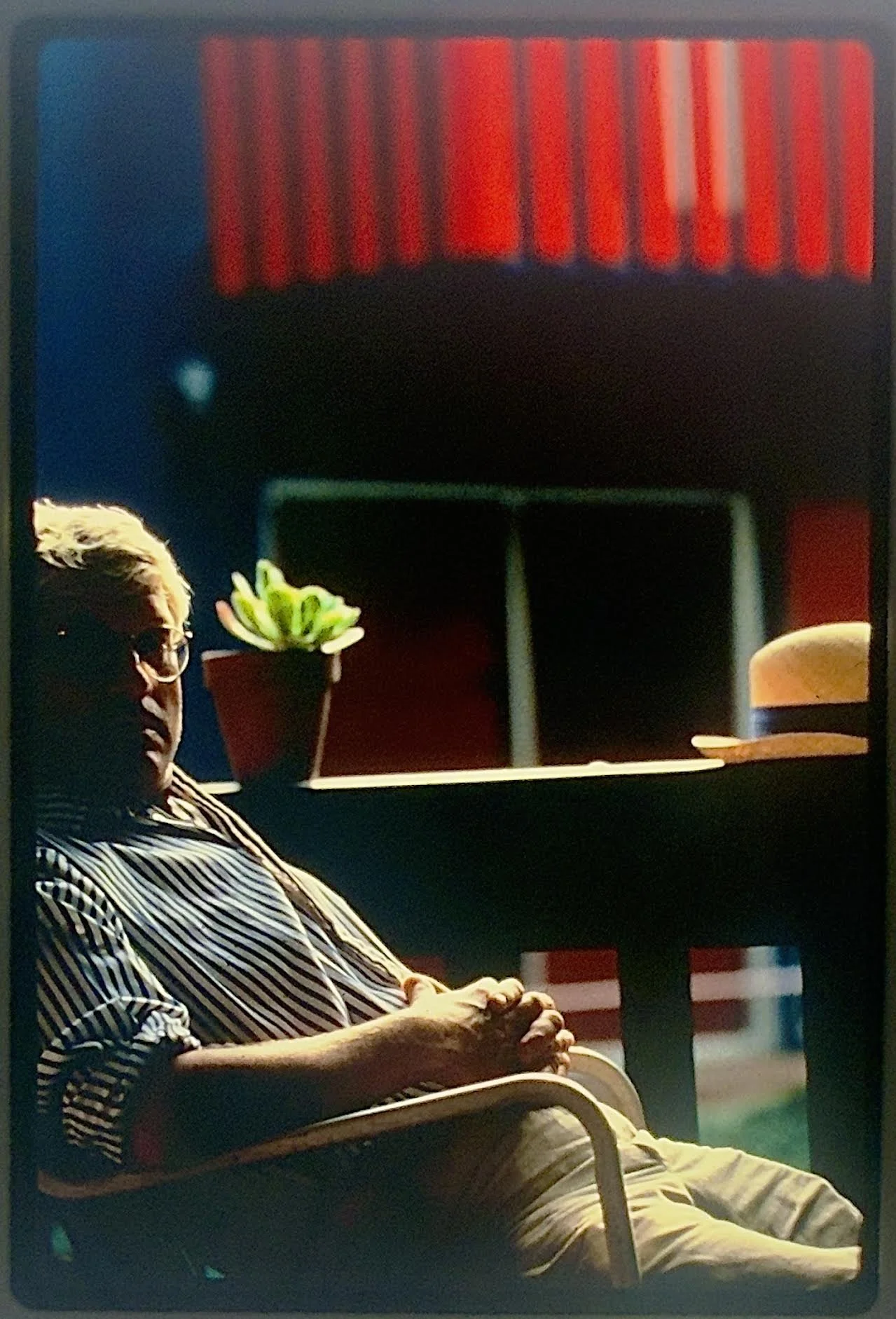
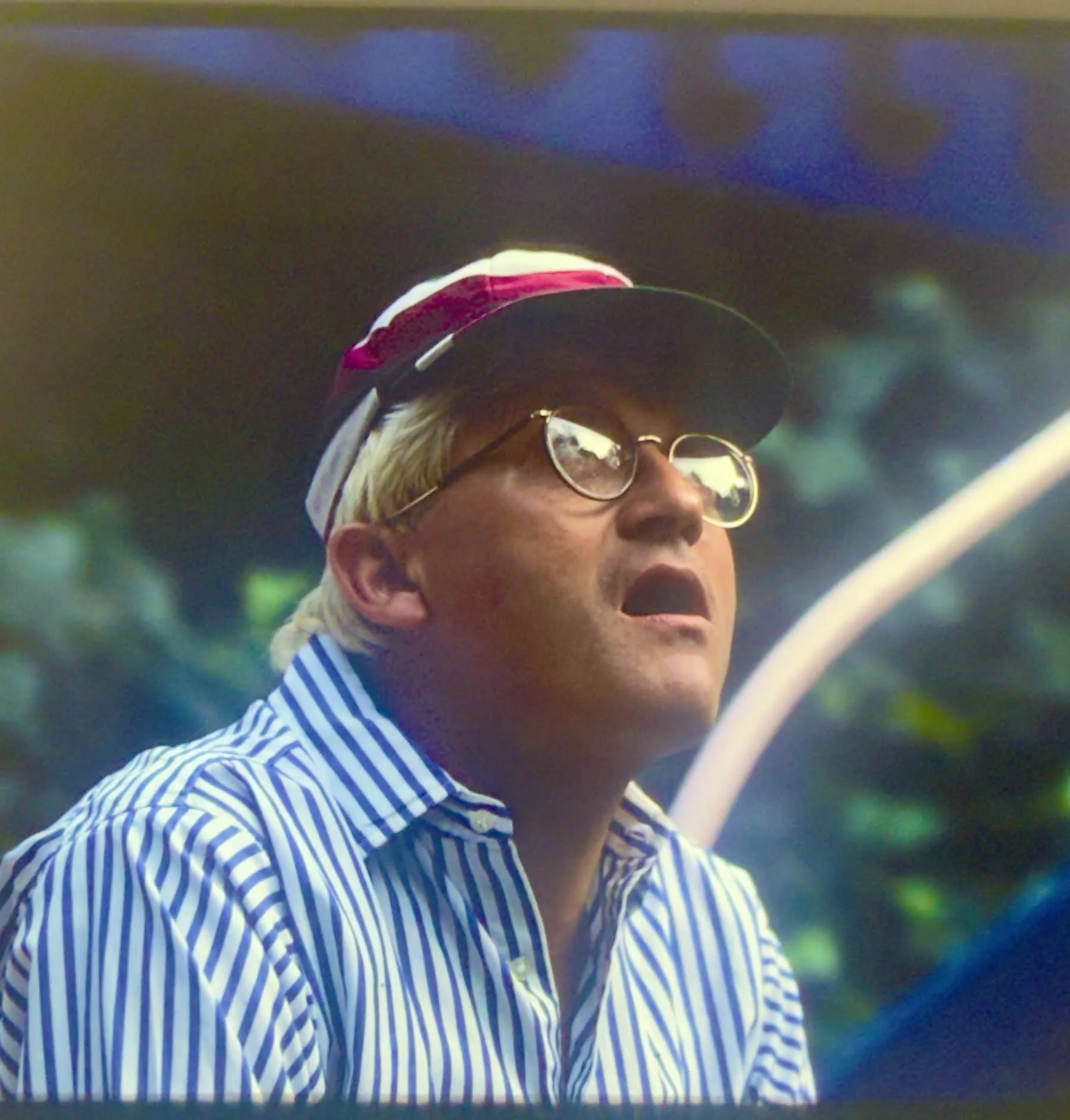
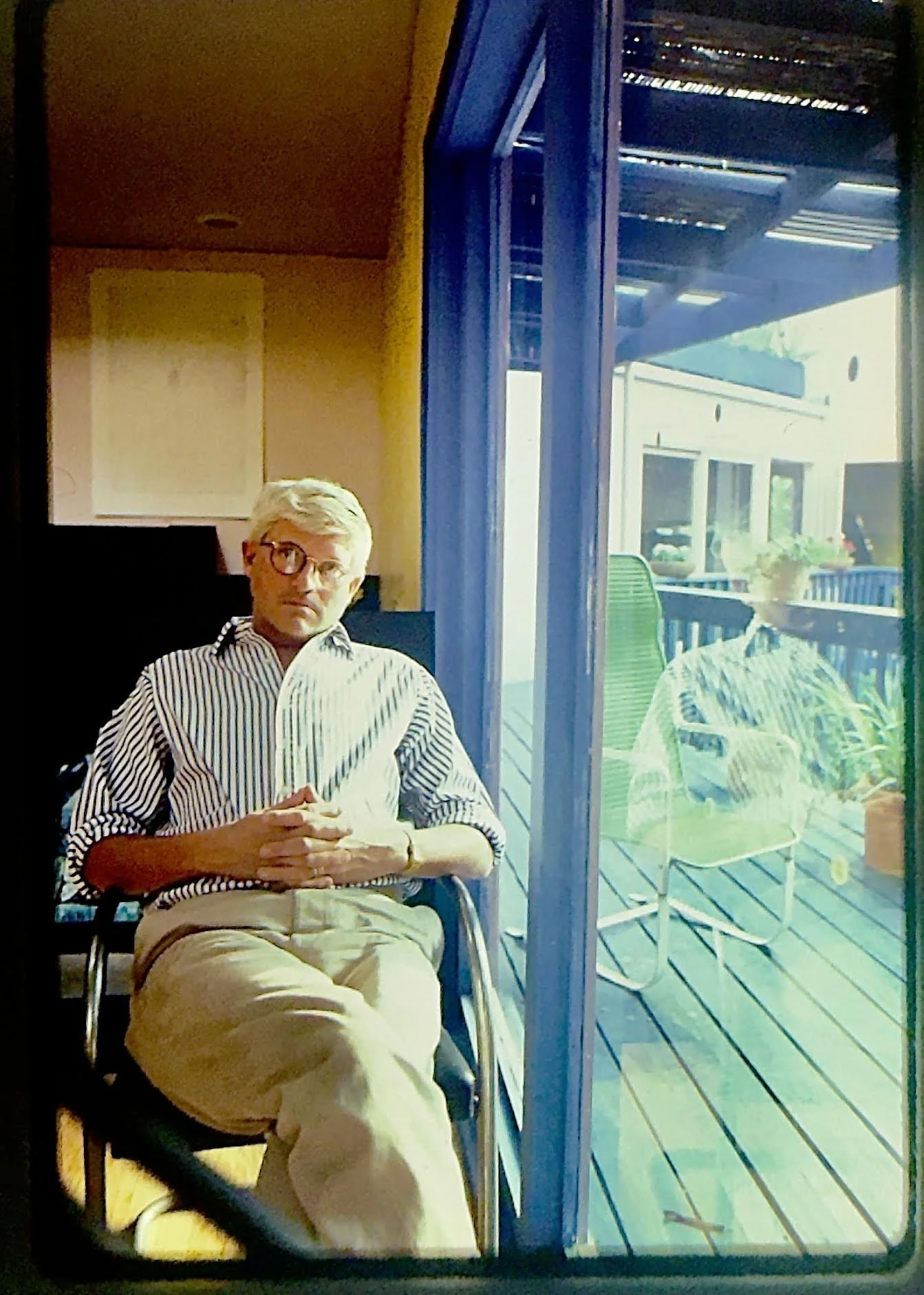
Remembering Artists From Another Time: David Hockney

David Hockney: Los Angeles California

Truthful Fiction

Buster Keaton sat atop the locomotive coupling rod in The General. Unexpectedly, the unexpected surprised. What followed was a hilarious adventure and a transcendental calm. For a moment, my eyes melded into Buster’s. For a mere few seconds of moving celluloid, our eyes shared a meditative pause, and  the entire universe was explained. I became acutely aware of the places between the worlds of fiction and nonfiction. 

Universes ablaze, everything that looks like harmony poses before my single reflex. Photography has never been about where I arrive at. I am telling a story that has not been seen yet. I sit, watching quietly and solemnly the world go by on my way to a destination. It is the middle ground that I see. The fantasies of what may become excite the camera’s lens. It is the lush life for the curious. It invites all eyes to hear the key (if you listen for the magic) of Billy Strayhorn’s Lush Life. It is a pace I can play in.

If you could see what my eyes think while en route to a capture-I often repeat these lines to myself as if I am alone with me, me, me. There is no eye in me, just me. There is often a bit of frivolity at play. I unintentionally try to freeze-frame every shift of light on the horizon. I unintentionally try to freeze-frame my life. I unintentionally absorb the meaning of every shapeshifter between here and there. I hold hostage one thousand stories to dream about on another day, in another repose, in a life ahead.

When I arrived at David Hockney’s home my mind went blank. For too many days before I tried to imagine the photograph I would snap. The opportunities to meet fame head on are rare. “What will I “do” with David? What will I do?”

I remember the architectural photographer Julius Shulman (who mentored me for a number of years) told me he could see David Hockney naked from his home. To this day, I doubt it. Julius had a bit of a children’s playpen in his mind. Plus, I have never seen the picture he claimed to have made. 
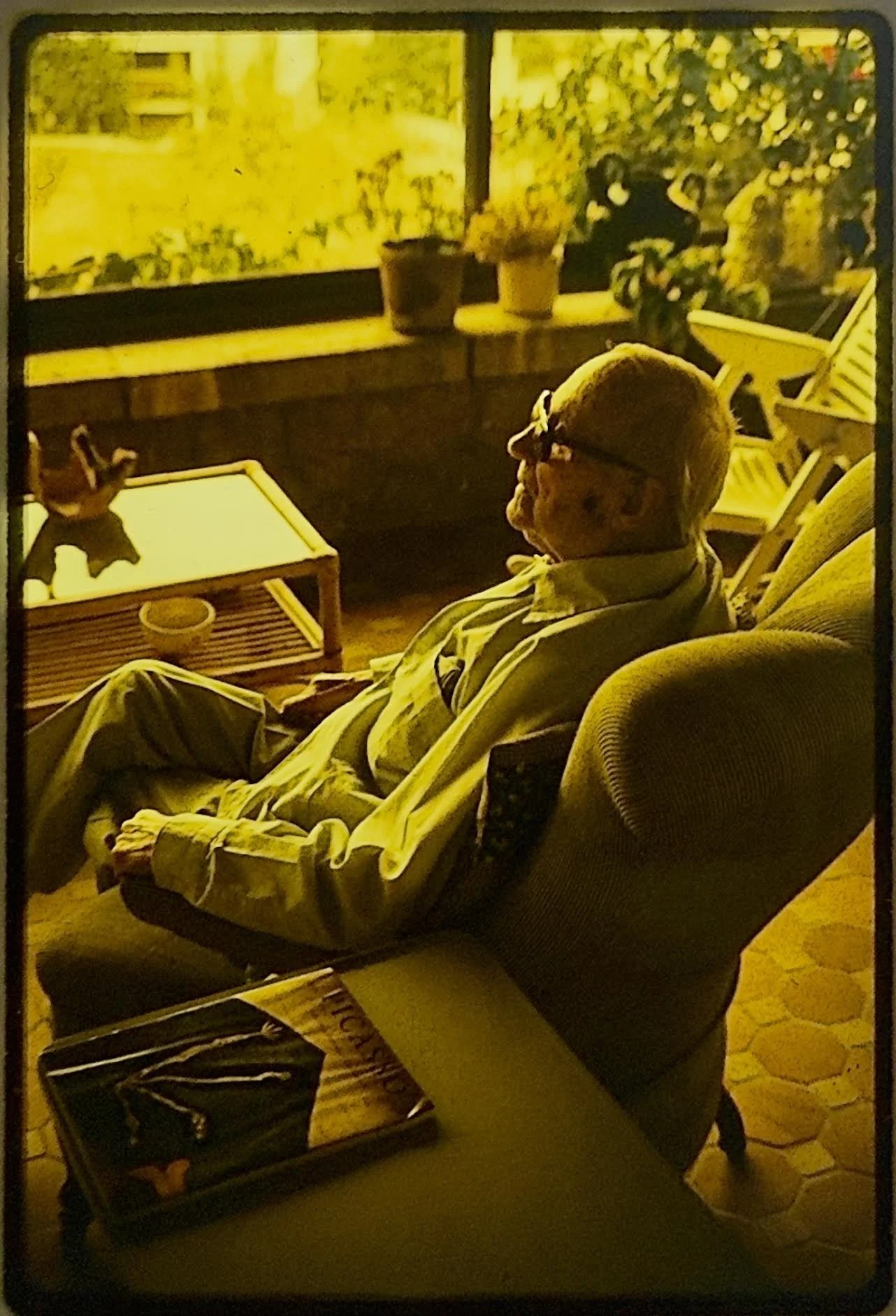
I remember standing at the front door waiting for David to bring me in. As one might imagine, I was thinking about the Shulman naked pic. I was thinking about every photographer I had admired. I was lifting my brain to the north just to understand what I would do with David.
The universe is a funny place to live in. It is impossible to know what will happen in the next moment. So when this pale, pale sweet man greeted me, all and any of my worst fears vanished. He was for the next few hours a prince.
As with just about everyone I have ever photographed, he wanted to hear about my experiences and the people we had in common. We talked about his friend R.B. Kitaj for an hour or so. We must have covered many more names and places, too - maybe another hour or more. I felt more like a button buck deer than an equal. He was charming , articulate and just the most friendly of subjects. I was an ordinary person with a camera.
We eventually entered his studio. He was very excited to show me a Chinese scroll on which he essentially based a significant body of work.

He had little interest in explaining anything about the dozen paintings in view. He wanted to unscroll this delicate eighteenth-century or earlier Chinese scroll. His voice was extraordinarily passionate. He pleaded with me to touch the imagery. I slightly caressed the scene. It was a guilty pleasure. “Do it again,” he laughed. My nerves danced. He laughed some more. The Chinese art was as beautiful as anything I had ever seen. Fragile and deliciously ornamental.

My natural light was almost hidden at this point. I asked David if it was time for me to leave. The day was long. I framed maybe a dozen pictures in my camera. There were many details and reflective moments of repose. They were for another time, possibly before they disappear from my memory.

A great morning and afternoon came to a close. As he walked me to my car, we shook hands. Before we  parted, he surprisingly gifted me some needed oxygen. He handed me a cassette tape of Mendelssohn’s Violin Concerto in E minor, Op.64. He whispered some generous and profound parting thoughts. I accelerated and found my way cruising atop the Hollywood canyons.

Today I played a Spotify version of Mendelssohn’s Concerto. I wanted to remind myself of what picture perfect sounds like in my eyes.

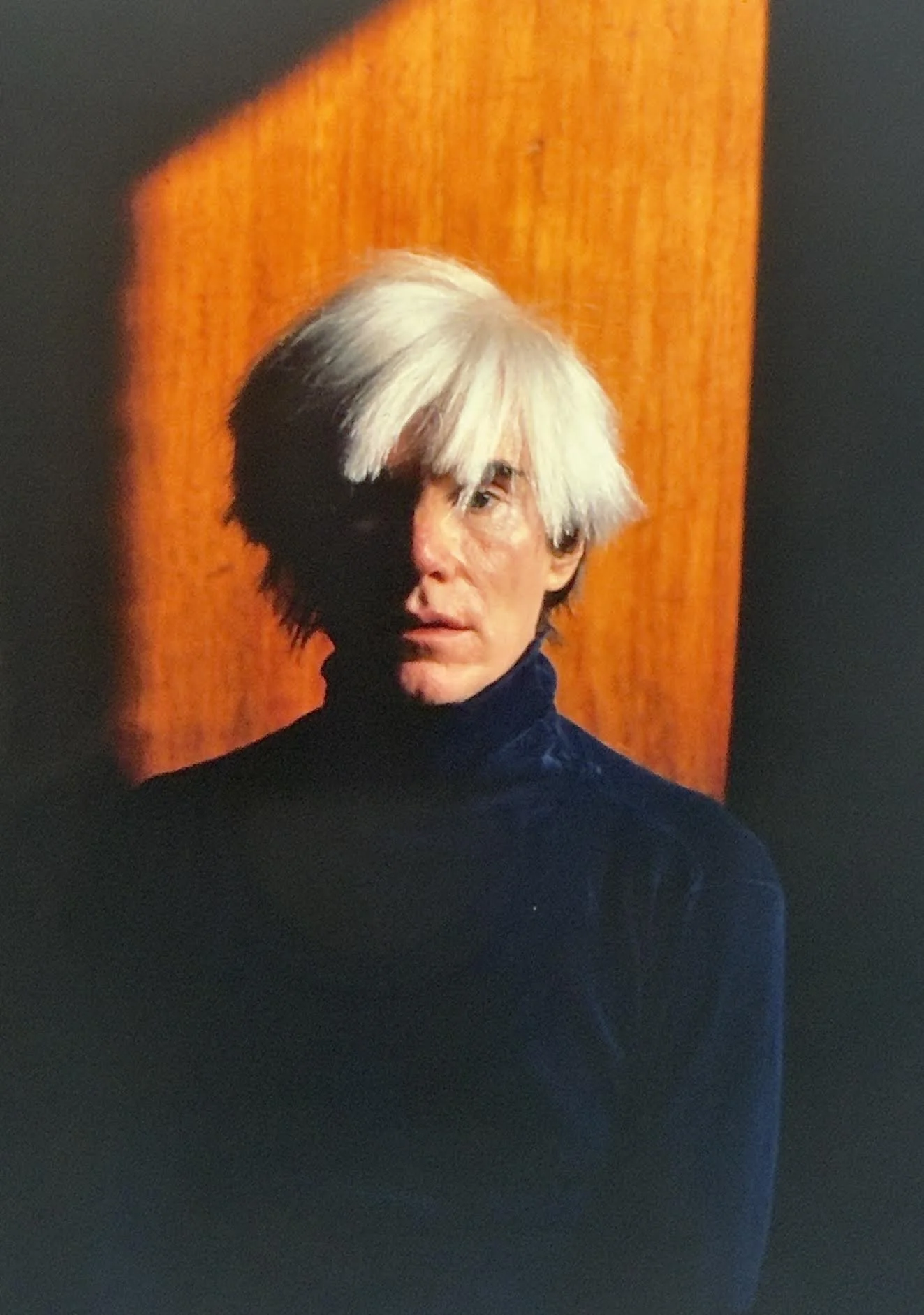
Remembering Artists From Another Time: Andy Warhol

Andy Warhol in his studio

Fictional Truths

My period of making portraits appear in the rear view mirror like a collection of rogues gallery and the inimitable. My camera has interacted with a lot of art, an army of artists, and art-world figures.

It is something that rests comfortably in the shadows of my archives.

One evening I huddled with cultural icons of another era: Senator Edward Kennedy, Jackie Kennedy Onassis, Andrew Wyeth and Andy Warhol. The Red Sea parted; the waltz of fame ensued, looking part Fantasia part Charlton Heston’s The Ten Commandments.

It was me being a Zelig for a few seconds. It was among a few days  which I was tapestried in moments, not mine. History is a home to many interpretations: I have an affinity to look back into my history through a slew of negatives and positives.

So many places and faces, I have spent years meandering silently aside the ancient and contemporary phenomena: The inside of my mind appears like a bountiful of holiday sparklers. In person I may appear  achingly shuffling like a Mynah bird in heat on heroin and steroidal treats. Yet it is merely me making sense of time behind my camera. So many types of fame in view, so much posturing. I do not belong, in milieus not mine. My future with celluloid captures was only a vehicle to somewhere. Somewhere is a place where a dream is a reality. Time is truly a slice of evidence.

I have traveled in ancient and contemporary architectural history:Turkey’s Basilica Cistern, Rome’s Aqua Virgo and Vicus Caprarius, Corbusier, Mies, Gehry and Oscar. I have composed apertures with a Kennedy, Miles, Warhol, Niemeyer, Hollywood’s Douglases, Astaire’s, and Kellys and other dream/reality milestones. The fame game became a stamp in time but not my camera’s intention. The intention was to feel a bit the earth’s rotation. It was great to be young and walking in history’s formidable footprints.

There was a man who knew everything about Bernini. I have never known the meaning of being an expert. I did not know him, but envied him. I dreamed  my camera might photograph the history of that knowledge. My camera would become an expert in all things seen. The man who knew everything about Bernini- -knew the secrets- - secret moments alone to caress the Berninis I merely imagined.

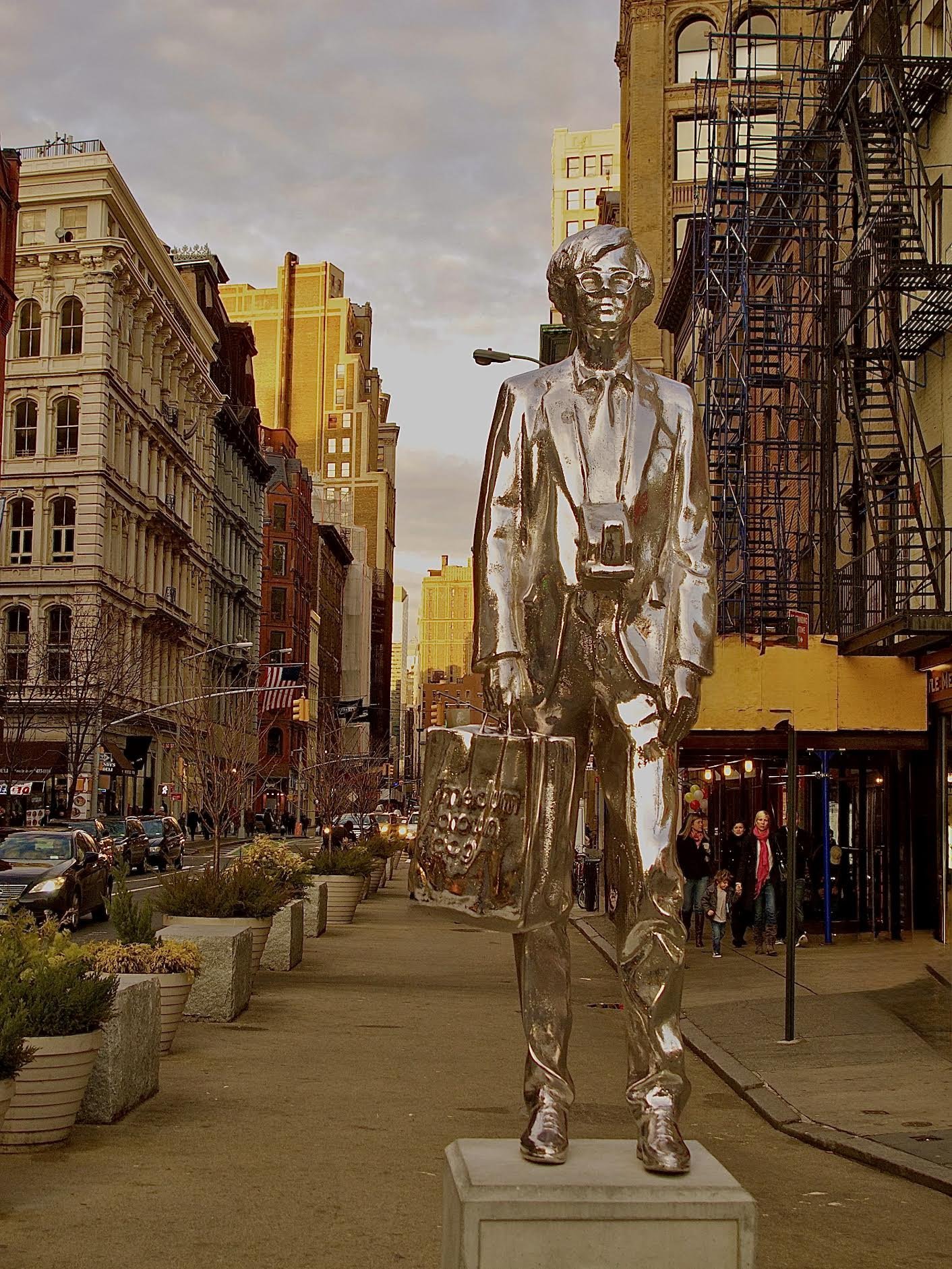
There was a time when everyone knew of Bernini. There was time when everyone knew of Andy Warhol. If Bernini was a populist pioneer, Warhol was a distant cousin. Bernini had the Pope and the Cardinal Borghese. Warhol had a different kind of guile for a different age. They were both icons of their times. They both blurred the lines of the private and public. They both dominated the visual culture. If imagined together I am certain it would have been a marriage of unconditional love.

For a time I merely wanted my camera to draw a visual line between the two. If the world could see my fingerprints atop the Berninis, they would see the evidence of the caress: The enviable position of caressing magic. If people could see the giant Andy Warhol painting of Mao Zedong in an art collector’s home, they would understand the furiously envious yelp heard throughout the home: I caressed the painting as if it was mine. Mao was mine for fractional seconds. I have spent a considerable amount of time caressing the brilliance of others.  

Warhol invited me to his Montauk estate. I dreamed that Bernini invited me to his Via della Mercede in Rome. In both matters I have and would have passed. I am not a mingler. I shared these fantasies with a famous art curator. He said “not to worry about mingling, you will find your special moments in time”. His good friend was a photographer of Donatello’s sculpture. The curator outrageously said that my portraits of artists remind him of those Donatello portraits: Light caressing life.

I told him that it is not about the light for me. I only wanted to be somewhere. He warned me about the necessity of patience. “You will be where need be in time”. There is never enough time, I thought.I told him that my light and the photographer’s Donatello light are not manufactured- -they come from a special place: From the wind of another time: A time when I might pause and press my fingers on greatness. I am an Ostrich…

Warhol near Union Square NYC Near his former studio


Remembering Artists From Another Time: Edward Dugmore

Artist Edward Dugmore in his studio

Fictional Truths

I have photographed many mid-20th-century artists; famous, interesting and artful. Those voices from my past haunt me like echoes from an asylum. Over time they have become a menagerie of mirages, one thousand fleeting floaters in the eyes. Maybe I am lost in a forgotten time a forgotten place in time but not in mind. My archives have revealed a life behind the camera. Pages alphabetized all in rows; glowing celluloid images reimagined in dreams. They fulfill and linger in my minds like a caress-able bevy of pillowy cygnets floating atop an entire planets estuaries. 

My portrait photography and architectural photography are in my cameras view like fraternal twins: through both I see my friends my history and stories told and to be told. 

Hand in hand they live as one: I mindfully approach both subjects with the same language, mentality and necessity to bend into the moment. Capturing a lifetime and everything imaginably alive before. Together they are my forever.

I have photographed many architectural feats. They have become  silent revelatory transcendental reminiscences: Volumes of imagery accompanying my mind while stridently shuffling along highways, roads and other conduits of time. My camera continues to ferry my life across many divides. 

The human poses are remarkably similar to the architectural poses I convene with. The memories of spaces in dimensions, the memories of people in spaces  - -My artists, my architecture, equally in mind appear imagined and real. Canvases conjured and canvases lived in: What kind of mind Is heard; how does the human eye dream differently from my camera lens. My camera attempts to travel effortlessly through Millenniums- -or so I dream. It is a quasi information highway that has an infinite amount of guile attached to it.

A  man, mind and time commingle.

Alone in the woods.

The car engine running. 

Nature majestically abound.

Locked in view is a mind alive alone frozen in time “Here I am,” is heard.  The quiet askance is not sad. 

Patiently behind the steering wheel a seventy year-old teenager smiles at the friends in the trees> A gleeful exuberance is imagined in the silent pose: He could never measure the pleasure of the escape into nature.

I could possibly imagine the Huck Finns, and Tom Sawyers gathering as in a sanctuary inside the old man who found a way away.

The unknown to a view, my camera has seen dementia just a few times. I imagined all of the artists’ painted expressionist abstractions, all of Clifford Still’s mentoring and mingling in the artists’ life: There is a dance in my mind: a witness to the celebration of art and nature- -maybe Matisse’s La Dansecomes to mind. The camera sees the humanity and sees the ghost of the past in the present:  

Balzac’s voluminous volumes could be comprised in the stories I imagined: Edward Dugmore alone in the vehicle until discovered: The artist trapped in mind and heaven: Nobody will know what the artist positioned behind the steering wheel thought. I know for my camera, it has never been about knowing the truth- -It has always been about communing within the interior of celluloid frames. This man/artist locked in the self: his voice heard in the woods and in mind.

The space of an artists studio, The spaces found in architecture are about understanding the equations: Measure what you see from the end of the lens to the abyss the viewfinder sees. I cannot ignore the beauty of sizing up the dimensions ahead as space in flux: I can only observe the realities I imagine. I utilize which discoveries speak to the experiences in my f/8 maybe f1/ exposures. My camera borrows imagined space to excel in freeze time.

Artist Edward Dugmore in his studio


Remembering Artists From Another Time: Andre Masson

Artist: Andre Masson: Paris, France

Fictional Truths

The cadence that belongs to the march of time- -the cadence of possibilities: Possibilities not mine but imagined in a city called Paris.

Every city has had a chronicler of sway: great cities big and small have had many strollers with eyes.  Paris’s history is like a voluminous waltz within moments of centrality and focus: Imagine if you try a chimpanzee atop a Parisian Metro sign. Imagine if you try, the nature of Paris that is real and elusive. There, forgotten and remembered memories pose for here and now. There is a unique cadence in every city on every planet- -Its rhythm is laced to the one or one hundred billion who have been or will be hurtled  through our universe or another’s.

The history of maps, are a map of men and women- -Today’s yesterdays have many maps. My day began at the former home of the dramatist’s Molière’s for lunch. The day partially ended at another moment- -The Surrealist André Masson hosted me for coffee, cake and a portrait session- -With links to Miro, Dali and Picasso my day became “…merrily, merrily, merrily merrily, Life is but a dream.” Another map to my future’s past.

From one arrondisement to another the stroll along Rue de Rivoli followed the sounds that paths made: I heard a collective of cadences: Maybe only Paris can mimic itself each day: Theirs is history I have listened to like an imaginary clock transporting through histories I have known histories I have dreamed about.

The way the streets look, as I stride, seemed to suspend time like a bridge over a real true to life folklore: The city streets feel and look like they are filled with armies of fashionable shapeshifters: In every direction, my lens follows, bending for my needs to capture what will be remembered as my Paris in that moment.

Once I left Molière’s on Rue de Richelieu, Rue de Rivoli and all of the built history ahead and behind looked like massive tiered towers tossed in and around my mind like globular clusters: Dazzled at least, every mason’s stone and design was distinguishable from another. I could not allow my pace to slow, my camera was in a hurry. 

I cannot be quite sure if my eyes or my camera co-opted Sir Isaac Newton’s theory of opticks. I was visually engaged to one of my favorite cities: My mind was in a brawl with my eyes: I wanted to stop and pose with everything that belongs to Paris. My eyes were happily blinded by the lights of colors refracted: If I toted Newton close to my ears he might have contended I was trying to draw the eyes into a single tunnel vision: He would be wrong. I needed to see the entire globe in a single frame.

I was flirting with exhaustion…happily so. It is the way I have always engaged the opportunity to make pictures: To imagine colors passing through prisms. My lens was glowing: Was I being too exuberant: 

There are thousands of people in my archives. My early days as a photographer were most rewarded for what the camera had to achieve.

Not an exposure has been made without Newtons’ Opticks in my subconscious: Imagine if you try what every capture may mean if wide angled prismatic distinctive points of view lived in your camera’s reality. Imagine my camera transferring all of man’s science and man’s discoveries of spectral light into a single frame.  Blame Newton if you must. The prismatic ride through a scope of time has been steroidal.

Alone in Paris. The corner of Rue de Rivoli arrives at Rue de Sévigné. I began at Rue de Richelieu. I have been lost in heaven wandering for nearly three hours. The massive tiered towers imagined have mostly vanished, faded from my imagination. A canopy of trees above waved some mist and sunshine in my direction: A coolness had arrived. The famous surrealist painter was just ahead. 

My decades sometimes imagined in mirrors of a carnival funhouse might invoke an illuminating story: Paris is home to many of my stories. My days and years adventuring in Paris have often seemed surreal at bedtime and in the morning rise.

I arrived at the home of Andre Masson: He welcomed me into his home. My camera and the ghost of Newton accompanied my moment. I prayed to successfully focus on a single frame.


Remembering Artists From Another Time: Joan Miró

Artist Joan Miro: Mallorca, Spain

Truthful Fictions

At times, the entire country of Spain feels as if Europe and the Africas’ loins are shrink-wrapped  into one remarkable  experience: To be surrounded by the inimitable scorched earth- -again: The Sun of Justice beds the El Solano: I am naked to the mind- -My DNA remains in full view splayed for all to see.

Giants- -art history’s gargantuas make for imaginary possibilities: They appear in my sky like jelly fish spanning seven oceans: A mercurial day in a human’s life is near. The cumulative effect from ageless experiences is near an end.

One day- - I realized Madrid is home to every chiaroscuro shadow I dreamed for: My intentions as in marriage are sincere: I stood face to face with the hotel’s ten-foot window: My eyes imagined a patterned sweeping view of Madrids’ city circle: I was on the phone with a well regarded New York art dealer of particular character: A gadfly of sorts to most but with me a sonorous revelation of intrigue; A chess piece (possibly a pawn) in the beginnings of America’s abstract expressionism- -the beginnings of modern America: The education of all things relevant to who I am feels self taught: The art dealer told me stories that altered my views, my understandings of mountains- - It was not unlike …White Elephants atop the horizons:

Madrid, imagined by me ferried among the streets many likenesses to John Singer Sargent’s “El Jaleo.” My art dealer hidden and costumed like Kiplings’ Peachey in The Man Who Would Be King among them: The entire Spanish population flamencoing in the blackness of the city. I made pictures.

The personal becomes emotional for many reasons: The autopilot in me was shifting speeds: I found more experiences truly kissing the eyes I imagined: Salvador Dali e.g., was a wish that only partially manifested.

Without hesitation I dream more surreal than I might imagine- - and again:  

Before I sun-tanned atop a hotel retreat in Mallorca: I was in a frenzied state of mind for more than one-thousand miles of travel: I assumed a brief suspension of chaos a few hours in the Prado Museum> I communed with heroes of another time: Then the the Turkish Coffee phenomenon kicked in: I remember driving and a bit more from Madrid to Barcelona, Port Lligat, Costa Bravo, Costa del Sol, Valencia to the unwelcome ferry to Mallorca. The geography I traveled across filled my mind with dreams I have never been prepared for: I saw cities and architecture-cities and citizens-cities and views of a landscape-cities and my own education of life to be…I could not relax waiting for my appointment: The days will always be remembered as if I was an alien my own planet: 

“Sometimes it takes you a long time to sound like yourself.”

Miles Davis.

The Miles’ wisdom to date has not quite touched me: I daily possibly hourly imagine traveling back in time many decades: I count each film/digital frame of a life time looking for the answers- - listening for who is to be myself: Then and for decades to follow, I was making pictures as only I could: I was not an alien anywhere when the camera led me to what would become>Maybe the greatest days then and now: 

Joan Miró opened his door for me: Something happened that I cannot interpret: I was photographing a particular kind of fame: I was living for a few seconds of a day in their- -the artists oxygen: I Inhaled and exhaled in the twilight of Surrealism: I was within arms distance of the magnificent: The figures in art history I have only dreamed about.

Architecture of Cities: Mapping Beauty XXXVI

Architect: Ricardo Legorreta

Truthful Fictions


Why is it that everytime I land in a new…I remember part of a day with Dr. Geerat J. Vermeij.

He conjured for me a lure to scientific magnetism never before imagined: A science that awakened concepts for me  never before engaged: The captivating possibilities that his science introduced imaginary possibilities: The adventurisms in all of us- -me.

What I remember is like recalling a recording of a waltz: A crew of pink crustacean shells swayed in dance like a wealth of alchemy at my fingertips in mind and imaginary: Memory and touch joined forces to merely enrich and pave ahead for days and years.

Then ahead are the forensics that are like participatory friends. Making claims and sense of everything breathing life into a moment: “Over dramatic”? Not an inch: Take a peek at Antonioni’s L’Avventura: The stunning silence in search of answers: The lingering camera absorbing the eyes’ investigations into the past and the now: The weightlessness of feeling your way through a planets’ life forces may reveal the substantive window into our nascent beginnings:

Vermeij is a 97% blind paleoecologist and evolutionary biologist who through the heart of my eyes embedded in my camera’s fixations the most significant discoveries my camera has become: A tool to touch what a photograph can feel like:

As a scientist, Vermeij can mostly land on any shore adjacent to land and sea: The coast line of any of our shores textured touch of a rock, soil or shell identify where he is. I have always wanted the secrets of what we discover to be mine: Nobody we‘ll see what I see or the way I see- -something is there: Oh, how I try to see.

Histories can be realities yet to be imagined: A man has utilized his blind eyes to tell me the secrets that lie ahead and have always been just near.

My photographs will never replicate that level of sensory understanding: I have tasted too much of the modern world to fully understand the immersive journeys such as a Vermeij or others ventured. I have tried to linger like a Monarch roosting in their chrysalis: The atmospheric energy of another is a stimuli for the impossible: I willingly allow myself to follow in their contrails: My eyes enveloped for just an eternal nano second: A quieter space that most cannot see.

Los Ángeles County Museum…many moons ago

In the light of another country I will land. Light becomes an inexorable transformation: Compelled, mine eyes will adjust over time: Yet it is like scientific surrealism: The earth is round: The encumbrance of lights touch validates my neurosis in real time: Alone in Rio’s Copacabana, Shenzhen, Dhaka, Los Angeles and Copenhagen: My ears resonate with the unintended visual education from Dr Vermeij: I need the the idea of alone on an island surrounded by a textured life: I need the idea of the Crustacean sway: I need the captures to touch and then…Then like measuring Kelvins in the sky, the conundrum of touching lights’ balance of texture and heat profoundly affects the focus of today and the many tomorrows: 

Where were the whispers from architects, historians and everybody before me: Were there no warnings: How does one measure the depth of a conundrum: Without a second to wait most people can hear my Pentax explode on the streets of every place above and those to follow: In chess, Black follows White: In photography light and touch walk as one.

My Marriage of light and texture


Remembering Artists from Another Time: John Piper

H.G. Wells’ The Time Machine and more remind my mind of past and future eras: My eyes are heard lifting time listlessly with a lilt: Something’s are meant to age. I remember the tectonic shift when the (YBAs)Young British Artists- - emerged like new born embryo’s at work: Raging through England and other nations:

My feet have always been steeped in the ideal marriages of antiquity and the flow of visual ideas that perform in our modern days. I have witnessed the cosmopolitan mingle with street urchins’ like torrential transformative transfusions of captures. My main interests lied in other generations- -generations past.

We drove from London through English folklore: The Thames slightly seen between the trees around the M4 route: Hillsides and electric silences felt in every glance: Histories pointed ahead: The Royal Family omnipresence seemed near “Windsor Court is just past there”.

I felt I was at play like a  child passenger- -amidst fairy tales and authorships not known: From London to Henley on the Thames- -Silence absorbed much of the unexpected: The dappled light through- - the Weeping Willows, Beech and legendary Oak hovered above: Imagine Miles Davis’ In A Silent Way courting my ideas as we traveled.

Mirage’s appear under different circumstances: Yet the black and brown silhouette of the Giant Cormorant moved without aid lording atop royal castles and unencumbering beauty: Nature is like a linguist fluent in the real and surreal: Beauty of the ordinary and sublime are equally worth living for.

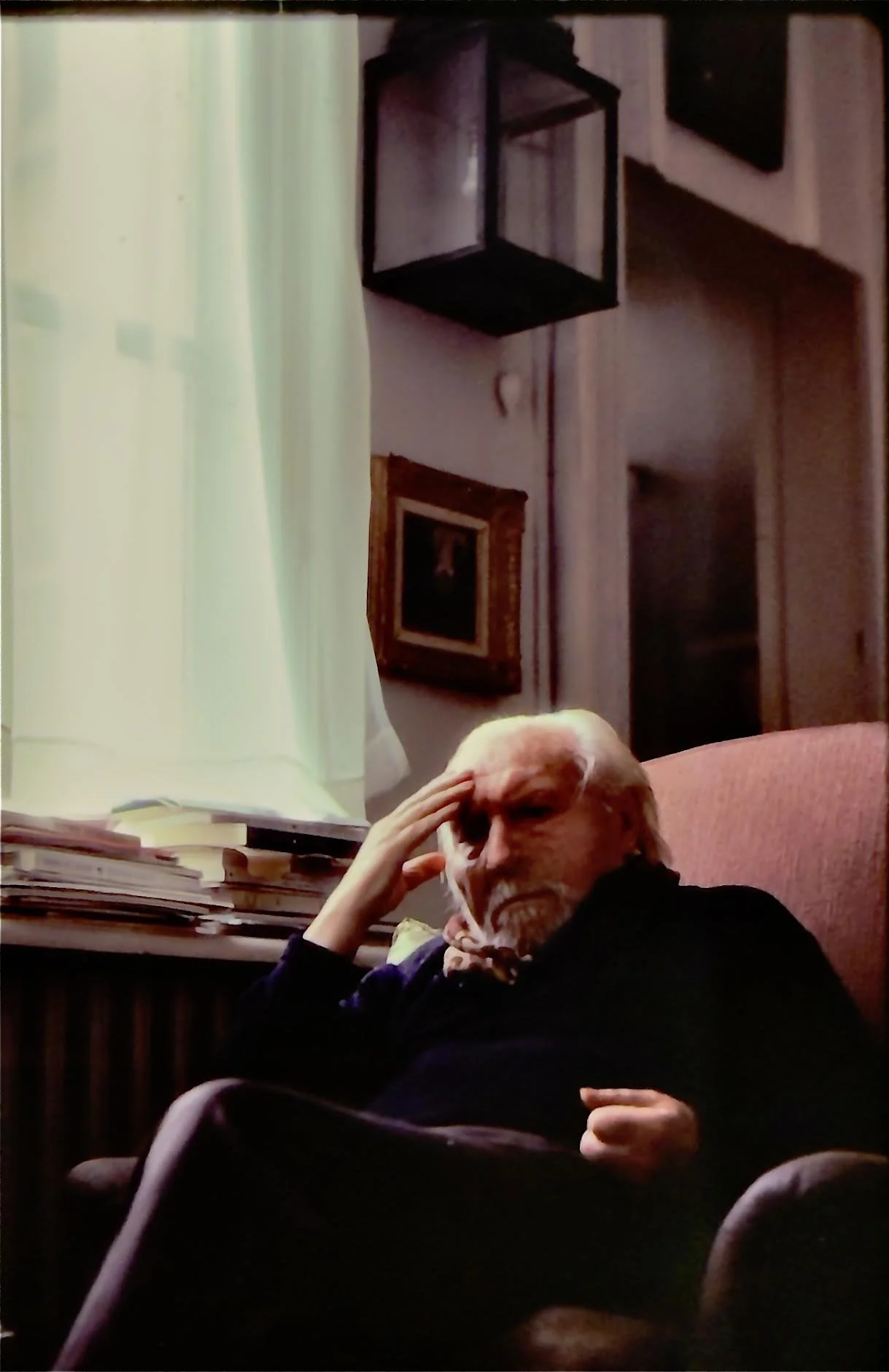
We arrived in time for lunch: It seemed that a schedule of actions were arranged for me. An entire salmon poached and waiting: The Director of then famous Marlborough Gallery and Mr and Mrs John Piper treated me with a special delight: (It was John I was there to make photographs of: His wife Myfanwy, celebrated for her Librettos made with Benjamin Britten would have also made a nice partner in my session). The wine and get to know you chat was easy: Then time begged us to get a move on- -the schedule was predetermined. The bells heard was for each one of us to clear the table- -shooting time was limited.

John and I walked as adventuring partners into his barn/studio. I try and act sophisticated and knowledgeable when art poses: I was not prepared for the moment: My eyes softened: Twenty something and feeling so much younger:

At that time art to me was many things: Picasso’s Guernica at the MOMA: Whistlers at the Frick: Arts of Oceania at the Met. All of those museums were second homes to my photography routines: All of those institutions welcomed with “voila”.

I have photographed many famous and not so… in their studios. That day the very tangible surreal John Piper floored me: I would not elevate his significance but his presence is here inside me today: There were remnants of a man and his art as if he disappeared into his paintings everyday: The many ghosts of a man who mastered the acts of moving in and out of his art as if the canvas and the painter were one.

When we drove off I looked back at John and Myfanwy as lovers, friends, husband and wife: I saw them outside the barn chattering like two Myna Birds filled with excitement: They were another breed to my eyes:

It was an awakening that I fell in love with.

British Artist John Piper in his Studio: Henley on the Thames

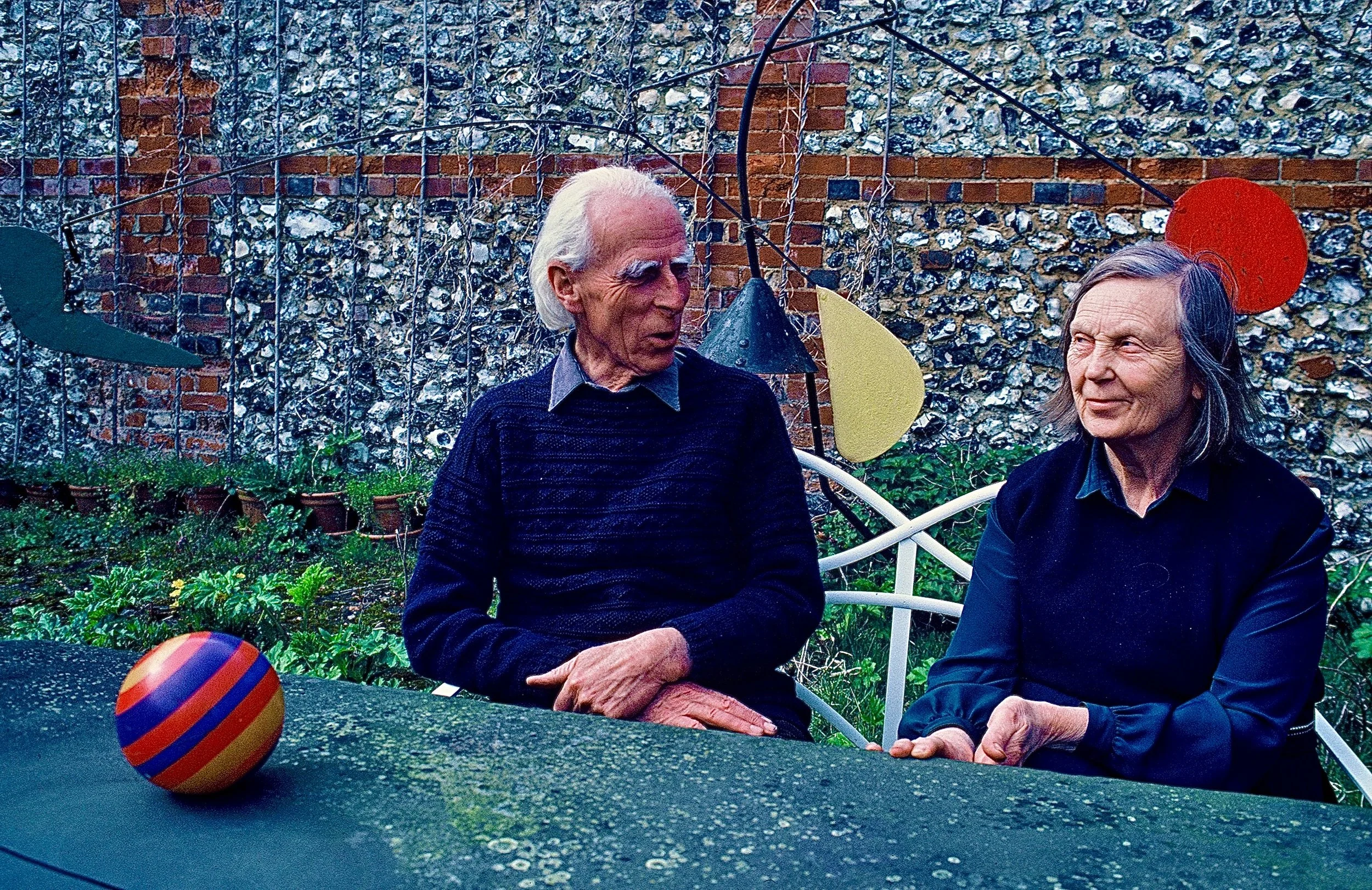
Artist John Piper and his wife Myfanwy

Architecture of Cities: Mapping Beauty XXXV

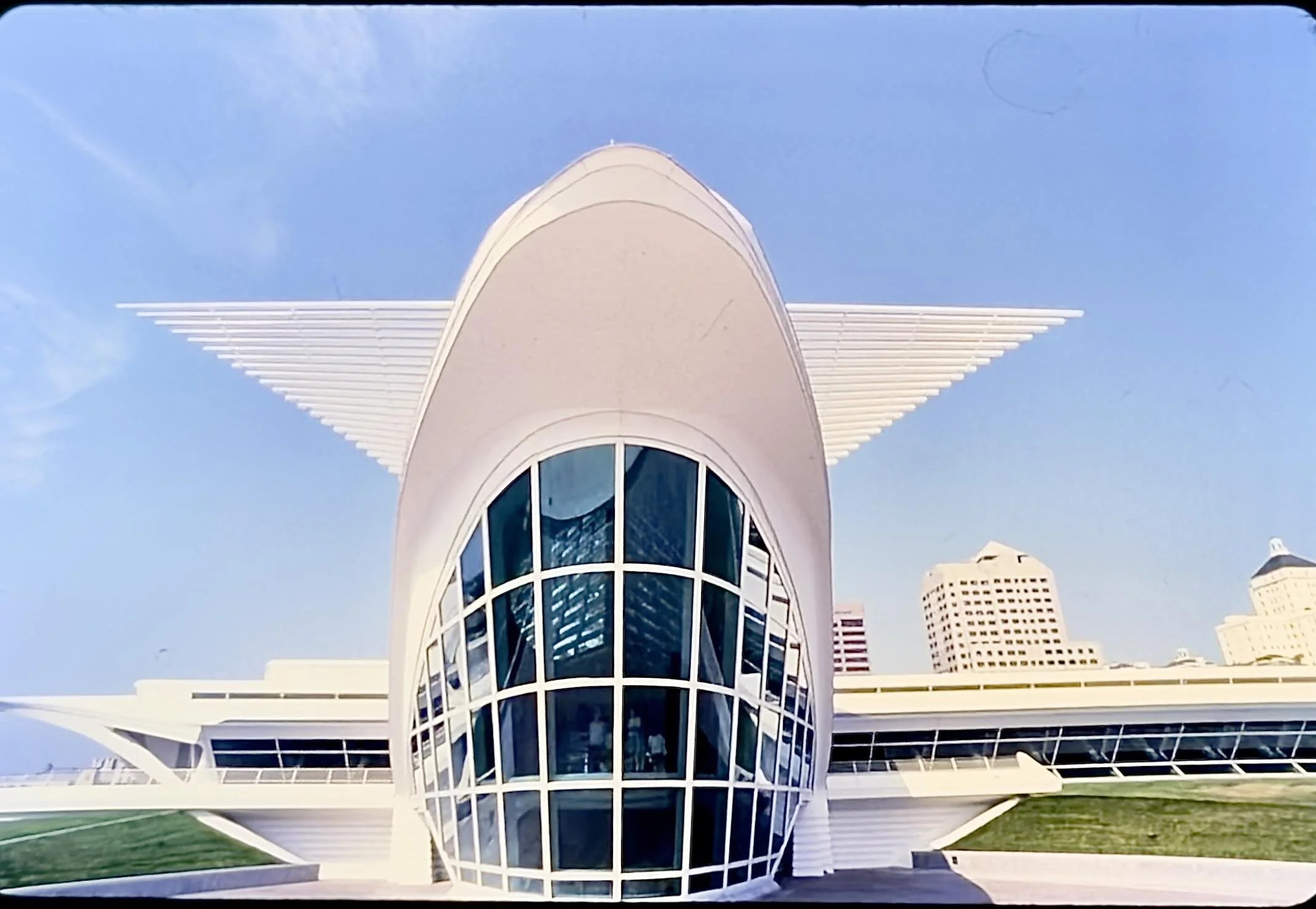
Architect: Santiago Calatrava in Milwaukee

Truthful Fiction

Reading is akin to love- -it is found, discovered like a romance nakedly displayed: The anticipated anticipations of fillingthe mind like a book nuanced with variables of intangibles mingling: Words of others indelibly scribed with not a black pool of vanishing ink in sight. 

My mind harnessed by extraordinary imaginary passions- -like dog-eared pages left by another, portraying a gift from anonymous ghosts in real time: 

In a Mexico hotel a guest of another kind unintentionally or not left me or another a book to possibly share a reasonable processing of the city’s culture.

A journalist in Moscow intentionally or not made a gift of an authored book to enlighten my visit: Days and nights of a nations’ histories accompanied my months…

Rain swept Stuttgart, Germany afforded me time to read books dedicated to my hotel rooms: No traces of elves nor Hare Krishna devotees could have managed better. 

In Paris, the entire city seemingly performing theatrically across from my 7th floor bathtub: In the moment I needed to hear a wee bit of English- -I accidentally found a perfectly bound companion stashed between my bathtub and the Contrevents/hinged shutters.

Hidden in plain sight: I suspect real people breathed a certain innocence into the eyes I have married:  The architecture of generations reveals guiding narratives like the dog eared books others left behind: left behind so great and innocent minds can point to where we live and yes, how.

Herbert Bayer: Santa Barbara, California

My eyes synthesize all matters related to what has become- -became: Buildings/structures left to tell a story where a matter of the beautiful and less lived and died: Industrialization of new worlds- -four walls forgotten in time and four walls with all the memories of vanishing times to be seen in my now!

I have stood adjacent to real time: I have embraced the realities in my moments: : The beauty of where I stand, I will not forget: Everything is bounding forward with all of the cracks and missteps that have been seen- -I realize whether I am near or afar myths are among my tales of tales.

At many intervals in time, architecture may be a best narrative for where we were/are: We stand in our feet before us: Lives lived in moments not seen- -there and here with you: In a moment if only for mine eyes- -Architecture may be like reading, akin to love.

W.B. Yeats’ Slouching towards Bethlehem speaks to my forever nightmares: The Ancients and the Modernists bundled together appear to have had a short life on earth: Compare them to the underfoot and the galaxies’ armies of other lives: You will feel how short time is truly- - It stirs my camera to hurry: I hurry with a frantic calm to capture those minutes- -lives before in part, my time becomes a vanishing twin…I was here but gone.

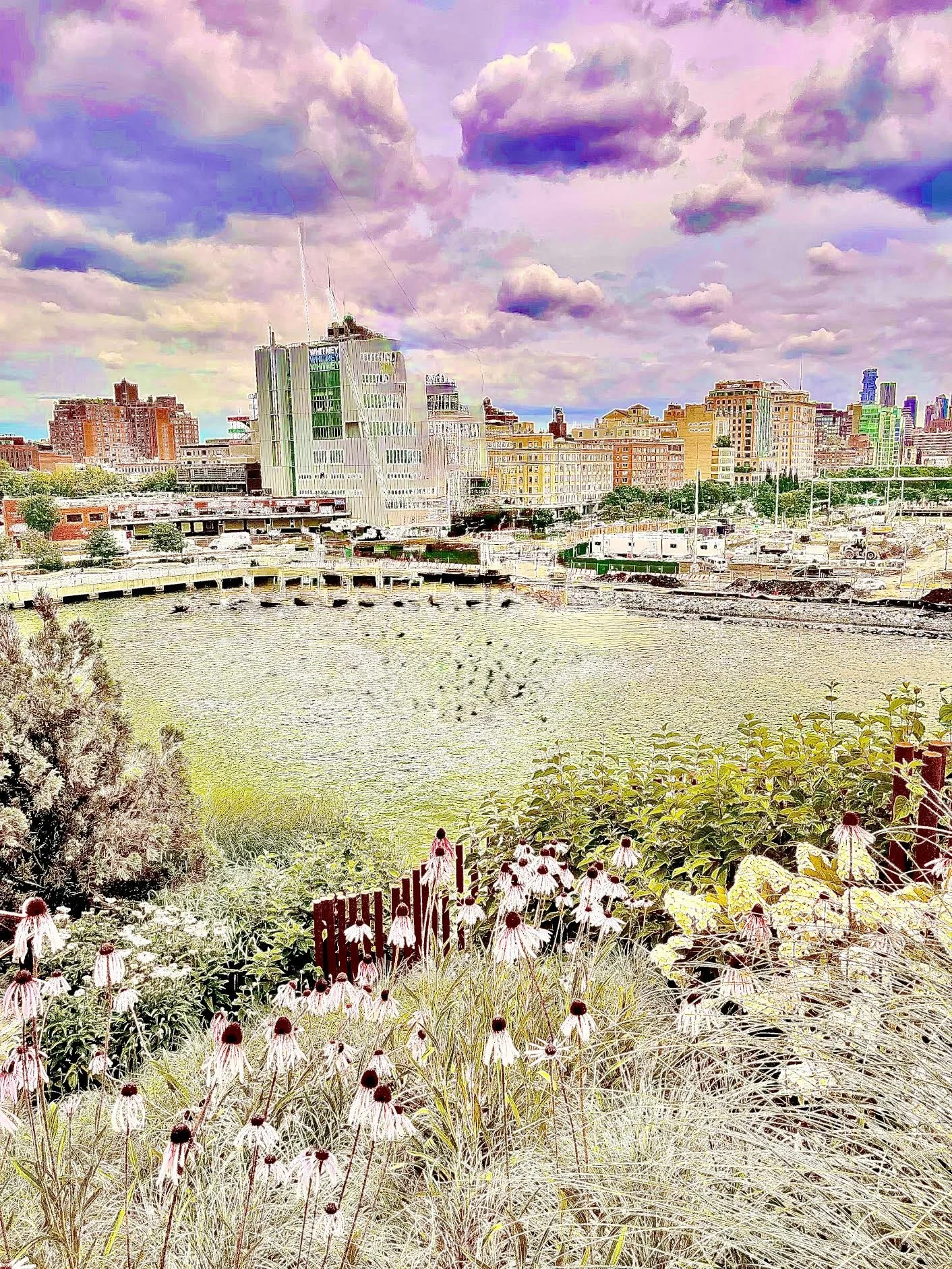
The Whitney Museum by Renzo Piano: New York City

I have stood on thousands of corners peering into the sounds of cities I have photographed: I almost always pause to shoot but more importantly I pause to consider what part of this moment will never be beyond today or tomorrow: My camera is set on motor drive: The  shutter-release has no choice but to capture my memories:

My day of reckoning was possibly when the great Brazilian architect Oscar Niemeyer grabbed my hand with two of his: The people in the studio froze and watched as we drew a picture as one: And again… It was a communal process where I realized the end is near and more is to follow: The rest of the story is my own folklore I share for another day.

I am completely filled with exuberance when I see tomorrow: The days when  I have  seen and hope to see again; Barcelona, Paris, Berlin, Rio a plethora of the “Americas’ entire asian influences and whatever the rest of the globe will allow:again: I am fortunate that  my cameras speak in many tongues: if you listen to what it shares:

A novel, a tome, some potent language from the Odyssey to the Wasteland books were always waiting for me: It was akin to love: Today, my eyes see architecture as kinships of the stories and myths I have embraced-- Like Orwell, my eyes are always on the road to…cities await.

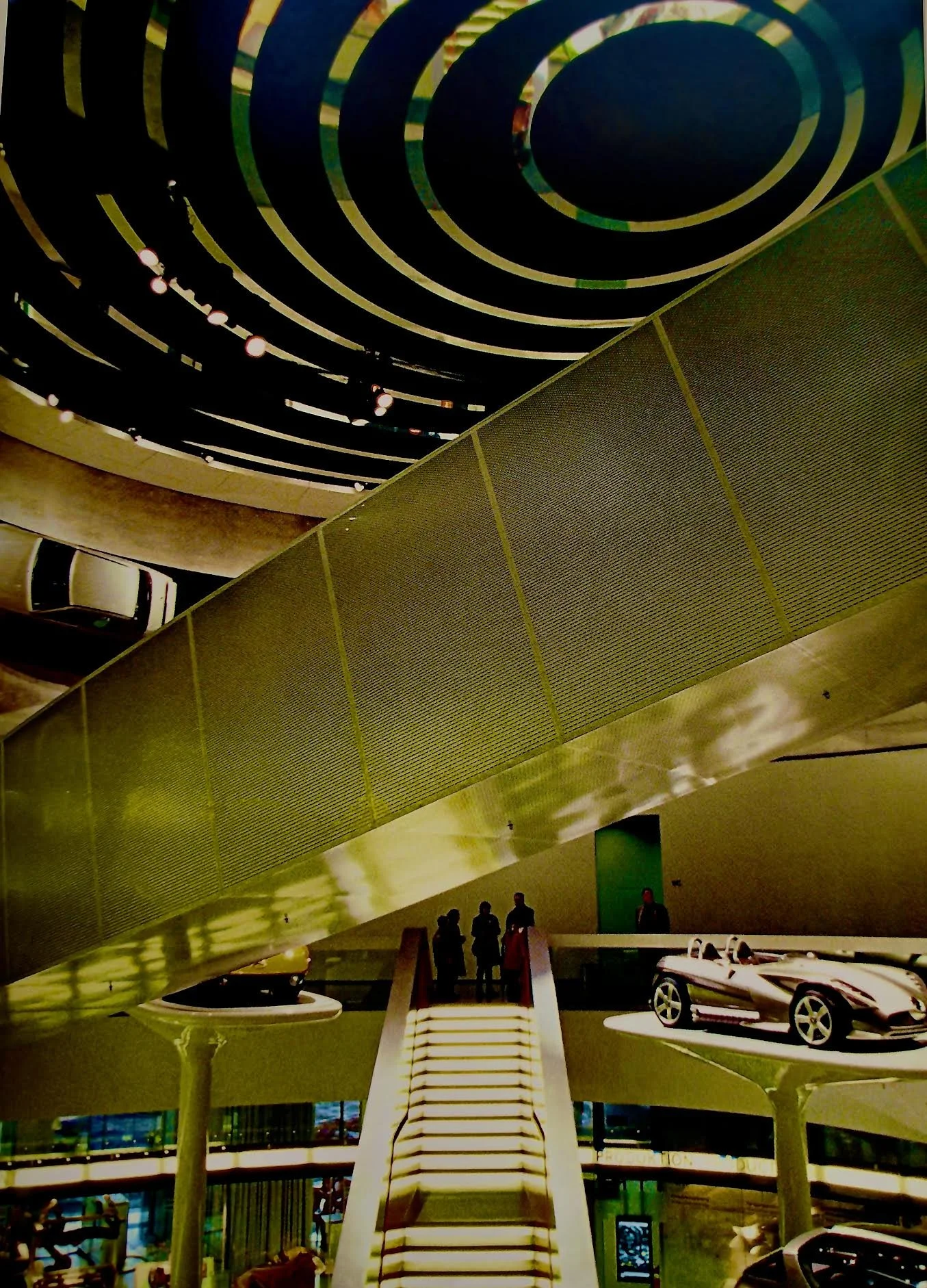
Mercedes Museum, Stuttgart, Germany


Architecture of Cities: Mapping Beauty XXXIV

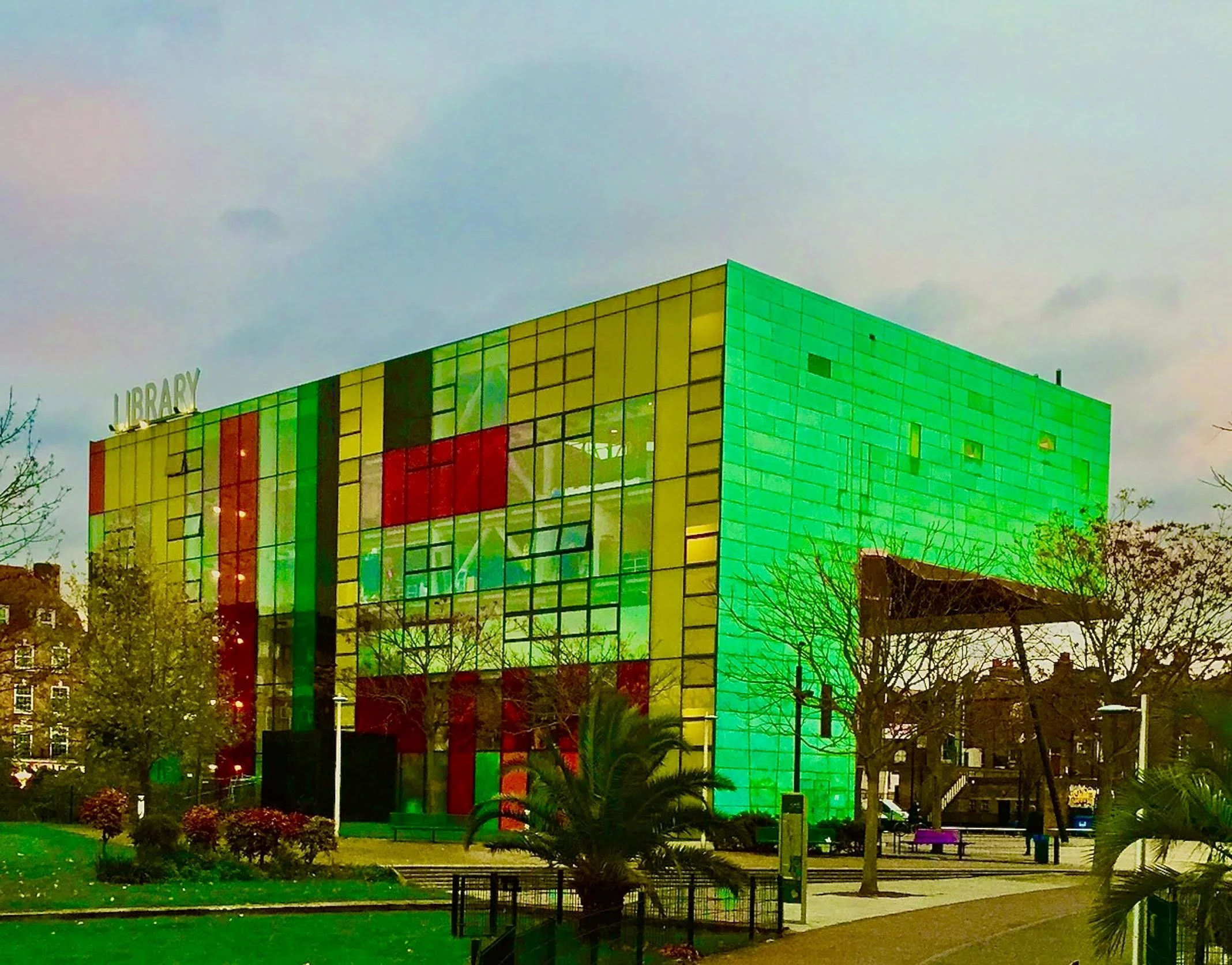
London: Peckham Library: Architect: Will Alsop

Truthful Fiction

Guns and Bullets- -The abridged version: For more than a day I knew a war photographer: He shared the horrors’ and beauty of places traveled: He traveled in a time not mine: He measured the velocities and veracities of deaths: 

We sat in his convertible as he listened to an Egyptian radio station: Arabic songs pierced the sky: The middle of one thousand and more Connecticut trees whispered a set of calming notes: I couldn’t imagine a more amusing journey: traveling in unlikely geography.

I asked a collection bare bones questions: I wanted to know why he chose this angle, this repose to live as a photographer: “I am in Beirut today, Cairo tomorrow and for many yesterdays I was in places not remembered listening to one dozen foreign languages completely forgotten: I learned what I could as fast as I could: Bullets decorated the skies In every imaginable war torn environment. Lying often in wait for a recording of hell in time, I imagined to lower myself below the earth’s surface to hide from the worst unimaginable. I celebrate my days and nights- -This was the course I chose- -I was born to do …

Listening with eyes in the trees above- -feeling below the thrust of oceans’ afire, the earth’s mantle- - The tectonic plates grinding in motion: I was in and atop my very own Surrealistic Pillow.

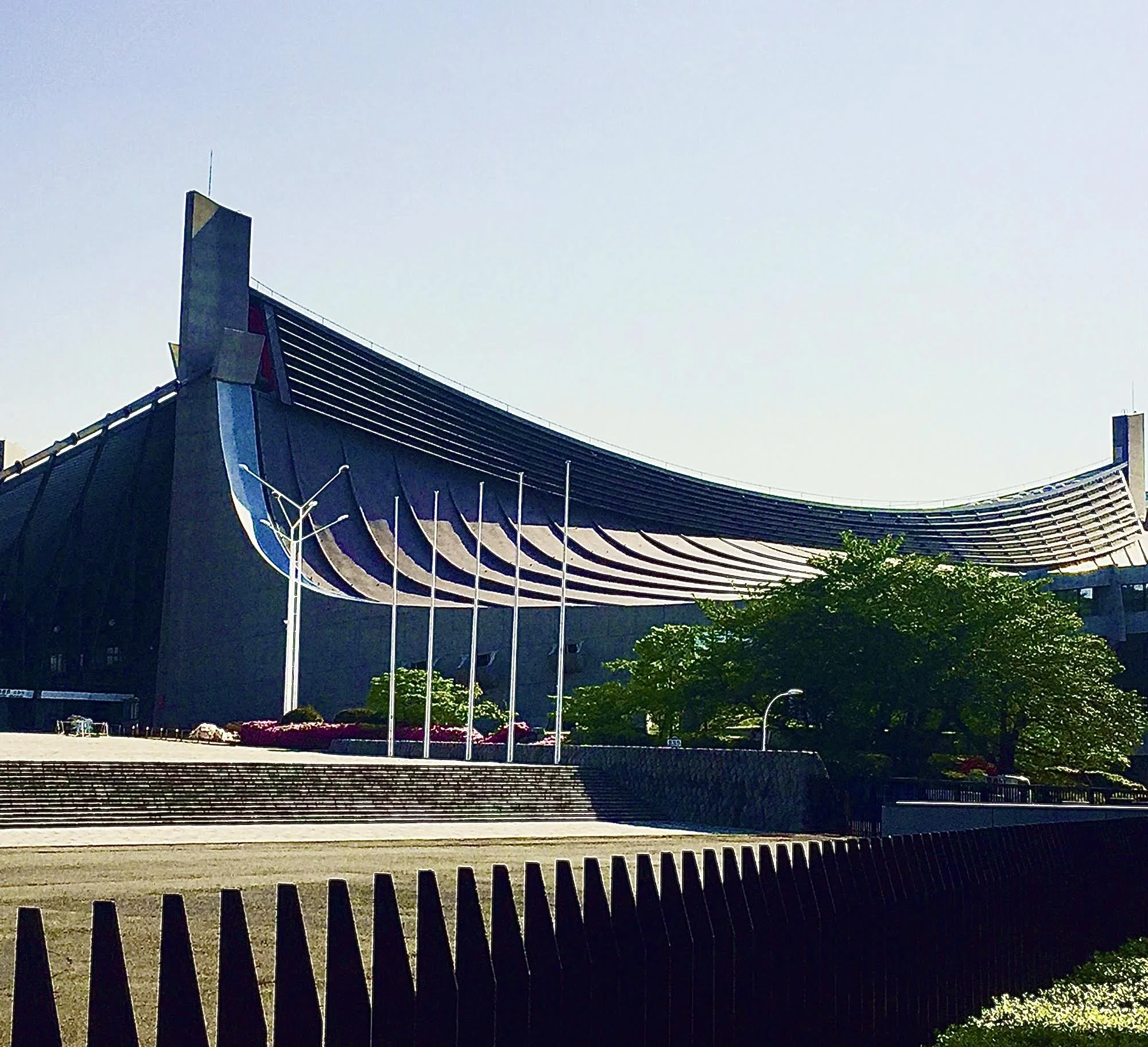
Tokyo: The Yoyogi National Stadium: Architect: Kenzo Tange

The war photographer runs and rushes. My friend warns; “Stay your own course, this one for me is driving me crazy”.  We and friends rise from a cold semi-nude splash in the lake- -refreshed. I listened to everything- -I quickly realized that my evolutionary path was beginning anew.

My canvas is sharply different from my friend’s: I too run and rush: Thrust in a rush to see emblematic Tidal waves, volcanic eruptions and howl to the senses as aquifers flow underfoot- -I howl for more: I rush to this city, this address in a variety of panicking intentions until I am allowed to exhale: When I do catch my breath- -my eyes remember

Henry Miller: “… you live from moment to moment. So in doing that, this moment decides the next step: You shouldn’t be five steps ahead. Only the next one. If you can keep to that, you’ll always be alright”.

My days photographing architecture has become like a natural dose of lithium: It inhibits one from running and rushing: I am reminded that cities can wait- -even as the light of day and the calendar of years urges my speed demons to move along before I sleep beyond my life: It is a disease that daily rallies my mind and awakens my eyes: 

An interior moment inside New York’s Museum of Modern Art

Good fortunes though prevail: I wear a charm of dreamcatchers for good reason- -to commune with the eyes of others.

I am terribly interested in the history of everything above and below the earth: Where a certain history once stood once filled the air- -Where the Pyramids live: Where life in the deep are being discovered- -yet, The modern world is my fancy.

The eyes of others: Maybe Thom Mayne, Richard Meier, Bernard Tschumi, Charles Gwathmey and many more  come to mind: Standing with phone in hand as they explained how to see their designs: It is/was a privilege not to be denied: With their voices near, the modern world comes into view- - I am alive with feverish passions to capture: I will die before it is time but what a rush that awaits: I breathe in both directions: I grab the Henry Miller moments in my camera’s view- -A gossamer of ideas can be heard dancing atop my brains nerve endings…

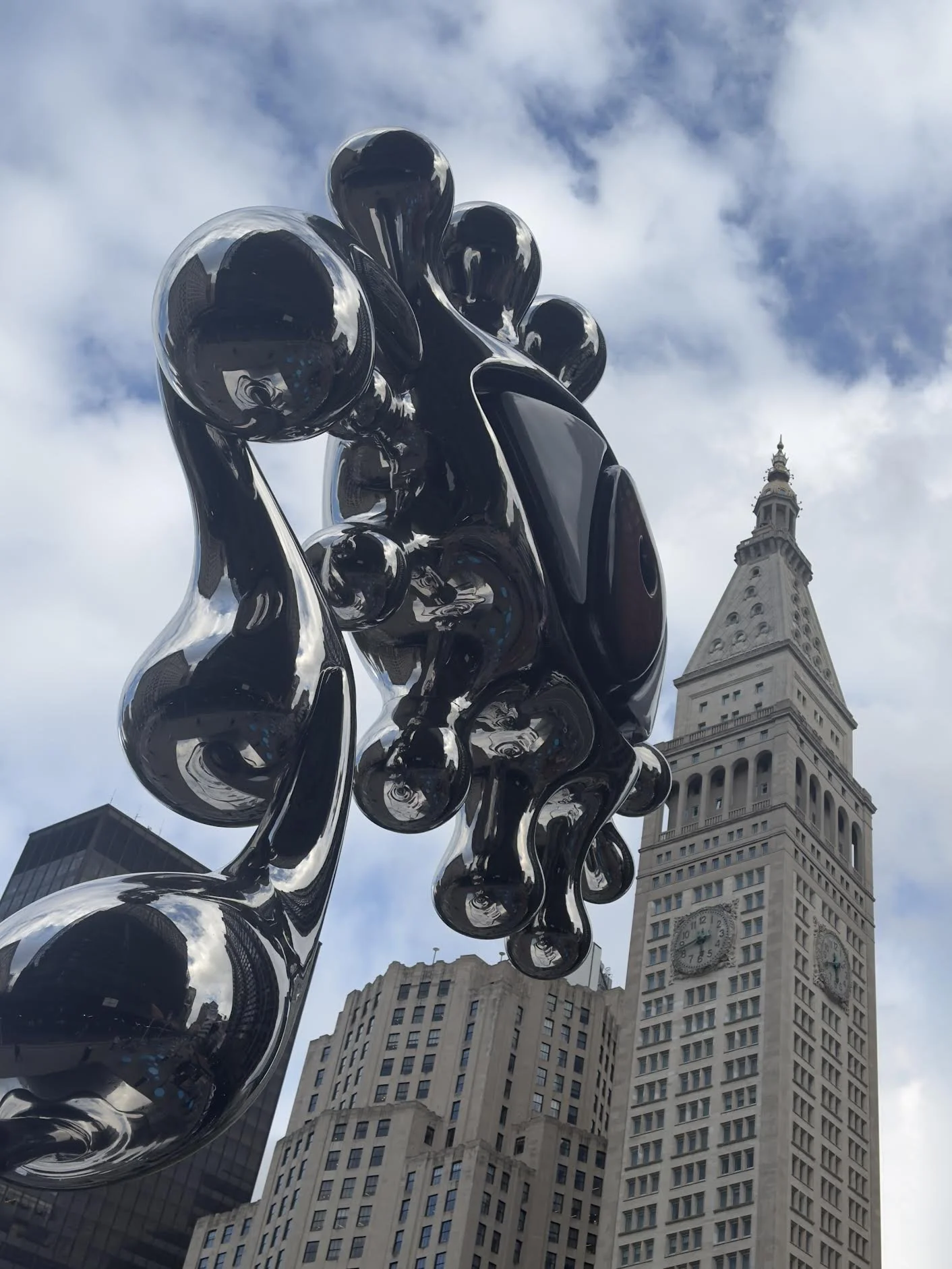
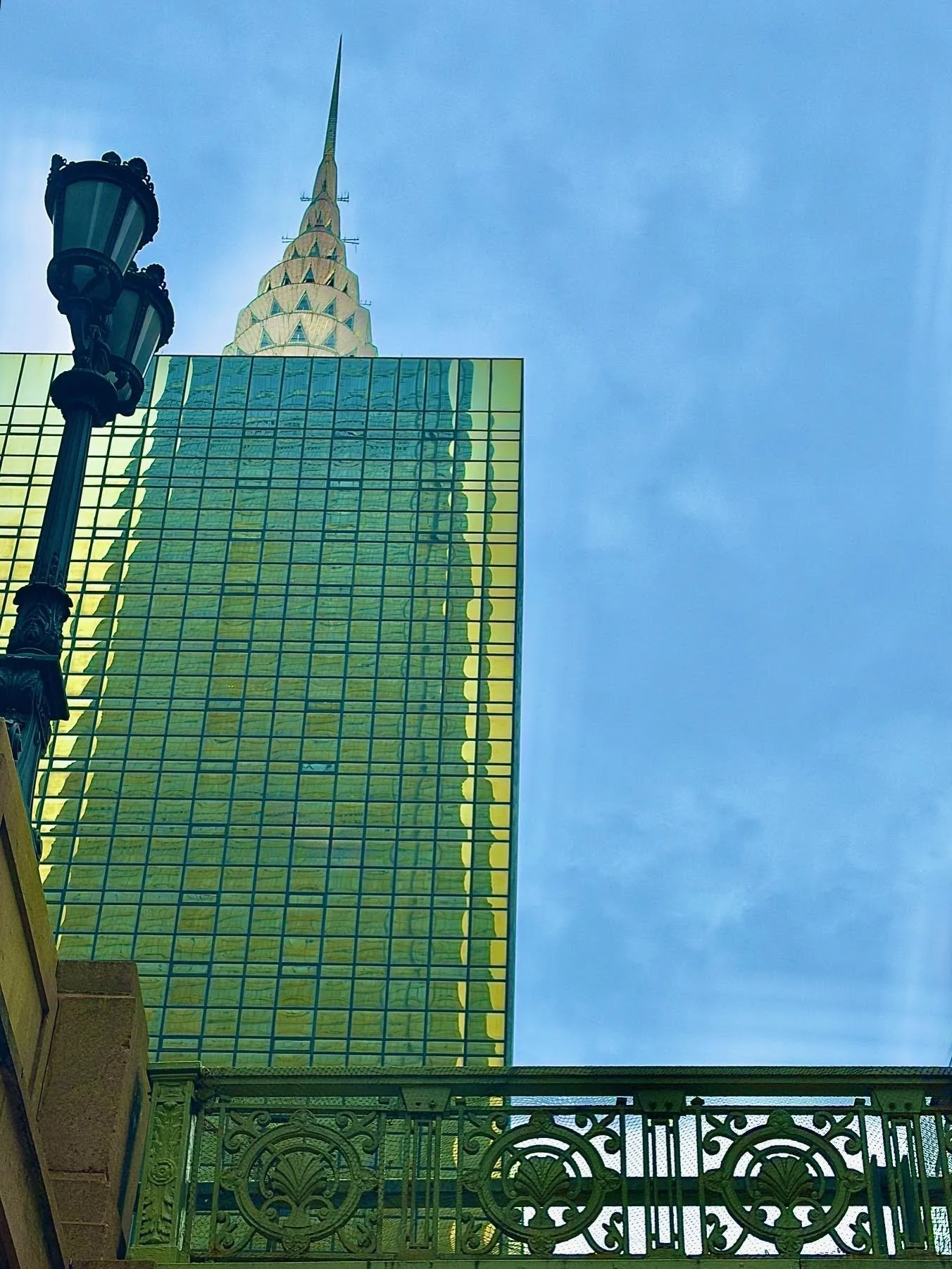
New York: Sculpture meets Architecture: The Met Life Tower along Madison Square Park Dances with artist Charlotte Colbert’s “Chasing Rainbows” Sculpture


Architecture of Cities: Mapping Beauty XXX111

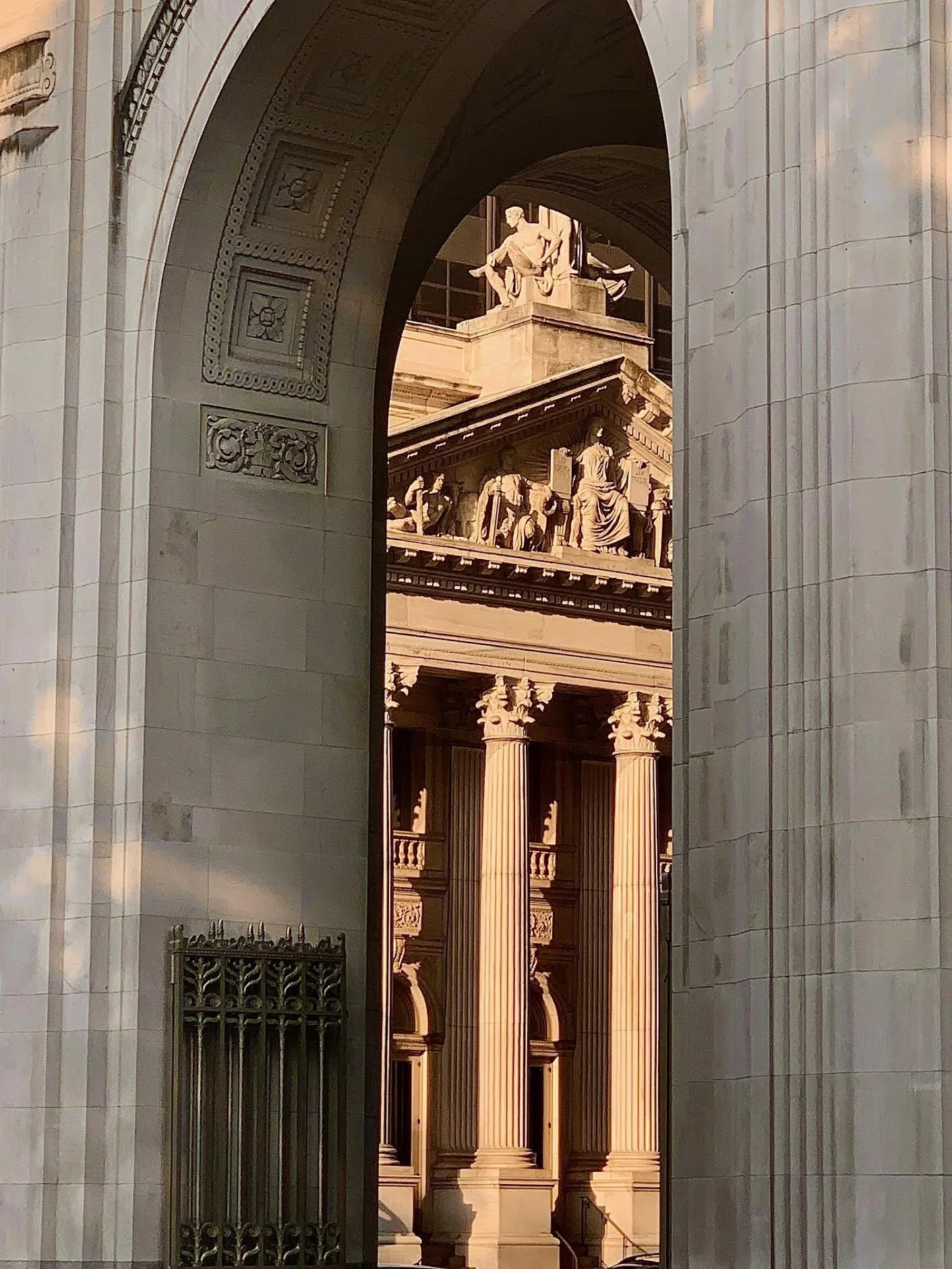
New York State Appellate Division of the Supreme Court: New York City

Truthful Fictions


Michelangelo gave Rome’s Adam and God life’s gift of an invisible sacrament: The spark of the divine- -the  memorably memorable: The collaboratively greet- -is a greatness while in the residence of eyes not mine- -Mine eyes were not theirs: 

More than hundreds, yet Oscar Niemeyer, Philip Johnson, Frank Gehry, Richard Rogers, Paulo Mendes, Hans Hollein, Zaha Hadid too whispered while hands held: Moments constructed remembered profoundly: The unexpected delight (not on par within the “Chapel”) felt within abstract precisionism: My mind forever planted in furtive soils across the planets continents. The captures that became a hush: Moments with words of others. Those I have known, framed my contributions to architecture’s photography.

The Moment

“The moment when, after many years of hard work and a long voyage you stand in the centre of your room, house, half-acre, square mile, island, country, knowing at last how you got there, and say, I own this…”

Margaret Atwood

New York City: Frank Gehry meets Annabelle Selldorf meets Shigeru Ban

I imagine Ms. Atwood equally running with hair in the wind, joy in the field of lilies…floating with forlorn as if Marc Chagall’s Bella in “Nocturne.” The imaginary sight might remind me of sounds to follow: Momentary moments are spoken: We, here, listen as one, two expressions of moments to live by: My camera hears sounds a wee bit differently than the Atwood “speak”. 

 Brief, the briefest of thoughts my camera recalls: Yet the enlightenment that is Andrei Tarkovsky leaves me  mingling within the reflective moments home to The Mirror: His moments of reminiscing of emotional sightings skyward; reflect those someone elses- -Not mine. The force of their aesthetic contributions resonated and will resonate until…:

Coping with moment’s time lost to history and horizons is freakish in part because of the commons: It is common for men and women, communities and  communities of architecture to vanish in the same way that “Tongues”- -languages of history are no longer spoken: Languages in hands not mine: Voices reminded of the ancients- - ancient languages vanishing and vanished: The need to be resurrected is a memory: Like architecture there is an emptiness not to be recalled or remembered>my camera with efforts attempts to record before that black hole swallows the memories entirely among us. Affected I was, I am: Voices carried- -ears remembered, the distant distance ahead: A limited caw of a bird splayed in song hardly remembered.

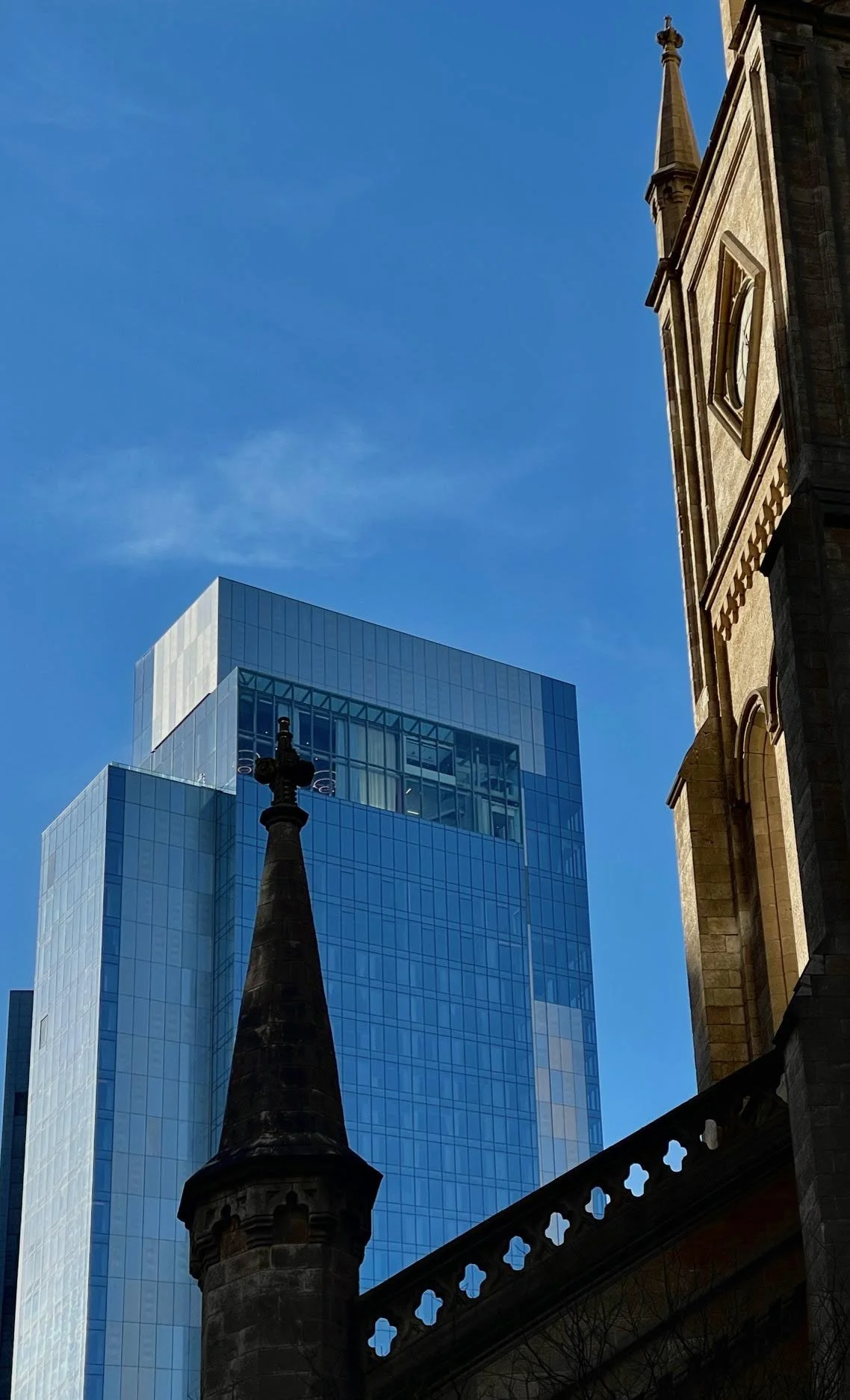
NYC: Virgin Hotel meets the Collegiate Marble Church

The faces in large and even larger formats became calculated captures of time built by geniuses of another mind: I reasonably attack with exaggerated passions utilizing the widest lenses, apertures to capture the expanse that become expansive ideas, architecture’s details. 

One afternoon Oscar Niemeyer embraced my hands: The other aforementioned architects did the same: Certainly with a different gesture to follow: They acknowledged what I do- -Yet my eyes (as my eyes often do) caught a glimpse of another thought: “This is a mere idea: You must understand the architecture I made: Now allow your lens to pursue it with good fortunes.

My journey has not been episodic nor Pilgrim’s Progress narrative: The camera’s dreamery  that is my imaginary place is where the very hush originates: The captures become.

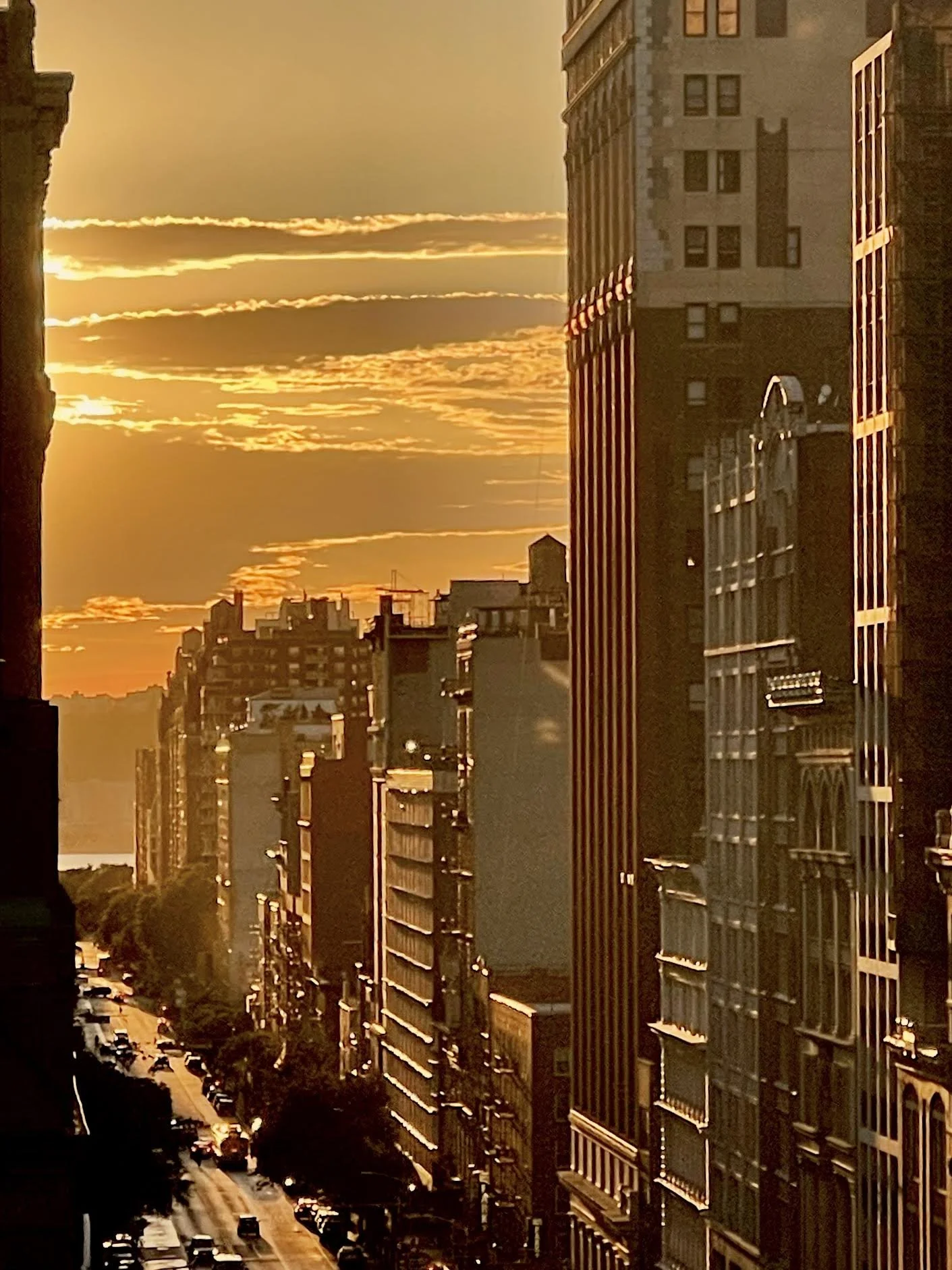
New York City: 42nd street convergence of …


Architecture of Cities: Mapping Beauty XXX11

Just a Dream

Truthful Fiction

On a lazy afternoon I stood (gazing) atop of earth’s unique crustal fault: A spectral spectrum of colors enjoined the planet with the universe. Native dances ensued: I peed into the rain: An unflappably impressive building waved hello:

Miles Davis: “Sometimes it takes a long time to sound like yourself”.

We have always needed science and math problem solving to make creative executions: Problem solving: William Shakespeare: Searched for reliable prominence to print indelibly of indelible utilized chemical processes to create black ink with plentiful of Oak gall: Albrecht Dürer: Scoured and sourced from apothecaries and mines colorful producing pigments to paint colors: Miles Davis didn’t need the the chemical process to create: He merely needed his heart and ears to produce alchemic creative sounds: The link? Three geniuses made the imaginary real by mixing quantitative amounts of curiosity between their fingers: There is no art without science and math: 

Cannon Street Station London

Miguel de Cervantes Saavedra and Miles Davis often come to mind while I imagine the dreamery that are my cameras’ place of perspective. Cervantes and Davis- -voices like no others: A permanence on this planet: They take you places that few can imagine until- -you listen as the language plays: 

I have looked for a window into their lives- -I have delved into their spaces: I have taken a measurable account into their darkest and brightest lights: Their stories. It is not a journey for enlightenment: It is a mere place to live with inspiration: The result is not about finding a sound or challenging a windmill- -just a happy place.

When I think about photography, the photography of architecture and more…I often walk into the set of Bad Day at Black Rock: The desert captured in picturesque Panavision: The empowered din of tremors looms overhead: My mind roams into places experiencing a real life satori encased in a fictional reality. It allows me to trace my memories, my days that have become years: 

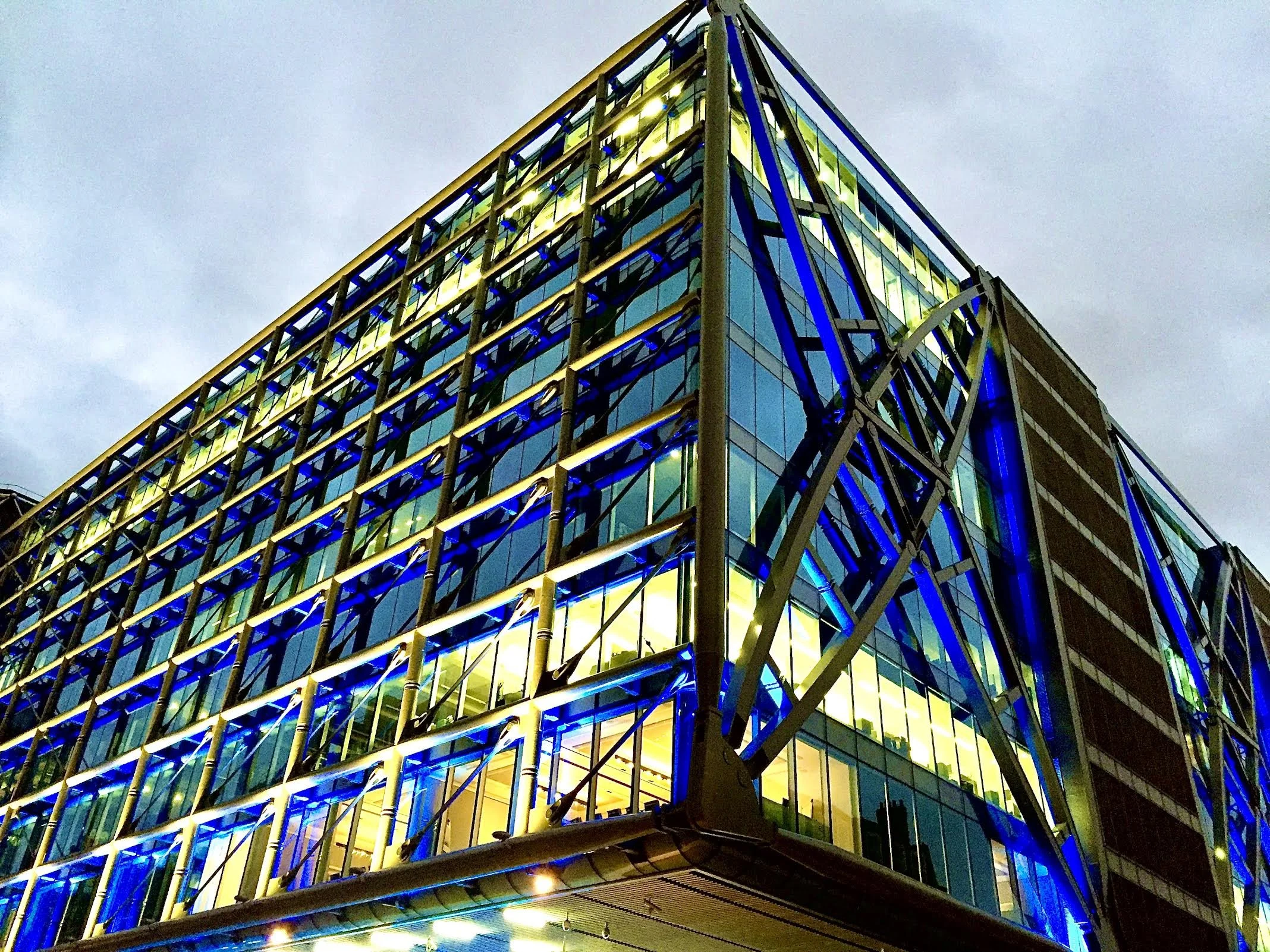
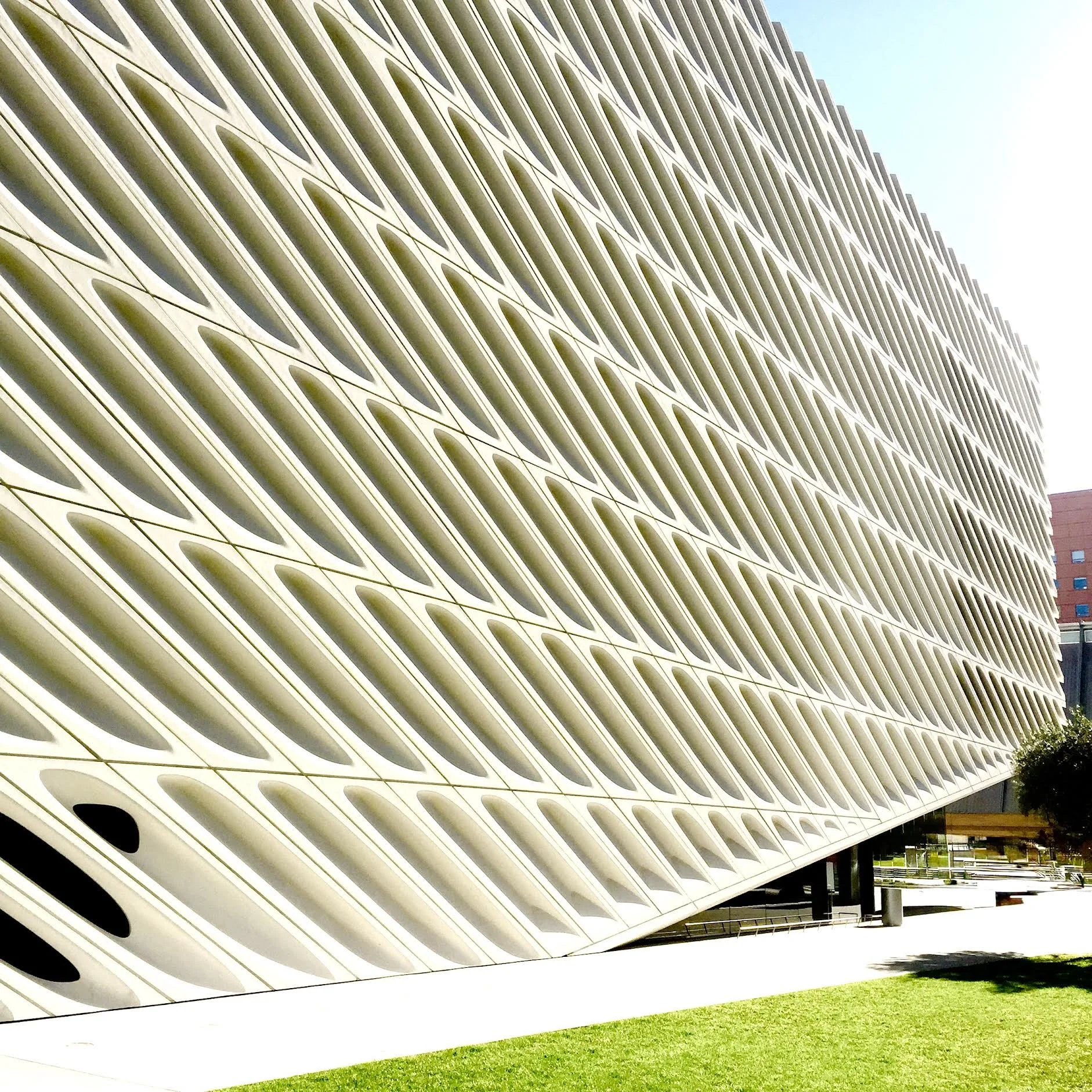
Broad Museum: Los Angeles: Diller and Scofidio Architects

I have seen thousands of architectural designs posing: Posing for my camera: The hundreds of thousands of frames stilled in my light are about my heart: The images were made from ideas- -potions that became reality: Mathematical equations informed the mechanical science that is photography: Attached to the equations are dreams of dark and light fractions: Darkened streets, lighted colors- -Adventure of worthwhile dimensions awaits: I will never travel enough: I travel to realize dreams: I travel to see stories about realities: Dreamers live in reality to become: The camera attempts to make sense of what it sees: I follow.

Photography is a science and math problem: The camera lives within a single envelope of a story that opens in a single frame: The earth that lies below is an underground sanctuary: The stories that my camera sees above and beyond is where my captures live in panavision: a widened and wider view that my camera allows:

Imagine multiplying camera frames by the hundreds of thousands: They for my formats are inviting fantasies: The Tolkien kind- -The Lewis Carroll kind- -The Cervantes and more: The camera poses for the closeup, for my eyes: Miles Davis: “Sometimes it takes a long time to sound like yourself”.

Architect: Zaha Hadid: London Aquatics Center


Architecture of Cities: Mapping Beauty XXX1

Details: The New New Museums:Architect SANAA on the left: Architect OMA and Shohei Shigematsu on the right

Truthful Fiction

 I knew I was dreaming while cityscaping. My mind wandered celestially. Contrails soared equally across the winter and Indian Summer skies: I never wanted to be on the receiving end of the word of the world: I never imagined to be seen as the great Khan, the great Kublai Khan hearing stories about worlds- -a world I knew nothing about. I wanted to be Italo Calvino in the guise of the real and fictitious Marco Polo dispensing truths and fictions for others to imagine.

Dreams are laid bare to be foretold: The illusion that memory’s fade is false: They live in personal curatorial revisionisms: Rewinds in real time: Everything we knew we know: Just press replay format: Everything is remembered differently: Pictures remember the facts.

The first glimpse of any new city is a contagious hello: Stepping off of a train, out of an airplane, out of a car, away from the space shuttle, lilting away from Mars reveal refreshingly new exposures: The camera articulately calibrates: There will be no optical illusions only optical allusions: 

The camera is not a diarist: it is akin to antiquity’s card catalog: A critical and definitive archive of  evidence hidden in a forever space capsule: The eternal archive will  be a reference to where, when, and why my camera lived:

I have tried to explain for decades the mechanical camera’s emotional eyes: The emotions it ponders and manners: The camera resides in its own auto-motor-drive:  Analog and digital functions maintain an Hello mode: The fleeting sensation that we all remember as our first. The camera witnesses the emotional high and low perspectives that are us: The camera nails down the emotional experience of the new- -The tenuous tensions are like a morning with Aspergers’. Like walking a tightrope on a single toe nail- - a gift of life- - like surviving a churning hundred-foot Nazaré monster: Inhale- -life and death are only separated by a hiccup in the aorta.

Grasping for anything and everything in Bangladesh

The camera never decides what will be the first picture: It is alerted to what it knows:  In case there is no return- -an entire city canvas becomes a single frame like a woodcut with an infinite amount of layers- -the permanence within the impermanence moments: History in a frame- - years, days, seconds and fractions.

Hello and goodbye are bookends: The two words frame the life at the beginning and the one before the end: They remind me of  times not always remembered: Winter, freezes whispering of an end: “Goodbye” appears like a Goshawk nakedly moulting in private: Goodbye to the past hello to the future: Oh to be a witness  to our beginnings and what transpires…

It can be nerve-wracking not to know if the the new friend- -the city will remain: It can be nerve- wracking if it may be the last time you see the friend- - the city:

converging shapes and colors in Barcelona

Every afoot, every glimpse is a reminder of the the fragility that is ahead and behind.

In Jaipur, India I had a nightmare naked: My mind appeared naked: My eyes were naked: Natures’ best and a nature not known were too- -naked. The wheels under moving along quite quickly froze as did earth for the cover of the Good Earth Catalog: All the possible imaginations hidden in plain naked sight: The eyes paused to see the raw: to see what I saw.

A woman by the river legs crossed in a colored cotton red sheath prayed: Her breath found in white- -also frozen: I watched as she doused in oils the seemingly dead body wrapped in a white sheet: A flame a sacrifice with prayers abound were now and near:  Her world not mine: My camera said hello and …I promised that day: Not a frame would pass without a capture ever again: There must be a beginning and an end to every capture: A single frame at best: The image haunts…not for what it was but for what the camera remembers:

I want to dance with Beatrice Potter, C.S. Lewis, George Orwell, Lewis Carroll J.M.Barrie

and the clans of those who give a voice to the unimaginable. What we hear are what our eyes see what we see are the voices afoot: Afoot in the hundred or so cities tucked into the archives numbering hundreds of thousands, now.

The Albertine Book Store in New York City