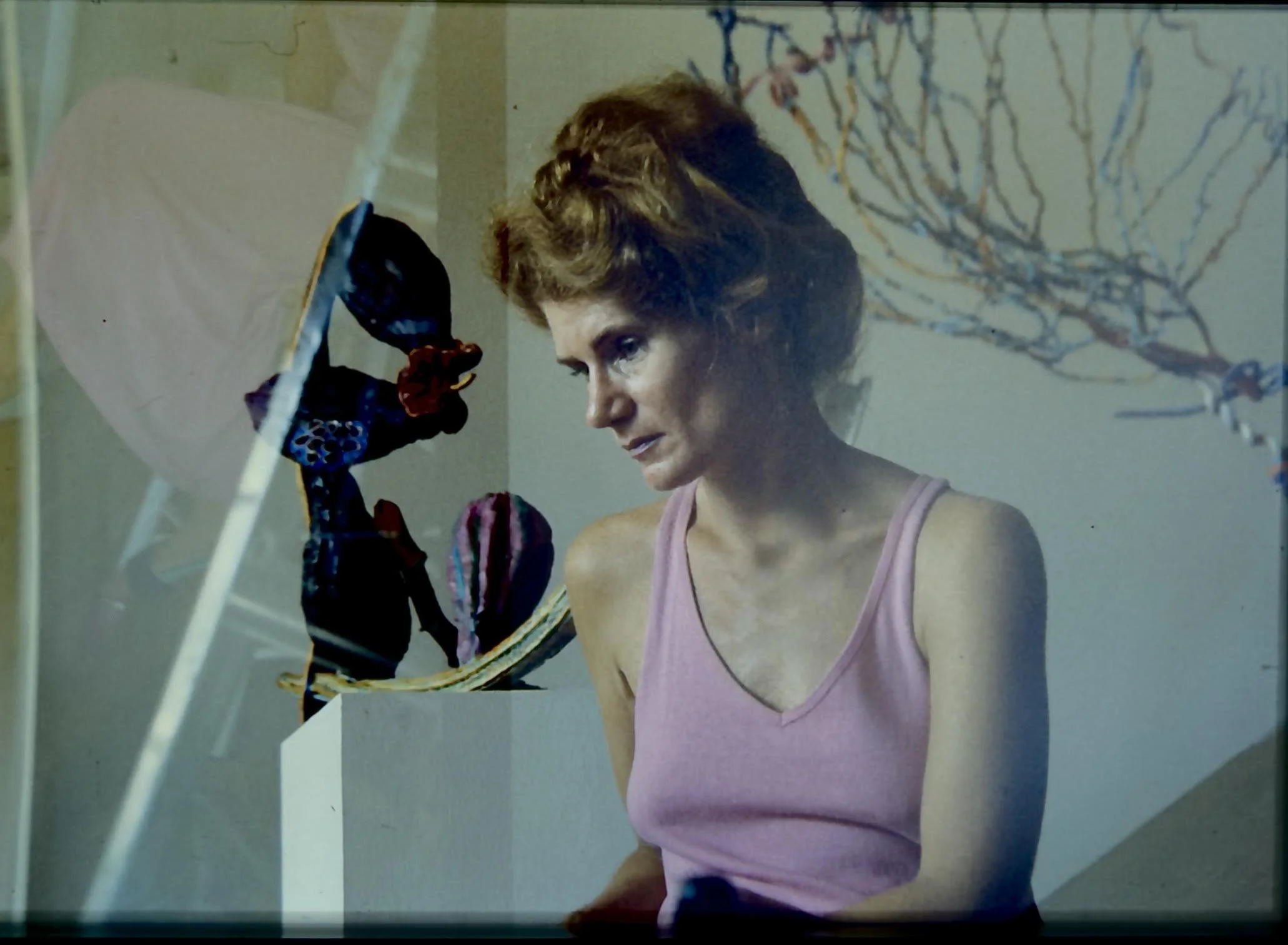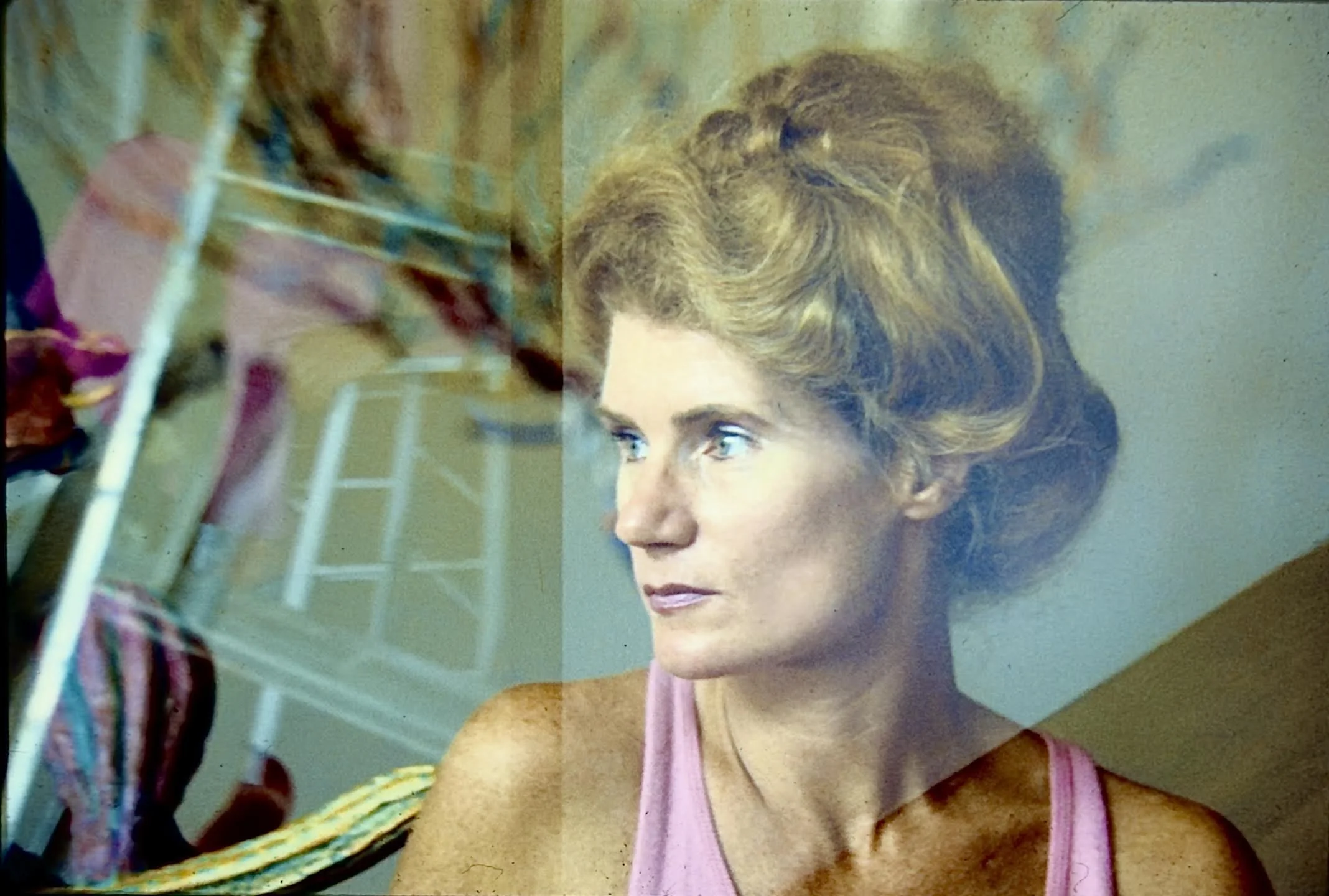
Artist: Nancy Graves by Richard Schulman
Fictional Truths
Tomorrows often become yesterdays at warp speeds. I have never experienced a day when I was alone without a vocabulary of marching orders and dreams to welcome my camera. I have for some time wished that my pictures might appear with an introduction like the great novels; the great ones allude to what the story may become. I have always found a hint of solace in a beginning: “Happy families are all alike…” (Tolstoy); “Many years later, as he faced the firing squad,” (Marquez); “It was the best of times, it was the worst of times…” (Dickens). They are not mine, and I am not them. Yet, phrases survive because they illuminate and, if allowed, define truth.
New York City’s SoHo was once a jewel box for the pleasure of living in the Western Hemisphere’s hive of contemporary art. During the early stages of my journeys to capture both the core and the fringe of living art history, I could stretch my eyes across ten city blocks with every eyelash close enough to touch and enter the studios of the hundreds if not thousands, of living creators. My camera felt magnetically guided by an imaginable copper crescent moon and star weather vane, spinning east, west, north, south and each ordinal direction in between. Fame, interest and folklore were walking the streets. Galleries, artists and soon tourists flourished. Old giants, hipsters and eyes on the prize types roamed freely.
With my camera held near my eyes, appointments brought me to hundreds of real life moments. The mystery and anticipation of an upcoming session felt like trying to imagine a face to the art. It was a unique time. How many times have you stood on the precipice of Niagara Falls when the earth ceases to move? That is when I heard, ”Hello.”
The artist Nancy Graves opened the door with eyes appearing like a boxed set of mistrust. I followed her lead through her studio, her life. None have walked through their own space with such grace filled with contemplation. She reminded me of a frail bird with little oxygen posing with uncertainty atop a waterfall’s crest before the cascade. It was truly a beautiful moment for these young eyes.
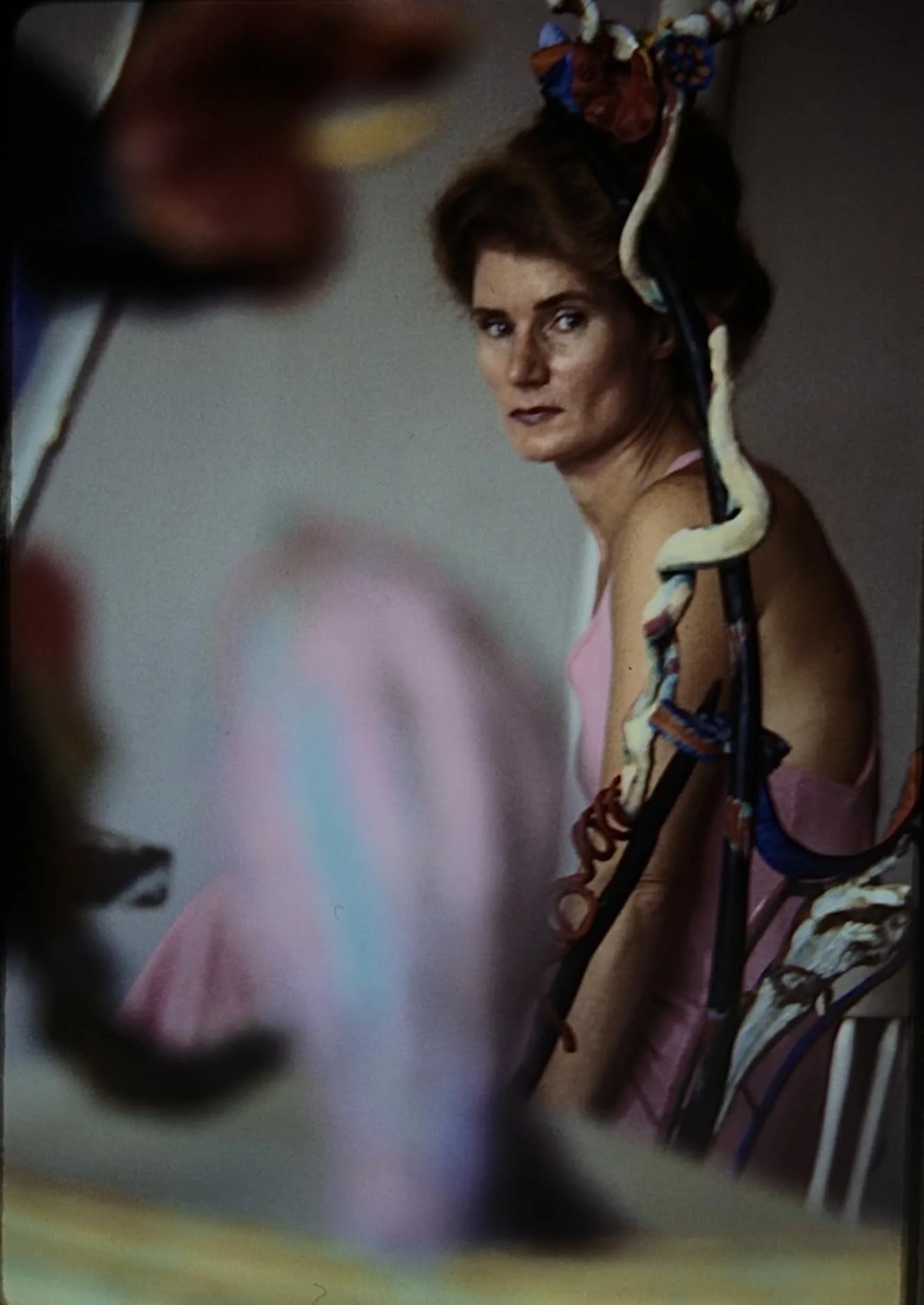
Nancy asked me if I had photographed women artists before today. I was surprised at the question. I never accounted for the numbers of men or women; I only targeted the links and lineage of available art history as I mapped out a day and a life. I quickly listed Helen Frankenthaler, Lee Krasner, Alice Neel, Louise Bourgeois, Nancy Spero, Louise Nevelson, Jenny Holzer; evidence from the many generational facets of my art history. She nodded approvingly. With no plan in hand, I quickly got to work, writing a dialogue in my eyes about what I could possibly do with this moment, this artist. This is how it begins.
I struggled to find a focus. Touching her shoulder, I asked her to breathe a bit. The afternoon was tender; her work was loud; her voice was like an ethereal whispering. I recall the memory of being there. It felt like a schoolyard Hopscotch game; the goal is clear, but the path can feel like physical chaos.
I was a portraitist of people who happened to be artists, and to me, they were the ones who mattered and mannered most.
Nancy Graves’ meticulousness and stunning attention to the bounty of details reminded me of Albrecht Dürer, who treated pigments and metals with precious reverence. Being alone with her work magically stoked my varied imagination, becoming like a kinetic link to her compadres in art, many of whom I photographed: They were Yale teachers and classmates who included Robert Mangold, Jennifer Bartlett, Brice Marden, Janet Fish, Chuck Close, Richard Serra, Jack Tworkov and Al Held. In an enigmatic or uncanny way they sat in the studio’s orchestra seats like a part Greek chorus, part jury, narrating and judging. I can still hear them sing.
Now, Nancy has passed. The footsteps of a thousand artists have passed, leaving behind the SoHo a few ghosts can kindly remember.