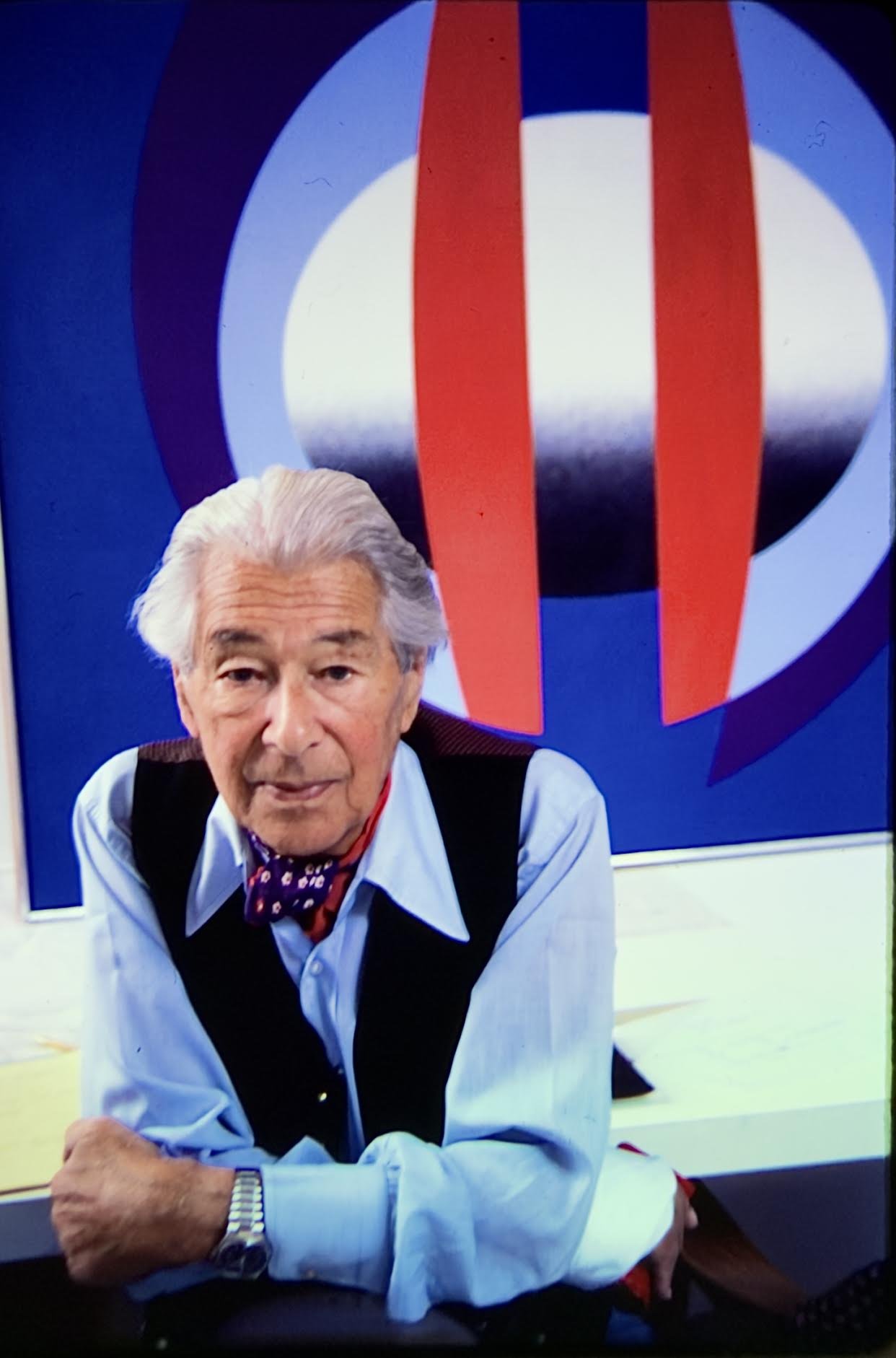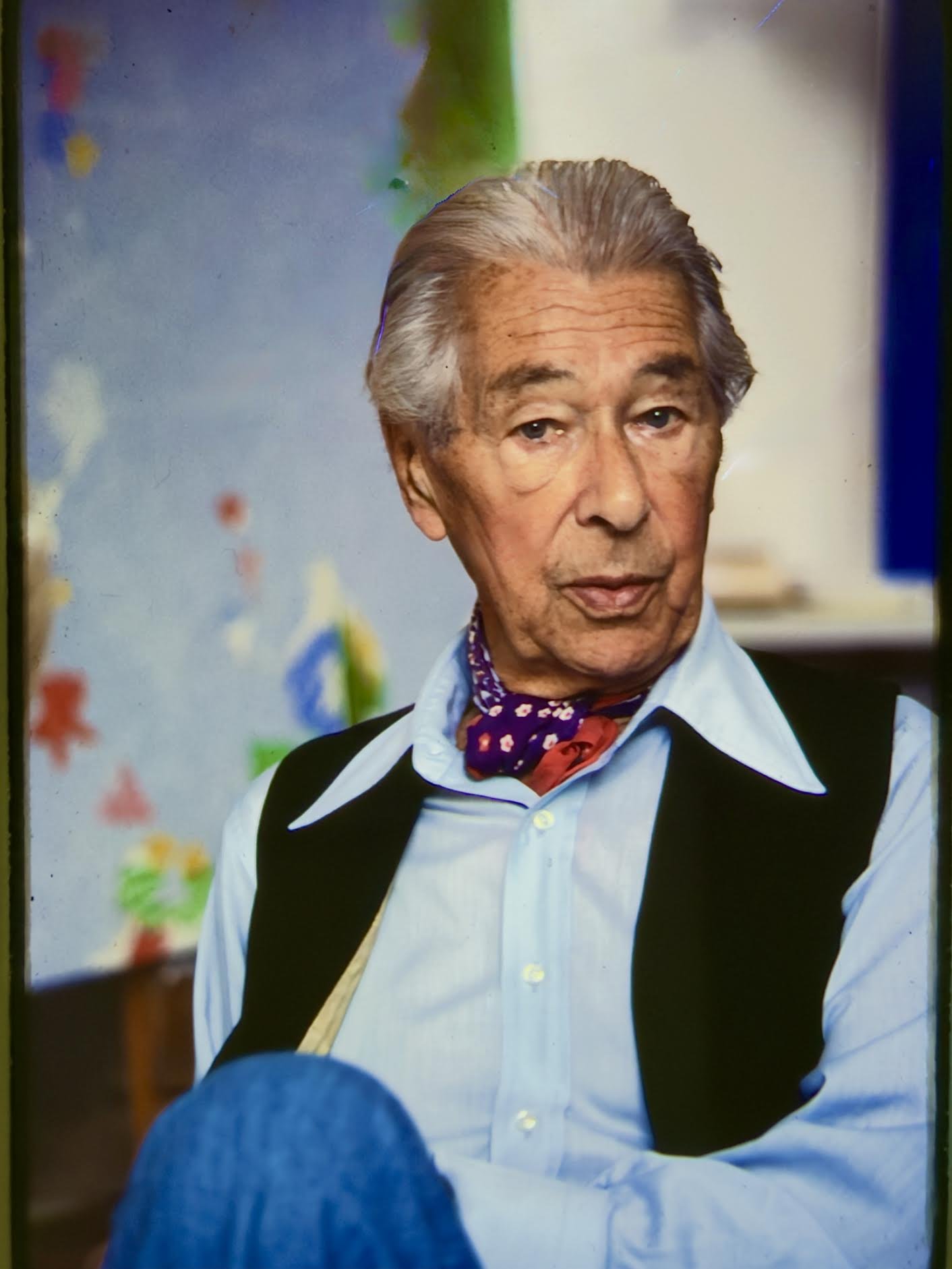
Photo Portrait of Herbert Bayer by Richard Schulman
Fictional Truths
Tokyo, Japan, holds 101 secrets for me. Much like Disney’s animated Dalmatians, those secrets are not hidden; they are right where you need to see them, in plain view.
I once made fifty, and maybe even thousands of photographs for a book. It felt like living in a dreamer’s fantasy in real time. That first trip was about making six portraits. I succeeded to varying degrees, while experiencing moments of heaven. I traveled the streets like an elf before Christmas Day. Simply feeling happy was just a fraction of what my adventures meant to me.
My first, fifth or any of my days in Japan were no more remarkable than the others. Still, something magical happened the afternoon I photographed the Pritzker Prize-winning architect Arata Isozaki.
The session became complicated because he had overbooked. I talked with him for a few minutes before he had to leave for an hour to be with a client. He politely left the office, and returned a moment later, apologetic. “I thought you might enjoy this while I am gone.” He placed a monograph of the artist Herbert Bayer and a serving of tea before me.
What resonated was not just his generosity. “Iso,” as he was known, could not have realized the significance of sharing that Bayer tome. He could not have known about the wonderful day I had spent in Montecito, California, with one of my heroes more than twenty years earlier. How could he have known Bayer’s contribution to the shaping of my camera’s visual religion.
Many years ago I wondered how come we couldn’t watch the Rolling Stones in our living room. Why couldn’t the world enjoy the company of fantasy:
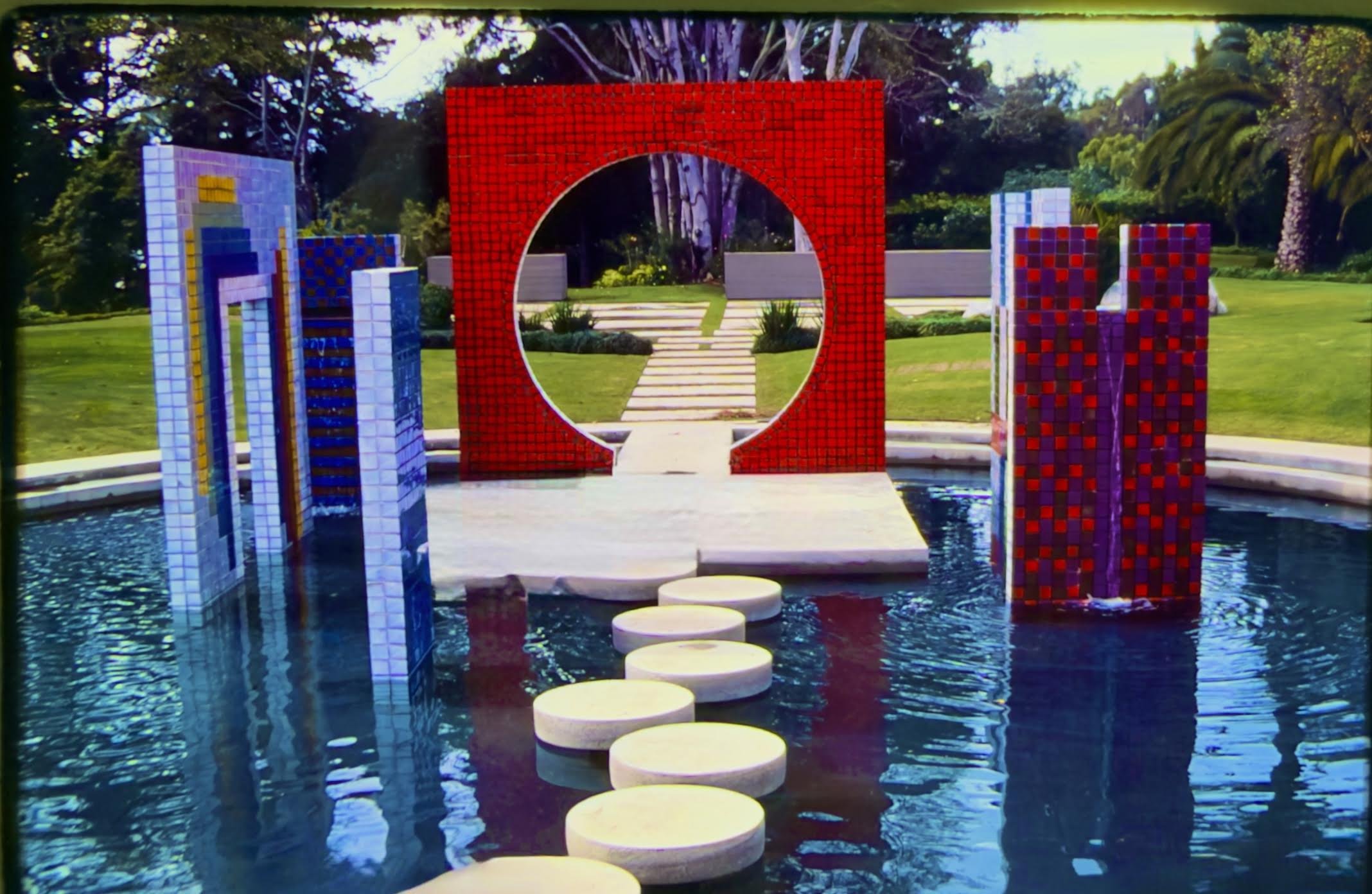
I had become so engrossed in the read of Herbert Bayer, that when Iso returned It was as if a holographic Bayer appeared in ISO’s office. Obviously like thousands of images before the power of dreaming took my hands. I felt the presence of Bayer and Iso in one breath.
A hologram is a truth as much as Mary Shelley’s Frankenstein…The imagination of mind and science melding as one is quite powerful.
Twenty years earlier when I arrived at Bayer’s home/studio, I wasn’t merely shooting a portrait. I was a traveler in the art world’s universe. Alone I was. The great interdisciplinary specialist by the mere shake of the hand, felt like I was sitting down to an art history masterclass. Pleasantly confined by Merlin’s Lady of the Lake, I listened to his tales of Austria, the Bauhaus, commissions, and a comprehensive list of those I should meet and know. There was a great divide between our ages, but he made Aspen, Albert Schweitzer and more like an afternoon with Da Vinci.
My camera awakened. My past and present celebrated with me. One might think sitting in the breakfast room with a few sandwiches might seem a bit dull, but not with such a captivating storyteller.
My portrait mattered. But to know that Bayer and Isozaki played such an emotional part in my camera’s work, is what mattered most.