Artist Keith Haring
Truthful Fictions
I was driving through one of a thousand urban boulevards in a sapphire blue ‘60s Mustang. Squabbling like wild children, Kurt Vonnegut and Ray Bradbury hitchhiked a ride in my brain. From afar, a squadron of infamous and famous faces materialized like celluloid portraits captured in the tailwinds.
I have always measured a camera’s life in fractions. I have measured the success of my pictures in fractions. Imagine decades of evaluating your happiness in a fraction of a second. I recall similar expanded fractions of time when I have felt like gazing into the eyes of a Caravaggio, a Renoir, or a Giacometti. It has not been my gaze that matters. It is the aura around and inside the eyes that captures my attention in one of those aforementioned fractions. The camera does not hesitate when it sees the light across the seas, atop and in between architecture or just as a dapple of light across Boulevard Haussmann. Everything I see is in fractions.
One day I graduated to large format cameras for two reasons: I was wasting film in 35mm by not utilizing frames efficiently; I wanted more information between the lines in the available resolution. The marginal differences can be tremendous.
I daily have visual conversations with my camera’ lens. They allow me to imagine what it might be like to exchange ideas between the eyes of the portrait subjects; my own gaze and an audience of one million. We all see what we see, yet consider it differently. To me, this exchange is the equivalent of a roundtable of oral history-ideas laid out on a table to unite the past, present, and future.
Grand thinkers, grand imaginations like Proust’s and Homer’s come to mind. The worlds they layered before our world are kinds of places I hoped to find while looking through my viewfinder. My personal Jupiter is probably Boswell’s The Life of Johnson. It was Johnson who wrote, "Memory, once interrupted, is not to be recalled... Tradition is but a meteor, which, if it once falls, cannot be rekindled."Boswell’s work is not an oral history either, but a a great account of a man and his times. My mechanical camera can only capture a fleeting moment before it disappears forever. My camera’s fractions could never equal one of literature’s great tomes.
Picture-taking is simple, so I try the impossible. I try for the grand and settle for a few musical notes. On a practical level my approach is akin to the musicologist and folklorist John and Alan Lomax, and the Chicagoan, Studs Terkel. My fractions can find a home in the cumulative sense. I never intended to become one of these figures. Documenting diverse places and people wasn’t something I sought to accomplish—it was a ticket to explore and find new adventures.
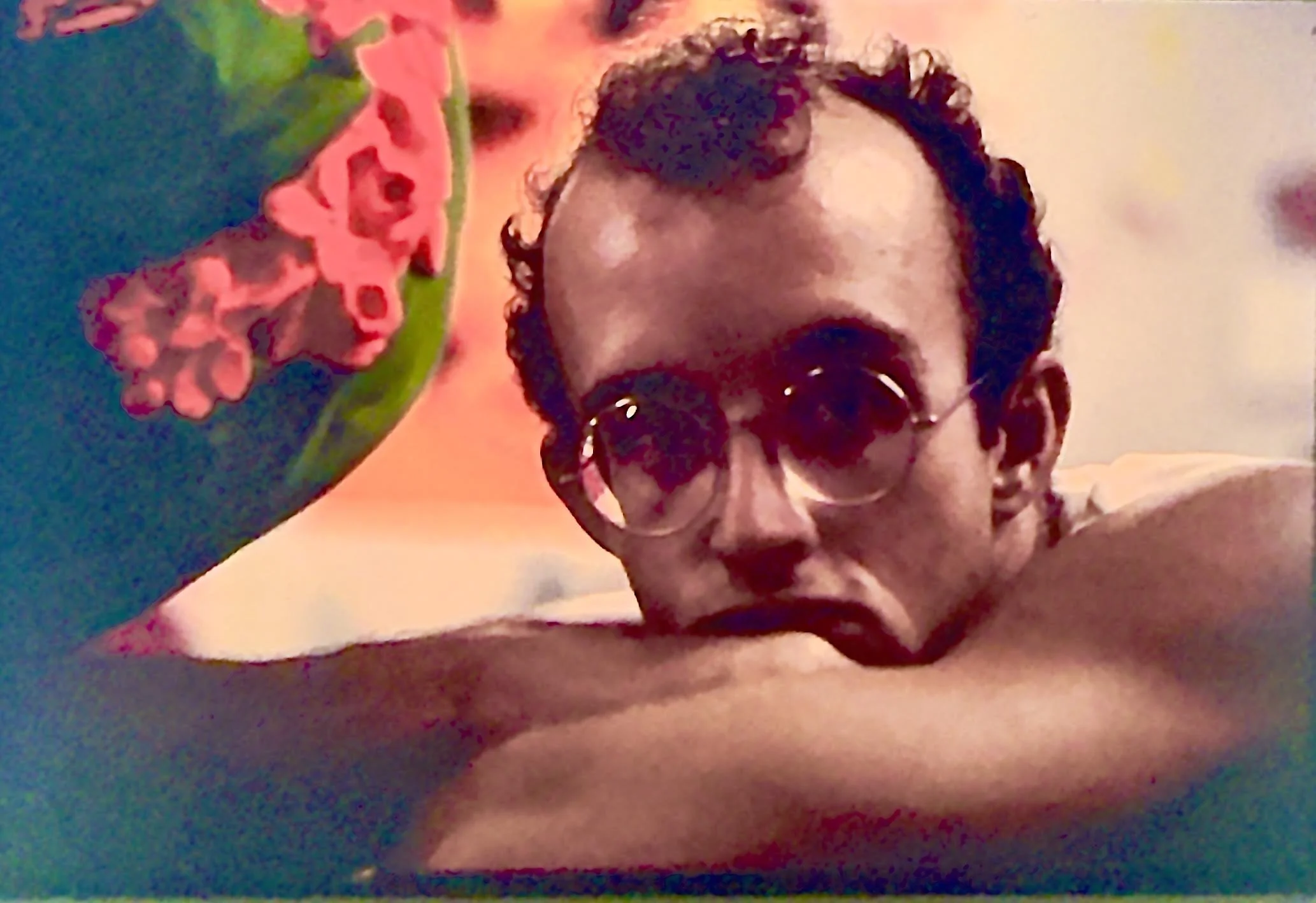
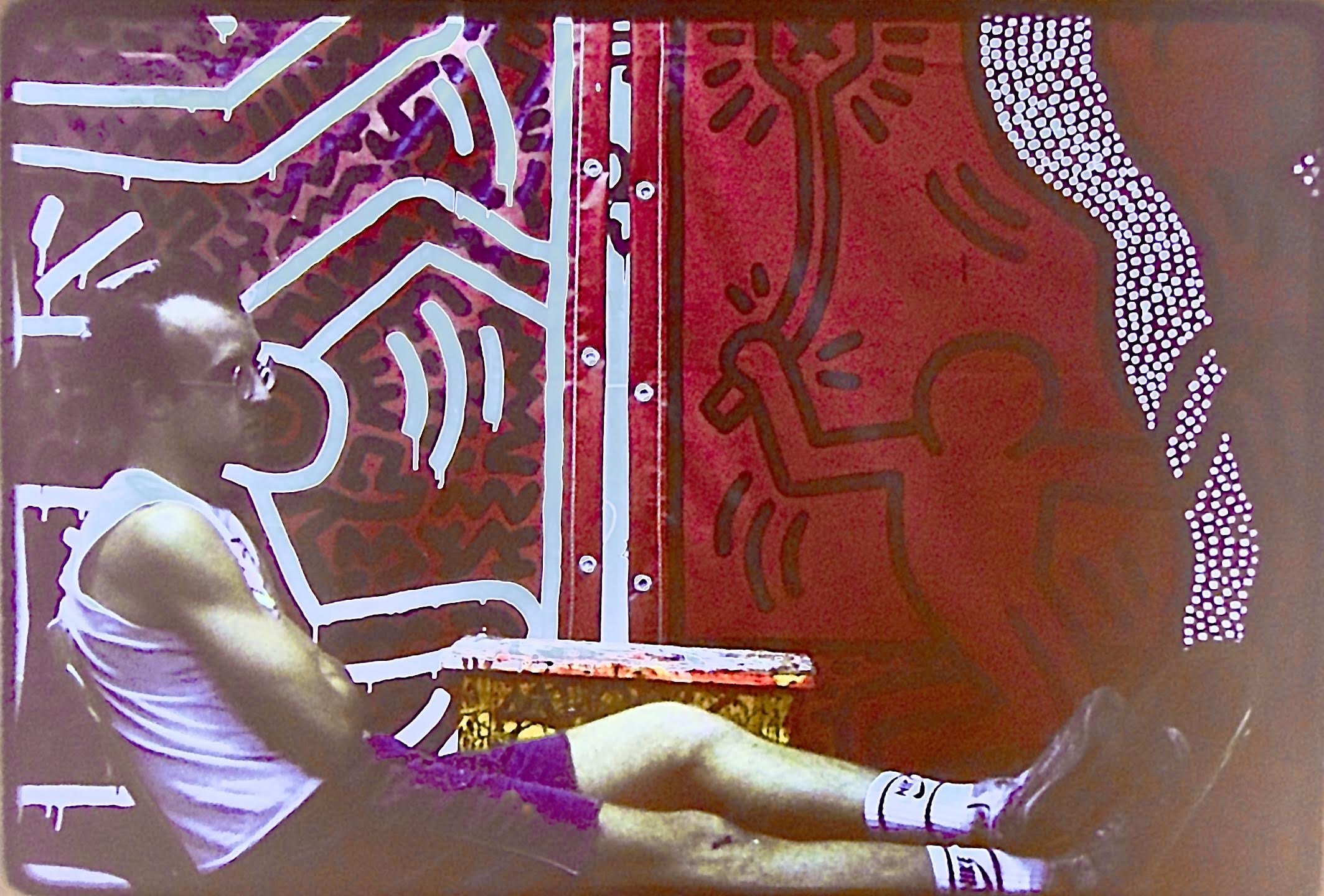
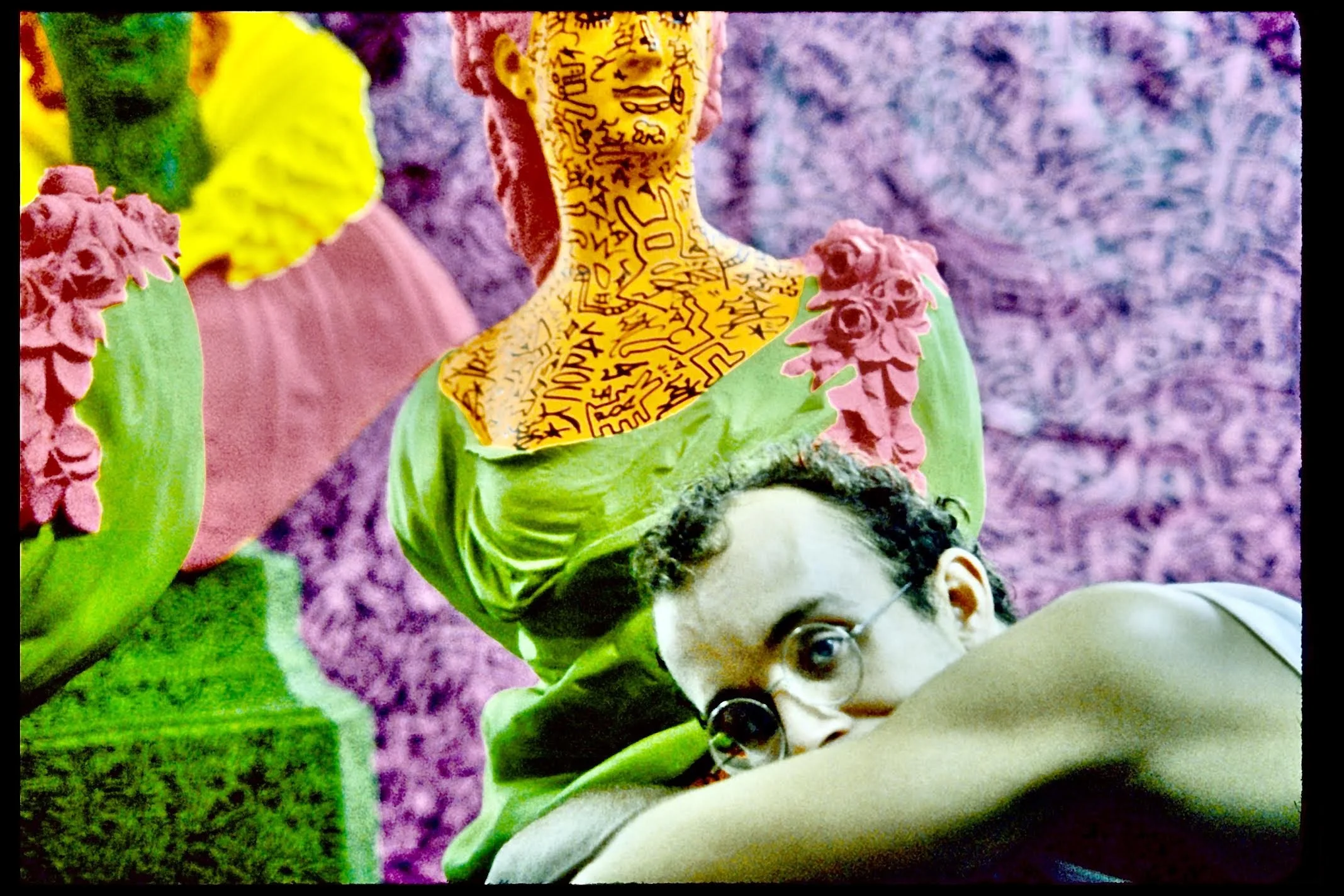
Arriving at the studio of Keith Haring, one of the prominent figures of the art world’s zeitgeist. Felt like a perfect pas de deux.
My camera never went to war. It has quietly and actively engaged creatives in their environments. Early on, Keith Haring looked haunted. I am not 100% certain, but he seemed overwhelmed by the fame. I think he also relished how he could twirl his wand and make things happen. So many speak about him as an elfin giant—fragile, much larger than expected. He was one of those people tethered to whispers: “There is Keith.” People look and listen.
As he posed before my camera, I could almost hear his unique patois. It wasn’t a reference to anything cultural, but like a number of famous artists I have photographed, his consonants and vowels seemed to become unique to his presence.
Keith was photographed by the most famous photographers in the world: portrait, fashion, and popular dilettantes all wanted a moment. When this fragile artist entered the room, one could claim that the zeitgeist had entered. The aura glowed.
The day I shot him, there was a line of known camera guys waiting for their slot. The fragile deer caught in headlights also knew how to exhibit a bit of P. T. Barnum. He created a circus effect, making the commotion seem that much more important. To be photographed four or five times in one day can feel daunting for anybody, but the fragile graffiti artist liked being famous. What I won that day was a concession. The famous artist loved that there was energy about in the hallways. When he faced my lens, it was almost as if he was lending his eyes to share the calm he could not have. But for a tiny fraction of time, he could be Keith from Pennsylvania.
The studio was filled with the graffiti-animated colors that would be the Haring trademark. One day soon, those canvases and wall murals would be worth millions of dollars. In my mind, one hundred ghosts of portraits in my rearview mirror gave me a bit of enduring confidence. The eyes of fame shone but were solemn. “Let’s just talk,” he motioned. I cannot possibly know what he shared with the “famous” guys. I do know that the oral history that my camera has captured over time, this was one of a mere few fractions of time where two quiet voices talked about art and artists and only if the day could end with that whisper.