Artist: Alex Katz
Truthful Fictions
The minds of some artists remind me of the blinding light generated by a Graflex Speed Graphic camera flashgun. Its magnesium flashbulb frightens the eyes like the hydrogen bomb testing at Enewetak Atoll. Remnants of the explosive white smoke remind me of Andrei Tarkovsky’s The Sacrifice, where a house burns inescapably in many flames. Similarly, as Michael Ondaatje’s Count László de Almásy burned brilliantly in the Saharan desert, his molting skin erupting, the human and reptilian skins remained. Strange imaginations-both voluntary and involuntary-sing as bright and dark forces at work. An apparent new birth reveals a bit of heaven.
An artist’s mind can be on fire and methodically cool. The lure of a new capture becomes my personal cries and whispers for what will be a lasting frame: a reality of moving frames, seen as a montage merging my portrait and architecture photography. It is all in one, all at once-a great awareness of quietude-like a pebble almost whispering as it dips into a waiting pool.
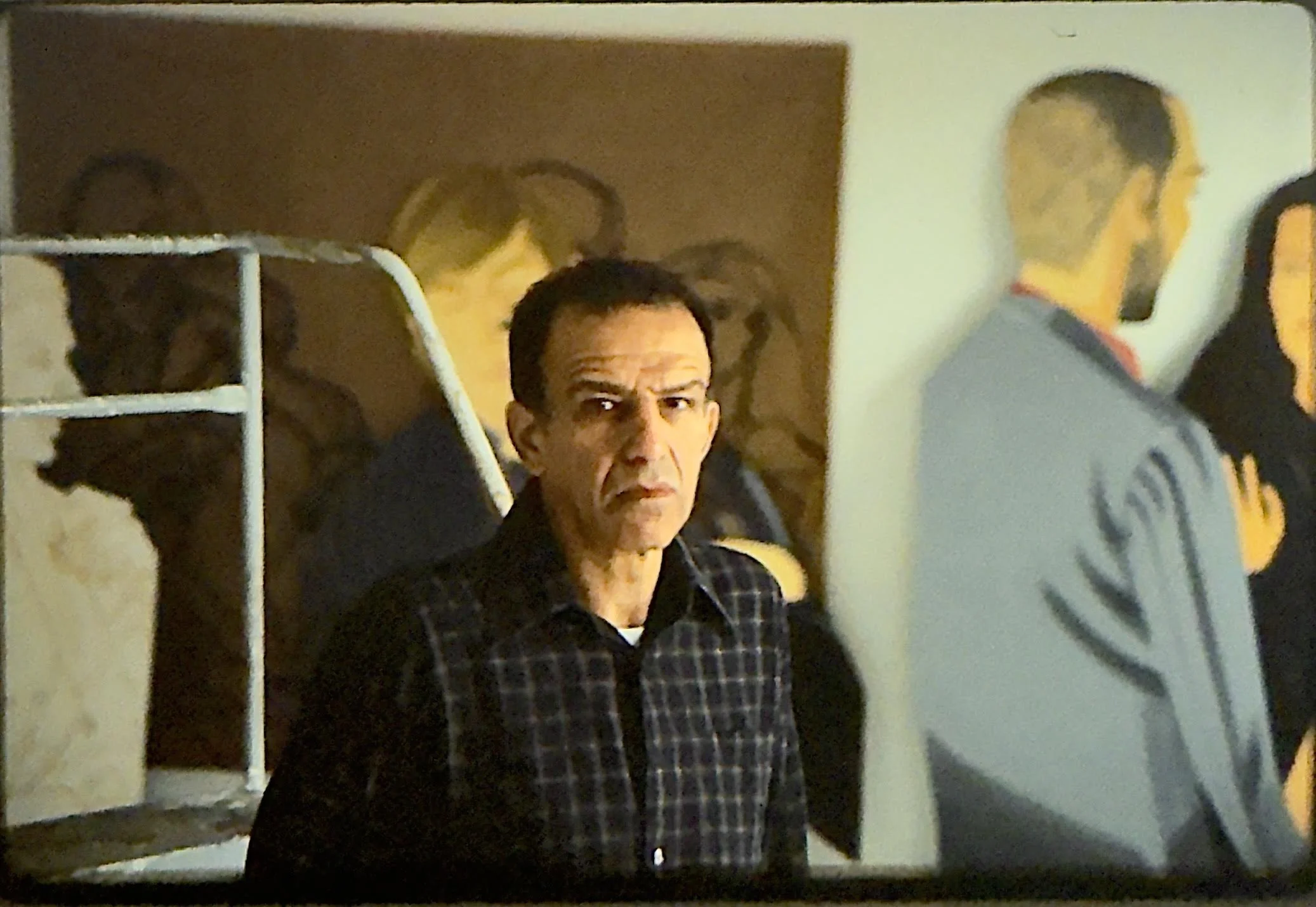
The artist Alex Katz greeted me at his studio door. He turned, and without missing a beat, I followed him like the Beatles crossing Abbey Road. Two men wearing white buck shoes, we strolled around the spacious studio more than once. A Day in the Life felt like a constant theme, was here again.
I always dream when I hear the lyrics, and I dream a bit more when the music plays. The quiet stroll still remains surreal in a fading memory. There was not a silence-just a query.
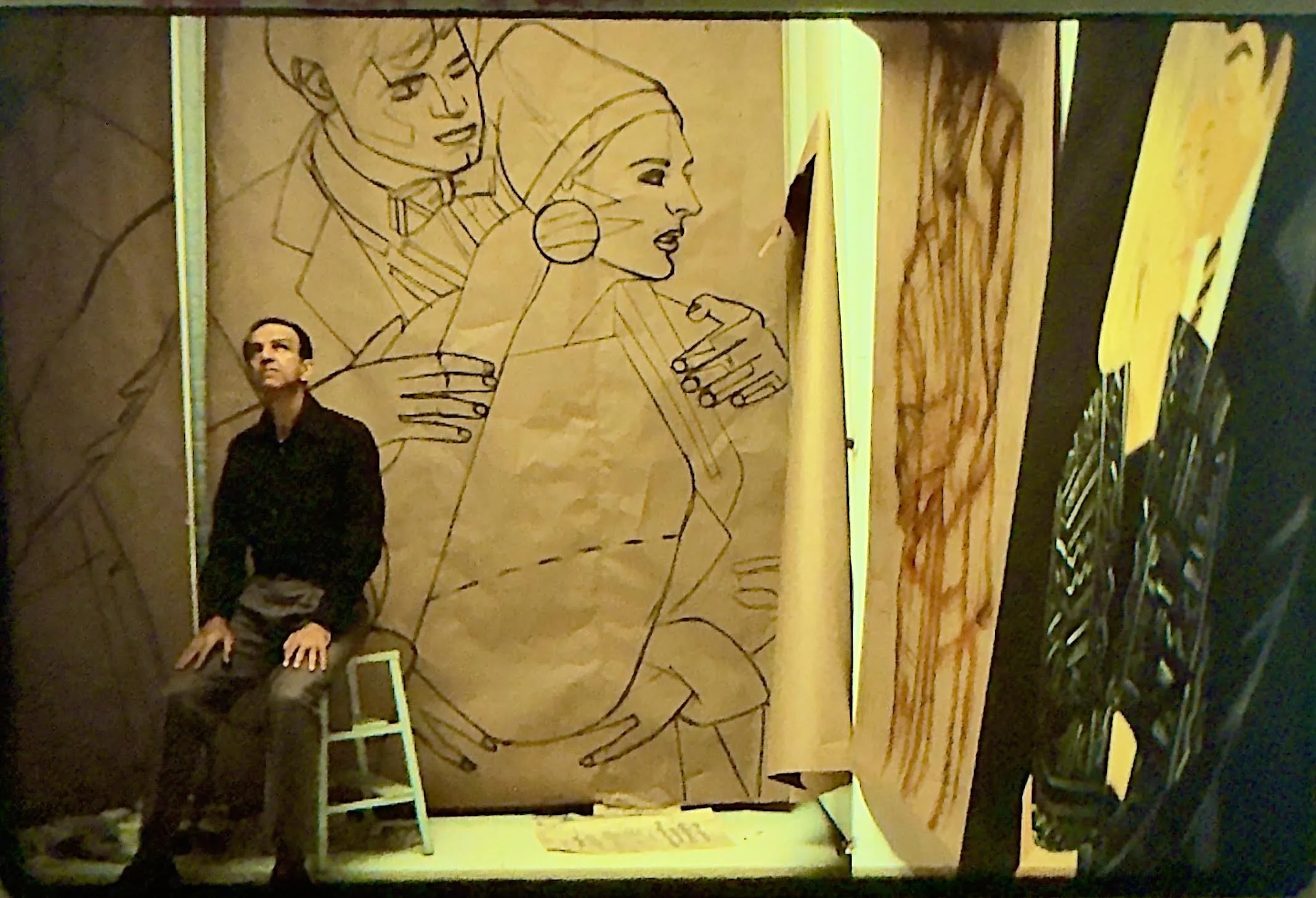
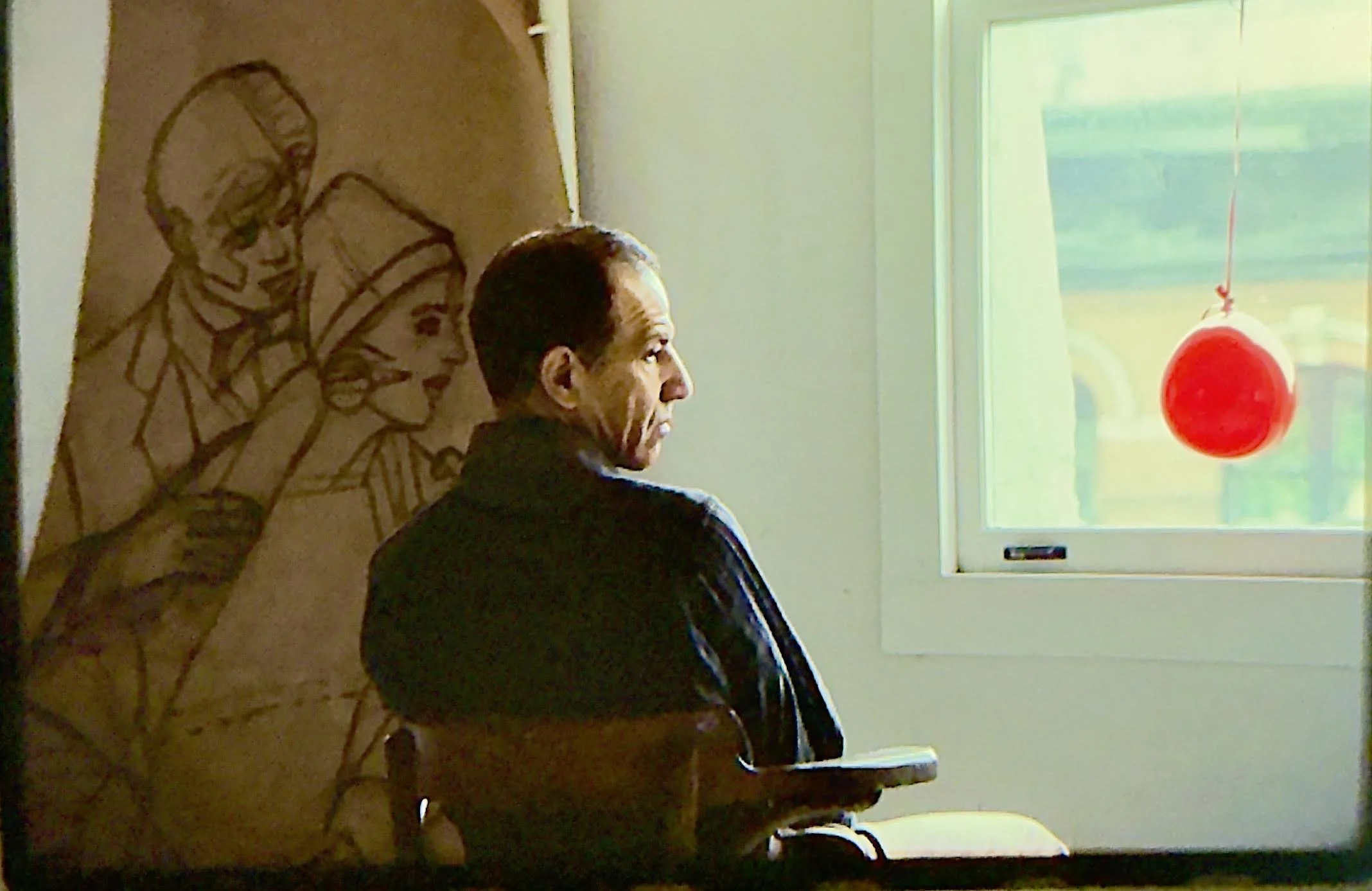
I had photographed hundreds of artists. The portraits were my classrooms for art history and psychological engagement. Photographing Katz was a minimalist exercise like a Georges Simenon novel. I had spotted a lone red balloon in his studio and hung it from the single window. The quiet story unfolded, but the power of mental persuasion was alive with every breath. We were two breeds of animals sizing up opponents or determining if there was a bond to occur. The dance of strangers began like a classic toe-step. In position we stood, the music about to begin.
Then, as in most portraits, I recalled some assistance. I saw Gordon Parks position his classic “American Gothic” photograph. I knew Gordon a bit. I could borrow his brilliance. The “American Gothic” was the defining anthem to my portraits, allowing the stoicism to become an unraveling of a life from the past, fusing with a moment in the present.
I listened to Alex talk about Alex. I remembered a rumor from early on in his career. He was so dissatisfied with his work, that he destroyed a measured ton of his paintings. He stared into and beyond the balloon. He repeatedly asked me, “Why?“ Yet he still calmly talked to me, around me, and beyond.
As we verbally catalogued names in common-The artists, the galleries, the travels- I saw him get close to breaking a smile. He was famous, I was not. But in the room where a painting and a camera narrated a history of two individual personalities with unique strengths and weaknesses, I called to him to let him know the session was complete.
Over the years I would run into him serendipitously. I would always extend my hand as he was lingering on a Soho Street or navigating a crowded gallery or museum entrance. He would most often not remember my name but say, “Yes, the Red Balloon photograph.”