Artist Frank Stella By Richard Schulman
Fictional Truths
To walk alone in a halcyon daze upon entering Elysian Fields is a flight pattern, that angels dream about.
The sensation of flight lives in some minds as the wind does in mine, anticipating the heaven that might await: the heaven that cannot wait.
The artist Frank Stella seemed to demand that each day would speak to an ideal. It was a Ferrari life, entering his own personal heaven while speeding on the Taconic Parkway past one-hundred miles per hour, like racing legend Niki Lauda in his Ferrari 312T2 chasing a thrust of unknown power. Somewhere in Stella’s work was not his actual silver Ferrari, but the classic Rosso Corsa. With red speed in mind, Frank in spirit could be seen welcoming the look of a champion. Arms spread wide, he wildly sped across great distances, celebrating an athletic score. His deconstructed work, driven by a fascination with brilliant speed, was a rewiring configuration of the eyes and mind; two parts joined at the hip.
Imagine a million and one cochineal insects crushed into carminic acid, spreading across the plane of the Ferrari chassis until it spilled, flowing into a Florentine lake. This was the Rosso Corsa that painted his dreams, blinding all around with imaginary speeds across uncharted red raceways. Frank Stella the artist, stood legs apart holding a dripping red brush in hand like Caravaggio’s David holding the severed head of Goliath. He sought a beautiful blinding vibrancy cushioned into his midnight dreams where his Italian roots convened. Years later, he kept a red Michael Schumacher Formula One Ferrari race car as a sculpture in his studio: His silver Ferrari was no longer alone, it became part of a wider space to dream in.
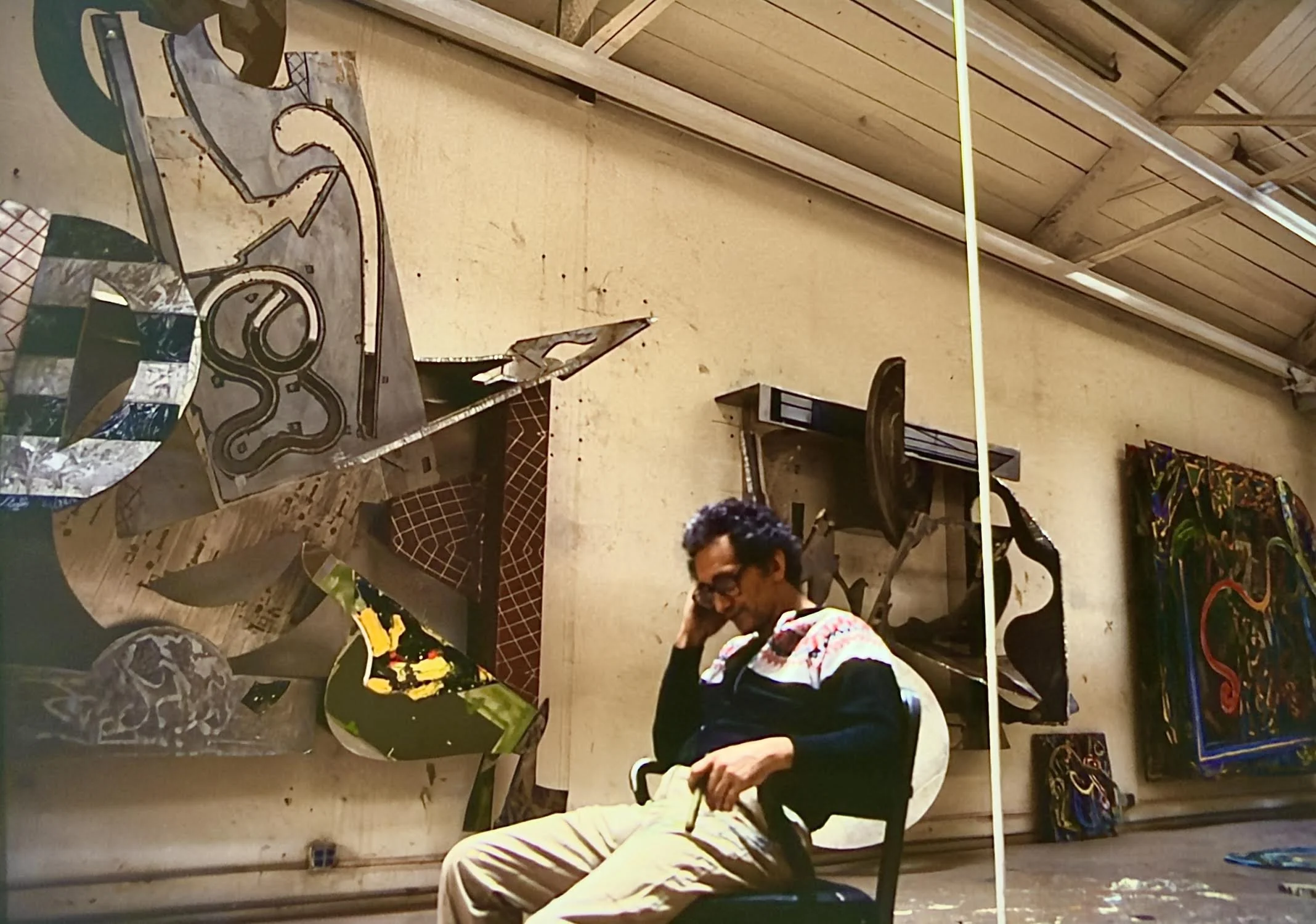
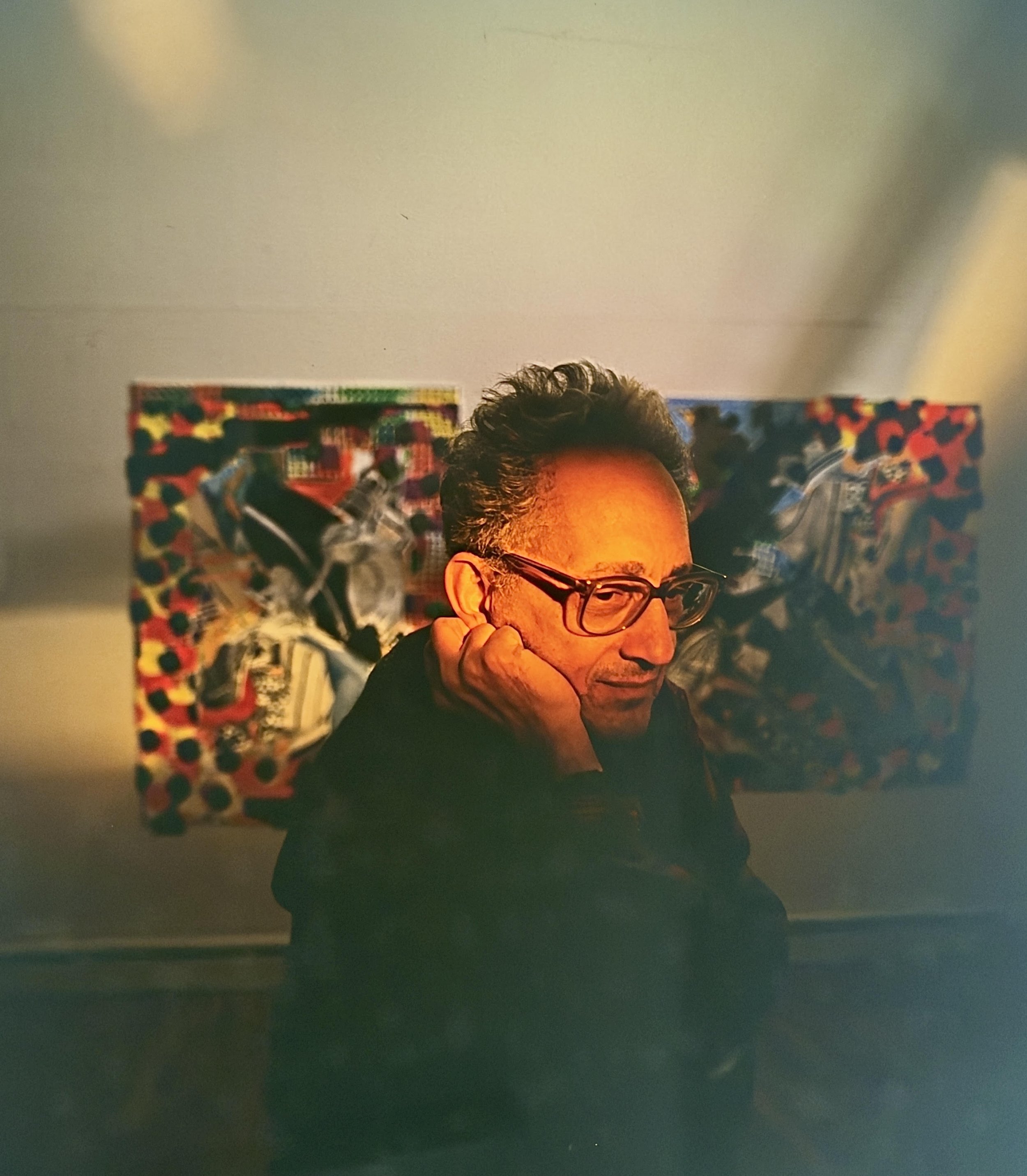
Over about ten years, I photographed Stella three times. Our conversations ranged from his experiences being photographed by Diane Arbus, who asked him to sit naked on the toilet, to why Condé Nast’s Alexander Liberman awarded me the commission to photograph him for Vanity Fair. I didn’t know what to make of Arbus’s surreal request. But my answer to Liberman’s question was easy: I had previously shot Liberman’s portrait. Though I was expected to be in Stella’s studio with the weight of Liberman’s scrutiny on my shoulders, I managed to play the part of an important photographer.
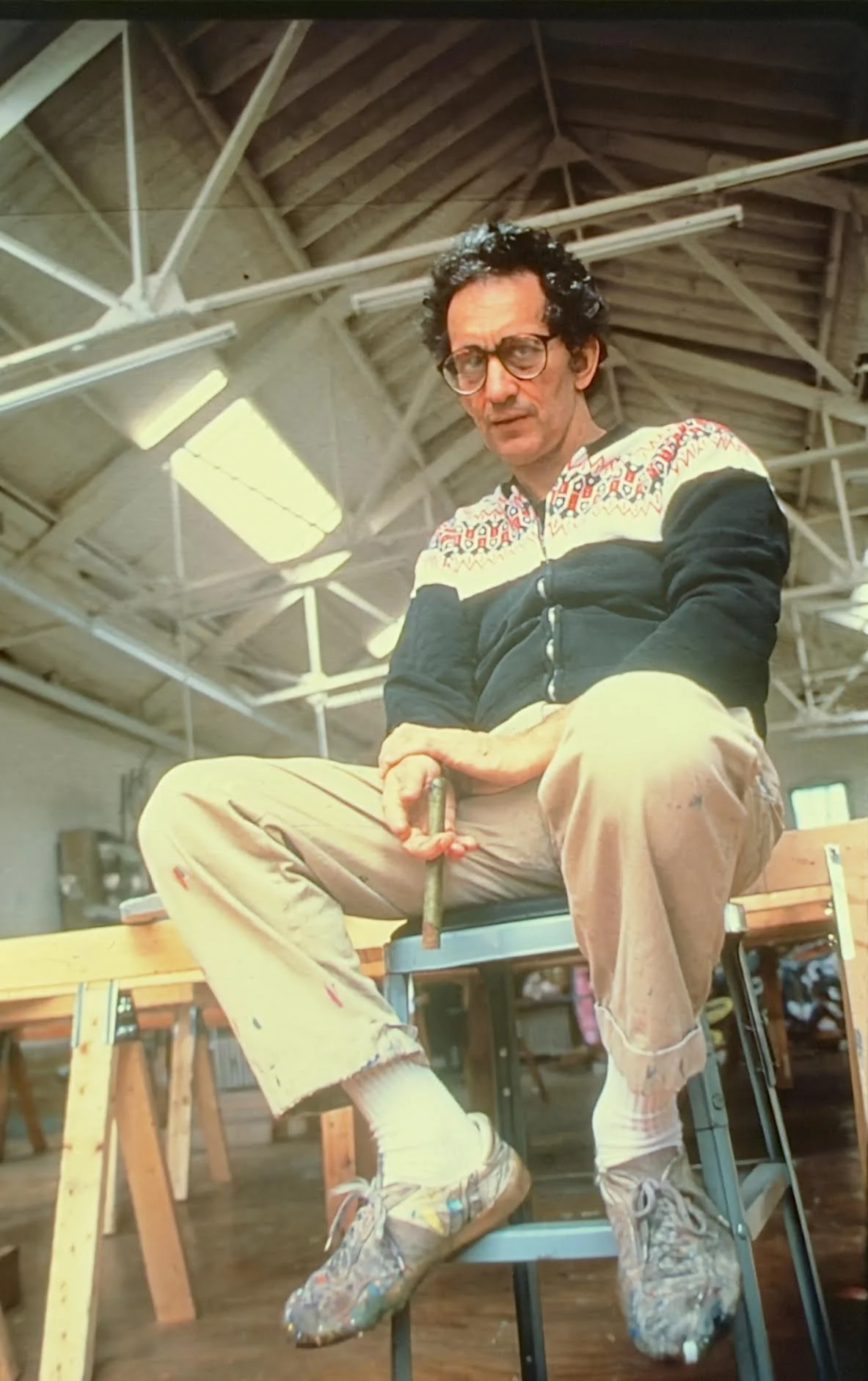
Photographing Frank Stella: His enormous site pieces resemble a deconstructed Ferrari, free of critical assessment or validation but filled with immense adoration. I have always enjoyed the facing the archaeology of art history. I had to treat the engagement like a race car driver. Frank would have appreciated the analogy; racing was a lifetime passion of his. For Frank, and for me it is about navigating time thru time.
The broader view means listening to the calm amidst unprecedented volumes. Endurance races like Le Mans 24 Hours endurance race or the Italian Mille Miglia Thousand Miles are both about applying heart to mind, passion to skill, while navigating a force both within and atop the road. To anticipate the pitfalls, the slick spots, and the blind turns requires something art and photography rarely capture. In the mind of the moment, the precision of calculating is heard, something cinematic occurs, another turn, another mile.
In both art and photography we imagine building another capture, creating another piece of the sublime.
Possibly to understand it best, one needs to move beyond racing and wade out into winter wave sets, feeling the powerful, powerful currents of Waimea or Nazaré, to feel the scale of something grand in nature to truly know what it means to survive the forces in life.
I am no longer a young photographer. Though I still enter a promising situation as if I am completely naked and among the first born in Eden. The mechanics of a properly engineered tool matters, but how the camera speaks and how it recognizes visual dialogues is most important. I bring an idea about light and space to everything I can see and imagine seeing.
Narratives whisper loudly; the subject waits and the moment has come and gone. Photographing the artist Frank Stella started out as if I were peering through a tiny spy hole. But the sessions ended with great satisfaction on my part: my mind’s eye was opened wide. I got to hear his thoughts on artists, architects and more, realizing that the photographer as a listener is a great tool. And I take that Stella experience into tomorrow.